
Shamanism and Folk Belief in Northern Xinjiang: Tengri, Bear Cults and Mountain Spirits
The first time I understood that Xinjiang was not just a place but a collection of invisible agreements with the land, I was sitting on a cold rock above a Kazakh winter pasture in the Tianshan. A herder named Bolat had stopped his horse to face a distant white peak. He did not pray out loud. He simply touched his forehead, then the ground, and moved on. I asked him later what the gesture meant. He shrugged, embarrassed, as if I had asked why he breathed. “The mountain knows,” he said. “We do not need to explain to the mountain.”
That small, ordinary moment stayed with me longer than any monument I have seen in this region. Northern Xinjiang is where some of the oldest layers of Central Asian belief still breathe. Not in museums. In the way people treat a spring, a stand of fir, a sleeping bear, a thundercloud. This is a guide to those beliefs, written from the road rather than the library, though I have tried to get the anthropology right.
The Sky God Watches From the Tianshan
Ask a Kazakh or Kyrgyz elder about God and you will often hear the word Tengri. It is an old Turkic word for the sky, but in living speech it means far more than weather. Tengri is the vast, indifferent, generous force that holds the world together. He is not a carved statue and he does not live in a building. He is the blue dome itself, the one thing you cannot escape when you are alone on the steppe.
I first heard the name used seriously during a long drive through the Ili valley. My driver, a quiet Kyrgyz man from the border country, tapped the window when a sudden storm rolled over the passes. “Tengri is angry,” he said, half joking, half not. Then the sun broke through and he laughed. “Tengri is happy. You see how fast he changes.” The gods of the steppe are weather gods because the weather is survival.
What matters for a traveler is that Tengri is not exclusive. He sits comfortably beside Islam, which most Kazakhs and Kyrghyz practice today. A man may attend Friday prayers in town and still thank Tengri when his foal is born healthy. The older sky faith did not disappear when new religions arrived. It folded underneath them, like a river going underground and surfacing miles later.
A Kazakh Elder and the Breath of the Mountains
Bolat belonged to a family that still moves with the seasons, and his grandmother was the person who taught me most about animism. She believed that everything alive, and some things that look dead, carries a jan, a soul or breath. A tree struck by lightning keeps its power. A spring that never freezes is a place to be spoken to softly. You do not shout near such things. You do not cut the oldest tree in a grove.
This is not superstition in the dismissive sense. It is a practical ecology. When every stone and river has a claim on your respect, you waste less. You take the sheep you need and leave the rest. You camp below the treeline rather than on the sacred summit. I watched her scold a teenage grandson who had kicked a flat stone for no reason. “That stone has been here longer than your grandfather,” she said. “Show some manners.”
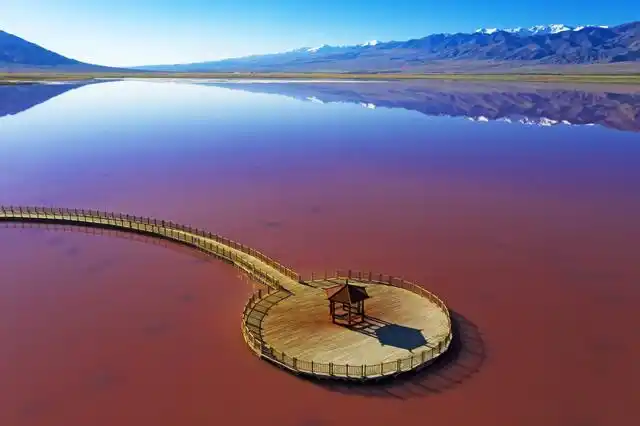
Mountain spirits sit at the center of this world. The Tianshan, whose name simply means Heavenly Mountains, is spoken of as a living presence. Certain passes are avoided at night. Certain rocks are left offerings of thread, a strip of cloth tied to a branch so the wind will carry a wish upward. I tied one myself near the Tuoli area, a blue scrap of an old shirt, because Bolat’s grandmother handed me the cloth and it would have been rude to refuse. I do not think I believed. I also do not think I disbelieved.
The respectful traveler learns the gestures quickly. Remove your hat near a recognized holy site. Do not photograph a person mid-prayer without asking. Walk around a cairn clockwise. None of this costs you anything, and all of it opens doors. People notice when a foreigner bothers to learn the manners of the land.
Bear Cults Along the Altai Rivers
If the mountains have spirits, the bear has a family. In the Altai, where Kazakh and Mongol hunters share the taiga with the few remaining snow leopards, the bear is treated as a strange relative rather than prey. I spent a week near the Kanas and Hemu rivers with a hunting family, and the subject of the bear came up the way weather comes up at home. Constantly, and with feeling.
The old stories say the bear was once a man, or a man was once a bear, and the distinction is not worth arguing about. When a bear is killed, the proper rites ask forgiveness. The skull is placed high in a tree, facing east, so the spirit returns cleanly. You do not mock the bear. You do not name it casually while in the forest, in case it hears and takes offense. My host’s father showed me a carved wooden bear figure kept above the door, not as decoration but as a guardian who had earned his place.
This bear respect is part of a wider hunting Ethic that runs from the Altai down through the Tianshan. The animal gives itself so the people eat. The least you owe it is gratitude and a proper sending-off. I found this more moving than I expected. In a world where wilderness is often either feared or consumed without thought, the bear cult keeps a kind of contract alive between hunter and hunted.
Foreign travelers rarely witness these rites directly, and that is as it should be. They are family business. But you will feel the attitude in small ways: a sudden silence when the dogs bark at something in the dark, a quick protective gesture, a story told only after the vodka has warmed everyone. Listen for those moments.
Where the Spirits Gather
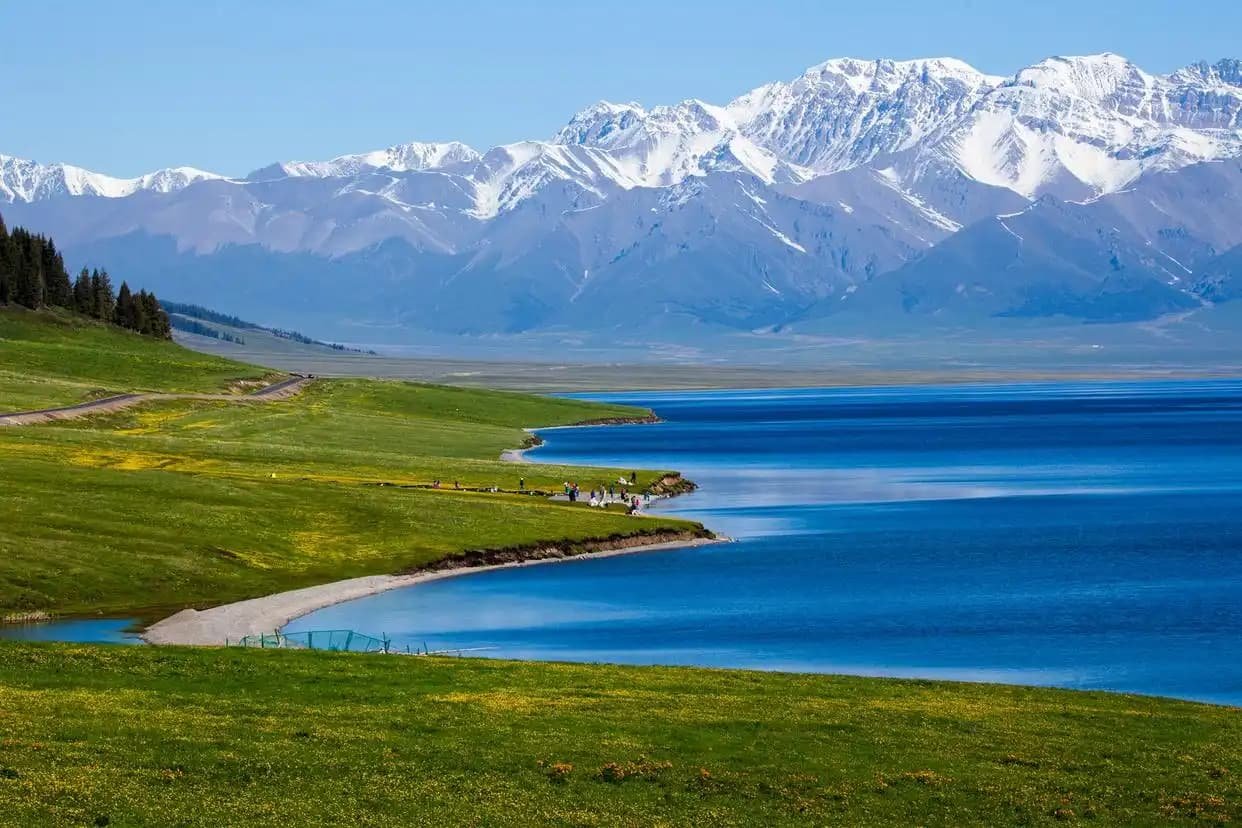
Sacred geography in northern Xinjiang is not random. The sites cluster where the land itself seems to stop and listen. High passes. The sources of rivers. Lakes ringed by mountains, which the Turkic peoples call kul. Sayram Lake, cold and absurdly blue, sits at over two thousand meters and has drawn reverence for centuries. Standing on its shore I understood why. The wind comes off the water with a clean, almost surgical force, and the silence behind it feels intentional.
Festivals are where belief turns outward and becomes shared. Nauryz, the spring equinox celebration, is the great one across the Turkic north. Houses are cleaned, a special barley soup called nauryz koje is boiled, and old grudges are meant to be set down for the day. I joined a Nauryz feast in a village outside Yining and was handed a bowl within minutes of arriving, a stranger adopted into the circle. The music, the horse games, the deliberate forgiveness, all of it carried a weight that went past mere holiday.
Eagle festivals along the Ili and in the Altai borderlands show another face of the same respect. The golden eagles are not pets. They are partners lent to a family for a season, raised with a discipline that borders on devotion, then released back to the wild so the line continues. Watching a hunter carry his bird on a padded glove, speaking to it in a low constant murmur, I saw a relationship built on awe rather than ownership.
The Kazakh herding world I keep returning to is the best place to feel all of this at once. If you want to understand the beliefs, stay with the people who still live by them. You can read about Kazakh nomadic life, yurt stays and horse trekking in Xinjiang before you go, and it will change how you see the invitation when it comes.
Threads of Belief Across the Region
Northern Xinjiang does not hold these traditions alone. The same sky god, the same respect for water and tree and beast, echoes in surprising places if you know to listen. Down in the Tarim basin the Uyghur world has its own deep musical and spiritual roots, and the great Uyghur Muqam music tradition, with its live venues and listening guide, carries trance-like modes that were once tied to healing and gathering communities. The sound itself is a form of address to something larger.
Further south, the Makit Dolan culture of Xinjiang preserves one of the last genuinely nomadic musical and poetic cultures of the Tarim, with twelve-meter reed flutes and songs about the wolf and the steppe that map closely onto the northern sky faith. And the cradle of Uyghur Muqam at Lukcjin and Shanshan shows how belief and art have always traveled together along the oasis roads. None of these are “shamanism” in the narrow sense, but all of them share the conviction that the world is full of presences worth honoring.
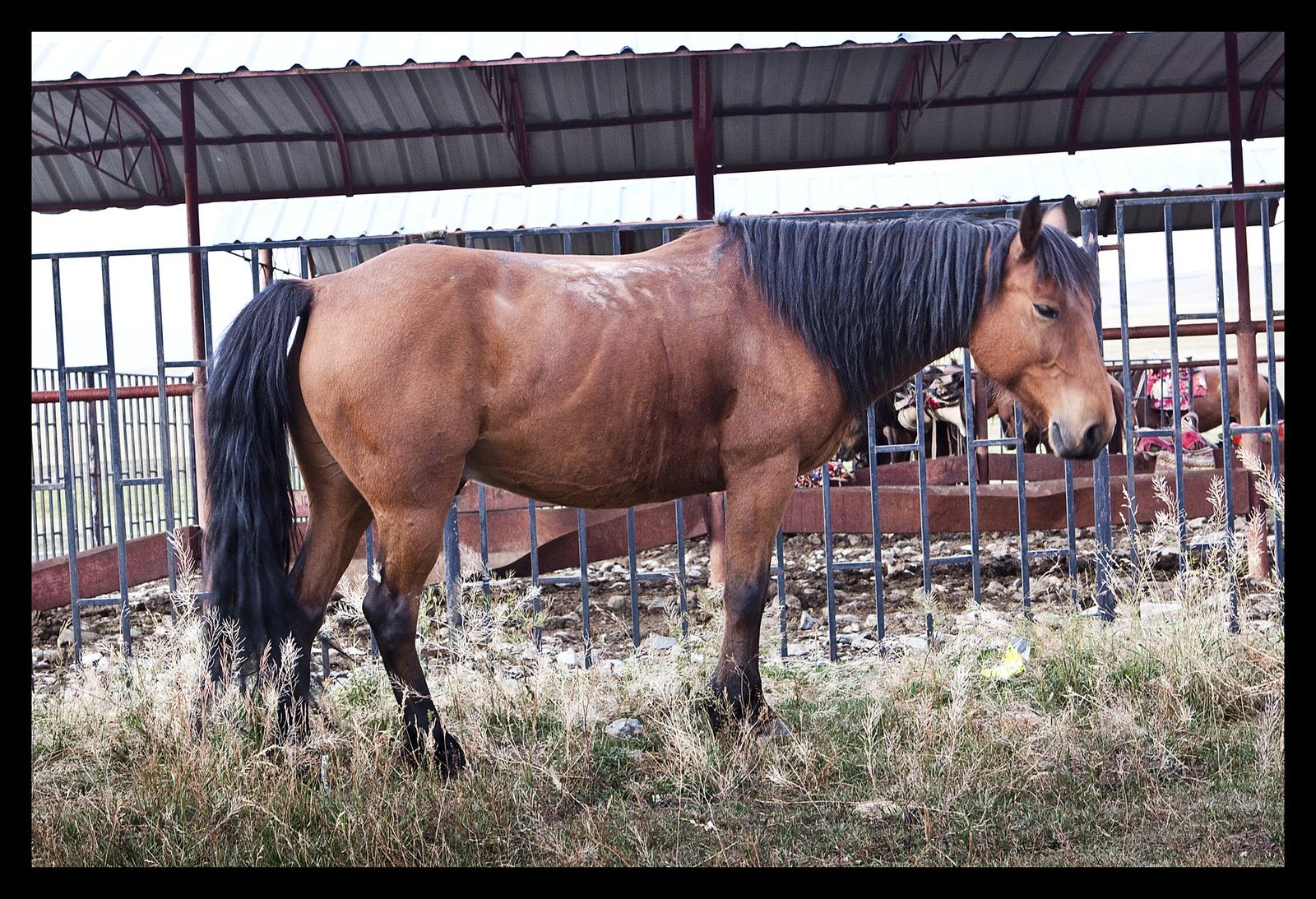
For the traveler who wants the horses and the high pastures themselves, the Akhal-Teke and Kazakh horse country guide is the natural companion to this one. The horse is not just transport here. In the old songs the horse carries the soul of the dead to the next world, and a good mare is spoken of with the same tenderness people give a child.
Living Belief in a Modern Borderland
I want to be careful here, because it is easy to romanticize. The shamans of popular imagination, drumming in smoke, are mostly a costume now, performed for cameras or for tourists who ask for it. The real continuity is quieter. It lives in a grandmother who will not let you waste water. In a hunter who apologizes to the bear. In a driver who greets the storm by name.
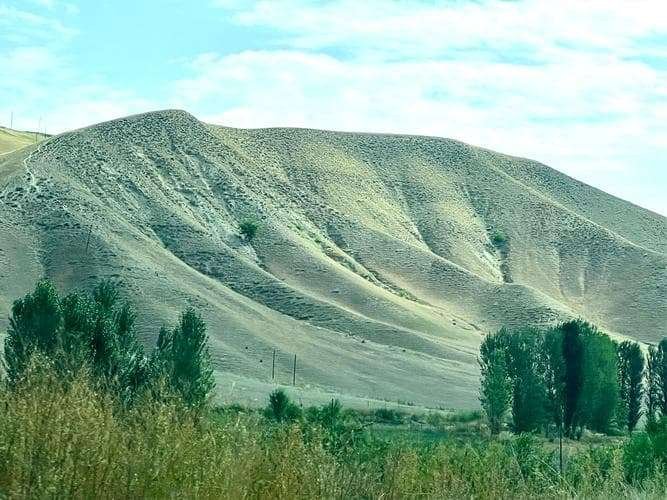
Young people in Urumqi or Yining may roll their eyes at the old ways, then still tie a prayer strip at a mountain pass on the way home for their mother. Belief here is not a rigid doctrine you accept or reject. It is a set of habits, a tone of voice around nature, a default respect that survives even when the explanations are forgotten. That, to me, is the most honest kind of faith.
The Mongolian communities of the far north add their own layer. Among the Mongols of Xinjiang, the fire spirit is fed before every meal, a few drops of milk or tea cast into the flame. I was corrected gently for nearly stepping over a hearth. “Never cross the fire,” my host said. “It is rude to the one who keeps us warm.” The fire, the ancestor, the sky, the mountain: in the end they are all versions of the same courtesy.
A Traveler’s Note on Respect
If you take one thing from this guide, let it be this. The beliefs described here are not exhibits. They are how real families decide where to camp, what to eat, whom to forgive. Approach them with the same politeness you would show a grandmother’s kitchen. Ask before you photograph a rite. Decline an offering only with a clear, kind reason. Learn the word rahmet, thank you, and use it often.
The best encounters found me when I stopped performing interest and simply paid attention. A cup of salted milk tea. A story told because the evening was long. A hand placed on a child’s head with a murmured blessing. These are the moments the brief above cannot schedule, and they are the ones you will remember when the passport stamps have faded.
Northern Xinjiang will show you glaciers and grasslands that belong on postcards. Stay long enough, and it will show you something stranger and better: a world where the sky is still a person, the bear is still a relative, and the mountain, always, is listening.