

Traveling with Pets in Xinjiang: Bringing Dogs and Cats on Your Road Trip
I crossed into Xinjiang with my border collie in the back seat, a stack of vaccination papers on the passenger floor, and no real idea of what the next three weeks would demand. People had told me the province was too vast, too harsh, too far from any vet who would know what to do with a foreign dog. They were half right. The scale is brutal. The welcomes were not.
Xinjiang covers roughly 1.6 million square kilometres. That is larger than many countries I have driven through. You do not pop to the next town. You commit to four-hour legs between fuel stops and watch the temperature swing from 34°C in the Turpan basin to near freezing at a pass in the Altai. My dog, Willow, handled the heat better than I did. The cold she loved.
Paperwork Before You Leave Home
Start with the documents, because everything else is easier once those exist. China requires a rabies vaccination at least 30 days before arrival and no more than 12 months before. Your pet needs a microchip, ideally ISO 11784/11785 compliant, and a health certificate issued by a licensed vet in your home country. I carried mine in a waterproof sleeve and a digital copy on my phone, which saved me twice when papers got crumpled in the glovebox.
The international side of this is its own subject. Different countries have different export permits, and some require a rabies titre test with a waiting period that can stretch past three months. I have written up the full set of entry and exit rules, including the titres and the paperwork order, in our guide to bringing pets into Xinjiang from abroad. Read that before you book a flight. The airline will ask for the same documents at check-in, and a missing form means a dog left behind.
One detail that surprised me: the health certificate must name the exact route and ports. A vague note saying only “China” was not enough for the officer who processed Willow. I wrote Urumqi Diwopu International Airport as the entry point and listed each city we would visit. It took ten extra minutes at the desk but kept us moving.
Crossing the Border with a Pet
The vet check at the border took twenty minutes and felt slower. An official scanned Willow’s chip, compared the number to the certificate, and asked about her food. I had brought a sealed bag of her usual kibble, which seemed to satisfy him more than any stamp. Quarantine rules vary by port and by your country of origin. Some travellers face a short holding period. Others walk straight through. Assume nothing and confirm with the Chinese embassy in your home country before you fly.
There is no pet quarantine on arrival for most visitors who hold complete documentation, but the rule is applied at the officer’s discretion. I kept Willow on a short leash and calm. A barking, pulling dog draws attention you do not want at a border. Quiet got us through.
On the Road in Xinjiang
Self-driving is the only way I would do this trip with a pet. Buses and trains restrict animals, and the long distances between towns make a captive dog miserable in a carrier. I rented a sturdy SUV in Urumqi and built my days around the dog’s needs as much as my own. We stopped every two and a half hours. She drank, she stretched, she sniffed a post by the G3012 expressway that she found thrilling for reasons I will never know.
The roads are good. The G3012 loops through the south and ties together Kashgar, Aksu, and Korla with wide lanes and light traffic. Fuel stations appear roughly every 40 to 60 kilometres, and most have a shaded patch where a dog can walk. I learned to fill the tank before it dropped below a quarter, because the next station is not always where the map promises.
Temperatures are the real planning problem. In July the edge of the Taklamakan hit 39°C by midday, and I would not leave Willow in the car for any reason. I carried a collapsible bowl and a two-litre bottle of water at all times. At night in the mountains the same week, the thermometer in my tent read 4°C. She curled against my side and slept. I did not.

Where Your Pet Can Sleep
Hotels are the part that needs research before you arrive. International chains in Urumqi and Kashgar almost always accept dogs, often for a small cleaning fee of 80 to 150 yuan per night. Smaller guesthouses in the countryside ranged from welcoming to confused. I rang ahead every single time. A five-minute call saved me from arriving at a locked gate with a tired collie at ten at night.
The full picture of where to stay, from city hotels to remote yurts that will take a well-behaved animal, is in our Xinjiang accommodation guide. I leaned on it hard. Some of the best nights were at family-run places near Sayram Lake where the host’s own two dogs became Willow’s running partners within an hour.
Camping opens the trip wide. We slept at designated sites near lakes and in the desert where no one counted pets. Our self-drive camping guide covers the legal spots and the water situations at each. I carried a foldable crate so Willow had a den when the wind picked up, and it doubled as a safe space in hotel rooms that smelled of unfamiliar cats.
North Xinjiang and the Altai Cold
The north is green and cool and the best part of the trip for a dog that likes to run. Kanas and Hemu in the Altai pull tourists for the lakes and the wooden cabins, and in September the mornings dropped to 1°C while the afternoons climbed to a soft 18°C. Willow’s thick coat made her the happiest creature in the valley.
Kanas Geopark enforces leash rules on the boardwalks, and rangers do check. I kept her close near the lake because the scree slopes are steep and the water is freezing. Off the paths, on the forest tracks between Hemu and the river, she ran free and came back filthy and delighted.
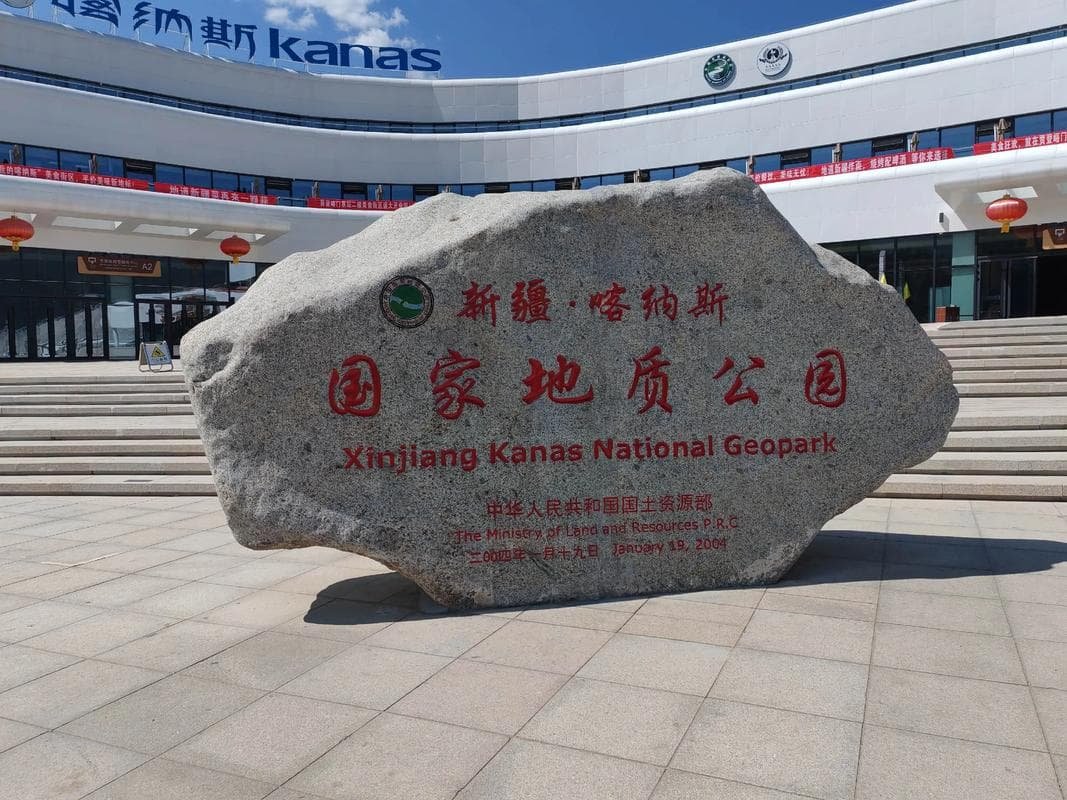
The drive from Urumqi to Kanas is about 800 kilometres if you go through Karamay, and I split it across two days with a night in Burqin. The town sits where the Burqin River meets the Irtysh, and its night market sells grilled fish that Willow judged from a respectful distance. Cold nights there meant I packed her a fleece that she wore without complaint.
Further west, the Ili valley around Yining surprised me with its wide grasslands and the lavender fields near Huocheng that smell like the south of France. Willow rolled in both and regretted neither. The valley stays warmer than the Altai, with summer nights around 15°C, which made camping there the easiest of the whole loop.
South to Kashgar
Kashgar is the soul of the trip and the furthest point south on my route. From Urumqi it is more than 1,400 kilometres, most of it on the G3012 and the G314. We took five days, stopping at Kuqa for the canyon, Aksu for rest, and then the long push west. Willow watched the poplar forests of Baicheng flash past and slept through the checkpoints.
Some counties near the border require a permit, and the rules shift. Before you head toward Tashkurgan or anywhere close to the frontier, check our 2026 border permit guide for the current list of counties and the application steps. I carried my permit and Willow’s papers together in one folder so any checkpoint saw both at once.
Kashgar’s old city is a maze of alleys where every third door has a dog or a cat dozing on the threshold. Willow drew a small crowd of children who wanted to pet her, and their families offered water for her bowl. The Sunday livestock market on the city’s edge is overwhelming for a sensitive dog. I kept her well back from the sheep and the noise.
Cats Are a Different Beast
I met a traveller in Hotan who drove the whole loop with two cats in a single carrier, and I have never been more impressed or more tired on someone’s behalf. Cats hate the car. They hate the motion and the strange smells and the relocated litter box. If you bring a cat, get it used to the carrier at home for a month first, and pick a hotel room with a door that closes fully so it cannot vanish under a bed in a strange town.
The upside is that cats need no walks and no border-collie levels of exercise. They settle into a hotel room fast. The downside is the vet question: a sick cat in a small county town is harder to treat than a sick dog, because fewer clinics stock feline medicine. Plan your route around larger towns if your cat has any condition.
Vet Care and Emergencies
Urumqi has modern clinics with English-speaking staff at the big hospitals, and I visited one for a routine check after a week on the road. The bill was modest, about 120 yuan for a consultation. Smaller towns have clinics too, but the language gap is real, so I downloaded a translation app and saved a few key phrases before I needed them. Keep your vet’s contact from home saved, and ask your airline or embassy which clinics near your route handle foreign pets.
Carry a basic kit: gut medicine for upset stomachs from new water, paw balm for hot asphalt, and a tick remover for the grasslands. The Altai and the Ili valleys both have ticks in summer. I pulled three off Willow after a riverside walk and watched the spot for redness for a week. None of it was scary. All of it was easier because I had the tools in the boot.
What I Would Do Differently
I would book pet-friendly hotels further in advance, because the good ones fill fast in peak season and I spent one stressful evening calling around Turpan. I would also bring a second water bottle, since the desert heat empties one faster than expected. And I would tell myself, on the hard days, that the quiet miles with a dog who trusts you are the point.
If you are weighing whether to attempt the loop with your own animal, our self-drive with pets guide walks through vehicle choice, crate setup, and the daily rhythm that kept Willow calm across 3,000 kilometres. I wish I had read it twice.
Xinjiang with a pet is not the easy version of the trip. It asks for more planning and more patience than travelling alone. The reward is a companion who meets every sunrise on the roof of the car and every cold mountain morning with the same uncritical joy. I would cross that border again tomorrow, papers in the glovebox, dog in the back, road opening north toward the snow.