

The Living Sound of the Oasis: Uyghur String and Drum Instruments from the Satar to the Daf
The Night the Satar Found Me
The first time a Uyghur instrument stopped me in my tracks, it was not on a stage. It was in a timber-framed teahouse off the old lanes of Kashgar, where a man I never learned the name of drew a horsehair bow across a long wooden box and the whole room seemed to lean toward him. I had come to Xinjiang to drive, to chase deserts and mountains, but that sound rewrote the trip.
The instrument was a satar. In the dim light it looked like a slender coffin with a neck, its body a single block of carved mulberry wood, its single string singing under a bow made of horsehair stretched on a curved stick. What came out was not a tune I could hum. It was a cry, a whistle, a human voice bent into wood. I ordered another pot of tea I did not need and stayed until my legs went numb.
That evening taught me something the guidebooks skip. The music of the oasis is not background noise. It is the archive of a people who turned heat, dust, and longing into melody. If you travel here with open ears, the instruments will tell you more about Xinjiang than any monument.
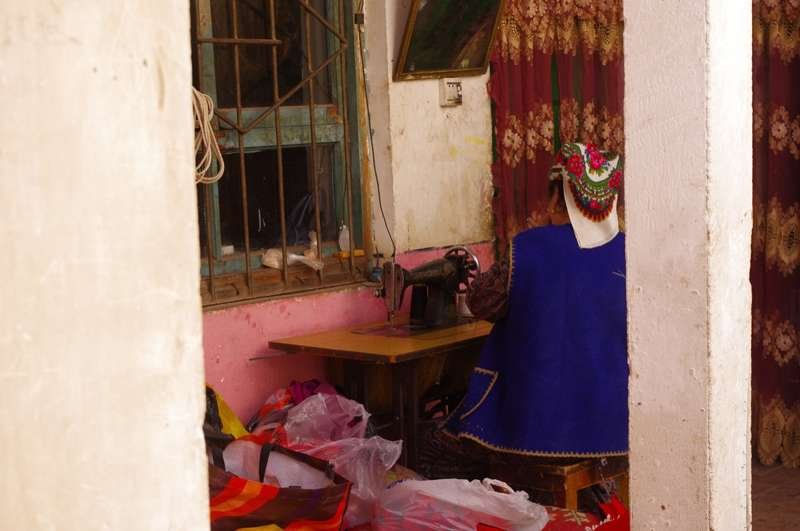
The Bowed Voices: Satar and Ghijak
The satar is the closest thing the Uyghur world has to a singing ghost. Players describe it as having a main string plus a row of sympathetic strings beneath, thin wires that hum and resonate so the instrument seems to answer itself. Run your finger along the neck and you find no frets, only the player’s memory of where the notes live.
I watched a satar player in Yining close his eyes while he bowed, his free hand sliding up and down the single string to bend pitches into shapes no Western scale allows. The sound is thin at the top, almost like a reed flute in distress, then it swells into something that fills the chest. Some say the satar was built to imitate the human voice, and after a long listening I believe it.
The ghijak is its cousin but a harder, brighter creature. It is a bowed lute with a small rounded body, often covered with camel skin, and it carries four or more strings that the player stops with the sides of the fingernails rather than the pads. The tone is nasal and urgent, the kind of sound that pushes a dance forward rather than lulling it to sleep.
Where the satar weeps, the ghijak argues. I heard a ghijak duet outside a village wedding near the Dolan country, two players trading phrases like old friends finishing each other’s sentences. The camel skin on the body gave the notes a dry, almost percussive edge. You feel the bow bite.
What the Bowed Pair Teaches You
These two instruments rarely perform alone. In a muqam ensemble they sit at the front, carrying the melody line while everything else breathes around them. Listen for the satar at the start of a piece, when the room needs a voice to lead, and then for the ghijak when the rhythm tightens and the feet start to move.
The Long-Necked Tambur and the Quiet Dutar
The tambur is the instrument that looks like it belongs to a storyteller on a mountain road. It has a long, narrow neck and a pear-shaped body, and it is played with a small metal plectrum that the player clips to the finger. The strings are steel, and they ring with a clean, bell-like clarity that cuts through a crowded courtyard.
I first noticed the tambur in a Yining music shop, where a teenager practiced a rolling pattern that sounded like water over stones. He told me, through a friend’s translation, that the tambur is the hardest to learn because every mistake shows. There is nowhere to hide in its bright, honest tone.
The dutar is the people’s instrument, the one you see leaning against the wall in a teahouse, picked up by anyone who knows a few songs. It has two strings, a narrow waisted body, and a soft, murmuring voice. The name itself means two strings, and the music it makes is conversational, like a chat between two friends who finish each other’s thoughts.
You will hear the dutar far more often than the satar on an ordinary evening. It travels well, costs little, and suits the small moments: a father teaching a daughter, a driver humming between towns, a group of old men passing a night under the stars.

The Daf: A Frame Drum That Holds the Room
Every ensemble needs a heartbeat, and in Uyghur music that heartbeat is the daf. It is a large frame drum, a wooden ring maybe forty centimeters across, with a goatskin or fish skin head and a row of metal rings set into the frame. The player strikes it with the fingers and the heel of the hand, and those rings jangle like a hidden bell choir.
I learned to love the daf at a festival outside Kashgar, where a single drummer kept a circle of dancers locked in step for what felt like hours. The skin slapped, the rings shook, and the rhythm shifted without warning from slow to frantic. The daf does not just keep time. It decides the mood of the whole gathering.
What surprised me was how light it is. A full-size daf weighs less than a laptop, and a child can lift it overhead and lead a procession down a lane.
The Rawap: A Wandering Hero’s Lute
The rawap deserves a mention even though it sits a step outside the core string trio. It is a short-necked lute with a rounded body, often decorated with carved horns or a stylized animal head at the top of the neck, and it carries a bright, plucked tone that sounds like laughter. In the hands of a Dolan player it becomes a story in itself.
I saw a rawap in a Makit workshop, its body inlaid with thin strips of colored wood so it looked like a small shield. The rawap is the instrument of the Dolan culture, the river-forest people whose music runs rougher and older than the courtly muqam.
Muqam: The Classical Tradition Behind the Sound
None of these instruments make full sense until you meet the muqam. Muqam is the great classical tradition of the Uyghur people, a sprawling cycle of songs, instrumental pieces, and dance tunes built around modes that act like emotional keys. A full performance can run for hours, moving from slow solo introspection to crowded, stamping finales.
The Twelve Muqam is the most famous version, a collected repertoire that UNESCO recognized as a masterpiece of oral heritage. Each muqam opens with a free rhythm section where the satar sings alone, then builds through sung poetry and drum-driven dances. Sit through one and you understand why the instruments are built the way they are: each has a job in a long argument between sorrow and joy.
I caught a shortened muqam performance in a Urumqi theatre on a cold spring night, and even trimmed to ninety minutes it left me raw. The ghijak and satar traded the melody, the tambur filled the gaps, and the daf drove the closing dance until the audience forgot to clap on time. That is the point of muqam. It is not a concert. It is a journey the room takes together.
Where Travelers Can Hear Them Live
You do not need a festival ticket to meet this music. The hard part is only knowing where to sit still.
Kashgar Teahouses
The old teahouses near the Id Kah mosque are the easiest start. Order a pot of dark tea, find a platform by the window, and wait. On most evenings a player will appear with a dutar or satar, and within minutes a small crowd forms. The music is free, the tea is cheap, and the players are glad for a foreign face that actually listens.
Id Kah Square at Dusk
As the light goes long, the plaza in front of the Id Kah mosque fills with strollers, snack sellers, and sometimes an impromptu circle of musicians. I caught a daf and dutar pairing there one evening that pulled in a ring of dancing children. The square is vast and loud, but the music finds a pocket of calm if you stand close.
Yining and the Ili Valley
The north sings differently. In Yining, the former Ghulja, the teahouses and the Xinjiang cultural etiquette of dropping in unannounced still lets you find tambur players in the older neighborhoods. The Ili Valley blends Uyghur, Kazakh, and Hui sounds, so the same instrument can sound new from one street to the next.
Muqam Ensemble Theatres
For the polished version, look for the state ensemble theatres in Urumqi, Kashgar, and Yining. These shows stage the muqam with costumes, choreography, and a full row of instruments. They cost money and feel rehearsed, but they are the reliable way to hear a satar and ghijak played at a high level when your schedule is tight.
Festival Moments
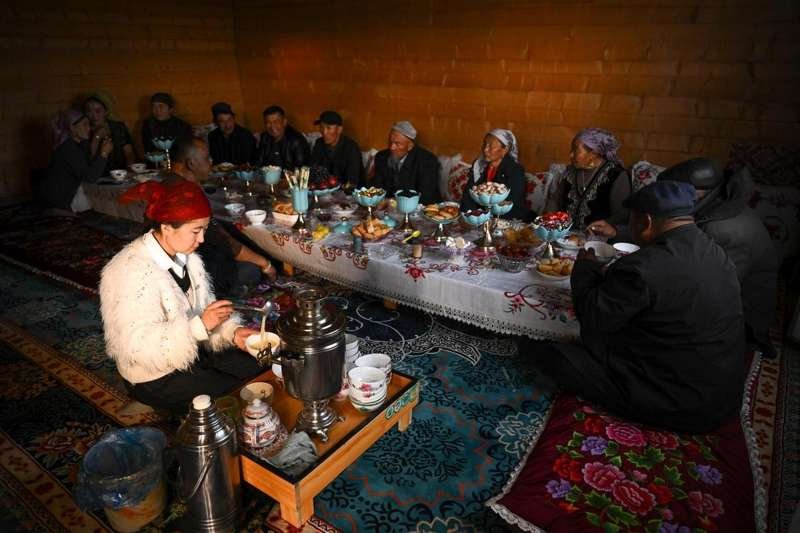
If your dates line up, a festival changes everything. During the spring celebrations around Nowruz the lanes of southern towns fill with open-air music, and the daf seems to come from every doorway at once. Weddings are the other gift. A Uyghur wedding without a live ensemble is unthinkable, and villagers will wave you in if you stand at the edge with a smile.
I stumbled into a courtyard wedding near Makit by following the sound of a rawap down a dirt lane. Nobody asked who I was. A grandmother pressed a handful of sweets into my hand and pointed at the dancers. For two hours the ghijak, daf, and dutar ran without a break, and the only rule was that you had to move your feet.
How the Instruments Are Made
The craft behind the sound is half the story. Most bodies are carved from mulberry wood, a dense, sweet-smelling timber that grows slow in the oasis and rings true when struck. A maker will hollow a block, shape the ribs, and glue the soundboard with animal glue that can be undone and reset if the wood cracks in the dry winter.
Skins matter as much as wood. The ghijak and some daf heads use camel skin or goat skin, scraped thin and stretched wet over the frame, then left to shrink tight as it dries. The result is a head that responds to the lightest touch. String makers still use sheep gut for the traditional lower strings, though steel has taken over the top end for durability on the road.
I spent a morning in a Kashgar workshop watching a man shape a tambur neck with a bent knife and endless patience. He let me feel the half-finished wood, smooth as river stone, and explained that a good instrument takes a season to settle before it holds tune. The Dolan knife craft shares this same patient logic, a region where the blade and the lute are cut from the same respect for the material.
Buying a Small One as a Souvenir
You will want to take the sound home. The good news is that small dutars and tiny tamburs are sold as souvenirs across the south, from the Kashgar Sunday bazaar to the craft stalls near the Id Kah. A tourist-size dutar runs light and ships easily, though check your airline’s carry rules because the neck sticks out.
Skip the loudest, shiniest models. The best keepsakes are the plain ones made by a named workshop, with honest mulberry grain and a smell of fresh glue. I bought a small tambur for the equivalent of a nice dinner, and it still hangs on my wall where guests ask about it. Tell the seller you want to hear it played before you buy. A maker who plays his own instrument will respect you for asking.
If you want something with deeper meaning, look for a rawap from a Dolan-area maker, or a decorated daf with real metal rings. These carry the Uyghur calligraphy and carving traditions in their inlay, a small museum you can hang on a hook.
The Instruments and the Storytellers
The music never stands alone. In Uyghur life it wraps around the great oral epics, the long heroic tales known as dastan. A dastan performer sings the story over a dutar or satar, shifting mode to mark a battle, a parting, or a homecoming. The instrument is the narrator’s second voice, and the audience reads the emotion in the wood as much as in the words.
Learning this link changed how I listen. When I later read about Uyghur dastan storytelling, the instruments I had heard suddenly made sense as carriers of plot, not just mood. The satar weeps for the exiled hero. The daf stamps for the charge of horses. The tambur rolls like a river the traveler must cross.
The Dolan tradition carries this hardest of all. In the reed forests of the Tarim, Dolan groups perform a rougher muqam with rawap and daf at its core, music built for communal dancing that can last until dawn. It is older, rougher, and more physical than the polished theatre versions, and it tells you that this sound was never meant for a quiet room.
Listening as a Traveler
If you take one habit from this article, let it be this. When the music starts, stop walking. The oasis was built by people who turned hard land into song, and the satar, ghijak, tambur, daf, dutar, and rawap are the surviving proof. Buy the small instrument, learn the one tune the teahouse owner teaches you, and you carry a piece of Xinjiang that no photo can hold.
I still hear that first Kashgar satar when the house is quiet. It was not a performance. It was an invitation, and the only wrong answer is to keep driving past.