
Fly Fishing and River Angling in Xinjiang: Cold Water, Wild Trout and Empty Banks
The First Cast at Altitude
The first time I unloaded my rods at the side of a Xinjiang highway, the only sound was the river. I had driven north out of Urumqi before dawn in a rented 4×4, watched the city lights thin into steppe, and pulled over where a tributary of the Manas cut under the road. Snow from the Tianshan still lay on the banks. The water ran the colour of polished steel.
I had come to fish. What I found was space. Hundreds of kilometres of cold, clear river with no other angler in sight, no fence, no fee booth, just the current and the long grass. That emptiness is the real trophy here, and it is the thing I still think about when I am home and the rivers are crowded.
I grew up trout fishing in cooler climates, so the idea of wild fish in Central Asia felt like a rumour passed between travellers. It turned out to be true, though with more fine print than the rumour suggested. The trout here are survivors. Many of the rivers are snow-fed and short, roaring in spring and shrinking to threads by late summer. The fish that hold on are tough, lean, and minded to test your patience.
Where the Fish Actually Are
Let me be straight about what you can really catch, because the brochures oversell and the locals undersell. The Urumqi region has reservoirs that are stocked, and those are the most reliable place to connect with rainbow and brown trout without mounting a long expedition. Managed reservoir fisheries south and west of the city hold fish that were put there on purpose. You pay, you fish, and on some waters you may keep a limit. That is the easy end of the spectrum, the place to learn the water before you wander.
Then there is the wild end. The Ili River and its tributaries in the west, the alpine streams that drain Kuerdening and the wider Tianshan, and the cold outflows near Sayram Lake all hold trout. These fish are wary, shaped by a hard life in fast water, and coloured like the riverbed. Most of these stretches are catch-and-release, and a few sit inside protected areas where the rules shift from one season to the next. I learned to ask before I cast, every single time, and that habit saved me more than once.
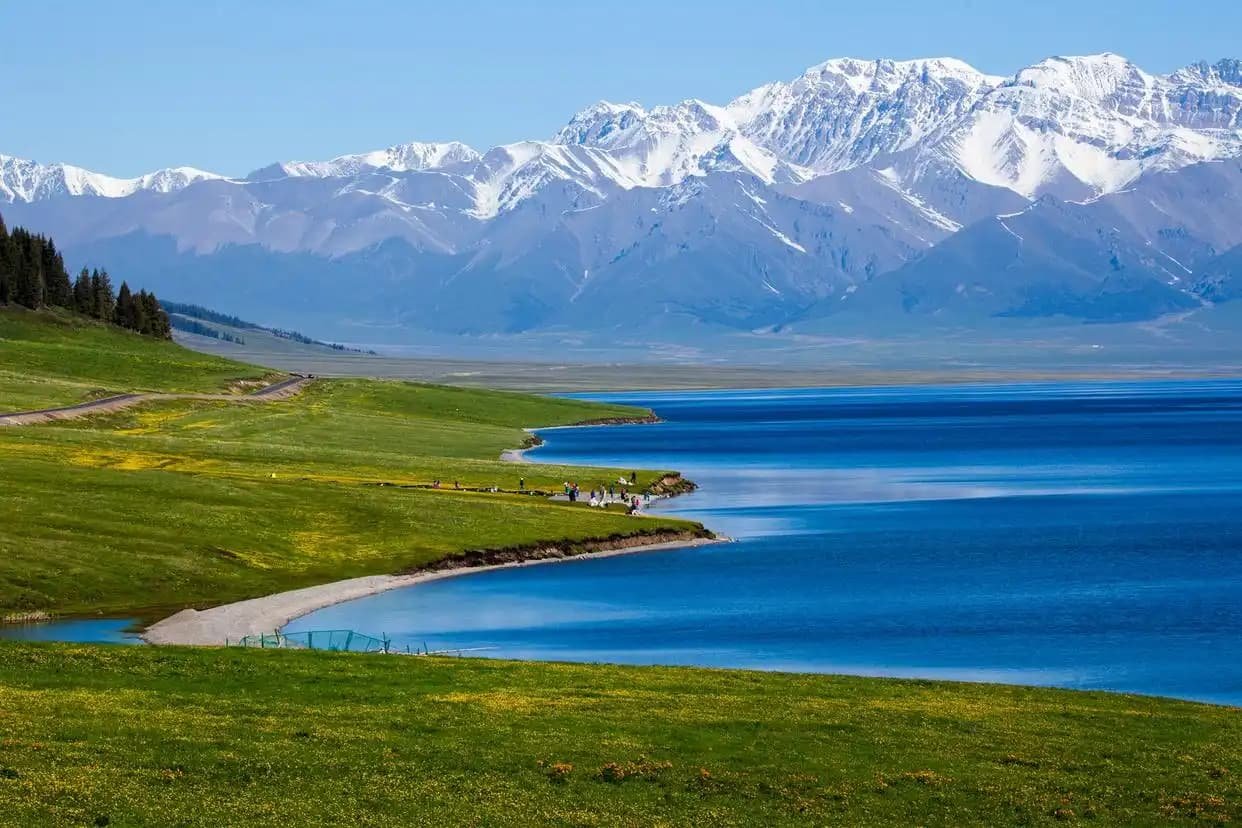
Sayram Lake sits at about 2,070 metres, a closed alpine basin that stays cold almost year round. The feeder streams on its eastern and southern shores are where I had my best wild-trout evening, working a small nymph along the seams where the snowmelt slowed. The lake itself is famous for scenery more than for angling, but the inflowing creeks below the surrounding peaks are worth a careful visit. Bring a licence if one is required that year, and expect the wind to arrive by midday with the force of a closing door.
The Manas is different. It is a bigger system, fed by glaciers, and it runs through farmland and grazing land as much as wilderness. I fished a stretch about 140 kilometres from Urumqi and found brown trout holding in the deeper pools below the willow bends. The water was clear enough to watch a fish turn and refuse the fly, which is a particular kind of frustration I have come to enjoy. Locals fish here with spin gear and worms, and they were happy to point me toward the slower water where the banks were soft.
Then there is the Ili. The main river is wide and silty in places, but the smaller tributaries, the ones that come off the mountains around Kuerdening and the nearby forest reserves, run clearer and colder. That is where the serious walk-and-wade angler will want to spend days. I based myself near the forest edge and drove a loop of side valleys, some reachable only after 20 or 30 kilometres of rough track. The trout were small, maybe 20 to 35 centimetres, but they hit a dry fly with a violence that made the long drive worth every litre of fuel.
What surprised me most was the temperature. Snow-fed water in May can sit close to 4 degrees Celsius, so the fish are sluggish and the hatches thin. By July and August the melt peaks, the rivers run high and off colour, and the best fishing moves to dawn and dusk. You learn to read the river by feel as much as by sight.
A Cold-Water Education
The first wild brown I landed came on a size 16 nymph in a Kuerdening creek, and it fought like a fish twice its weight. Cold water holds more oxygen, and the trout use it. They are built for the current, not for the easy life of a warm pond. That makes them precious and the catch-and-release ethic here feel like plain good sense.
I spent one afternoon on an Ili tributary watching a pool instead of fishing it. A dozen trout moved through the clear lanes, none interested in what I offered, and I left knowing the water better than I would have by casting blind. Patience reads as laziness to the uninitiated, but on these banks it is the only method that works.
Rods, Lines and the Rest
Gear matters more here than anywhere I have fished. I brought a 9-foot 5-weight for the reservoirs and a shorter 4-weight for the tight alpine creeks. The 5-weight handled the wind off Sayram better than I expected. I also packed a 6-weight as backup, and I was glad for it on the open Manas flats where a gust could fold a light line in half.
Lines were the real lesson. Snowmelt carries fine sediment that dulls a fly in minutes, so I tied a lot of nymphs and kept a small box of tungsten beads. Dry flies worked at dawn on the Ili tributaries, but the subsurface game produced almost everything I landed. Bring extra tippet in 5x and 6x, a good pair of wading boots with felt or studs, and a wading staff if your knees are not what they were.
Clothing is not optional. Even in July the water steals heat fast, and the banks switch from warm sun to cold shade without warning. I wore a thin fleece under a shell, kept spare socks in the truck, and carried more water than I thought I needed. The dryness fools you. You can be cold, dehydrated, and sunburnt at the same time, and the river will not care.
Seasons and the Ice-Off Window
Timing is everything. The reliable season runs from May through October, but each month fishes differently. Ice-off on the stocked reservoirs near Urumqi can happen as early as late April, and that first open water holds hungry fish that have not seen a fly in months. I hit one such window in the first week of May and caught steadily through the afternoon while the ice floes drifted at the far end.
June is the month of high, cold water. Snowmelt is at its peak and the rivers roar. The reservoirs and the slower lake inlets fish best then. July and August bring the warmest days and the most comfortable camping, but the wild streams need an early start. September is my favourite. The melt has dropped, the water clears, and the brown trout start to colour up before autumn. October can be excellent on warm afternoons, right up until the first freeze closes the high country.
In winter the game changes. The same lakes that gave me trout in May turn to ice, and locals cut holes to fish below the surface. That pairs with the open-water season if you want both sides of this landscape, with its own rhythm and quiet the rivers never quite match.
Driving the Empty Banks
This is a self-drive trip at heart. I covered roughly 1,800 kilometres over nine days, looping from Urumqi west to the Ili valley, north to Sayram, and back through the Tianshan passes. The roads are good on the main arteries, but the last few kilometres to the best water are often a graded dirt track that rewards a higher vehicle.
Fuel is the thing to plan. Stations are frequent near cities and sparse once you turn onto a forest road. I never let the tank drop below half in remote country, and I carried two jerry cans for the Kuerdening loop. Mobile signal fades fast in the valleys, so I downloaded offline maps and told a friend my rough route each morning before I lost the bars.
The drive itself becomes part of the fishing. I would wake, check the wind, and pick a watershed within two hours of camp. Some days that meant the Sayram inlets, other days a nameless creek crossed by a single bridge. The freedom to move is the whole point. You are not bound to one lake or one beat, and you follow the water the way the birds do.
Where to Sleep
Lodging ranges from comfortable to basic. Around Urumqi and the stocked reservoirs you will find hotels and guesthouses within a short drive of the water. In the Ili valley, Yining makes a solid base with real restaurants and a bed that is not a sleeping bag. I spent three nights there and day-tripped to the tributaries without once regretting the soft pillow.
Near Kuerdening and the higher forest roads, options thin out. I stayed in a forest guesthouse one night and camped two others, pitching by a creek where the only light was the stars and the embers of a small fire. Camping is permitted in many spots but not all, so I asked at the gate or the village before settling in. The cold nights made a good sleeping bag non-negotiable, and I learned to sleep with dry socks ready for the dawn.
Sayram has accommodation near the shore, though it books up in summer. I preferred to camp a little away from the crowds and fish the inlets at first light. The trade-off is the wind, which can arrive without mercy by ten in the morning.
Etiquette on the Water
Respect runs the experience. The banks are open, but the land is grazed and farmed, and the streams cross private and protected ground. I always asked permission before crossing a fence or entering a fenced pasture, and I left gates exactly as I found them. A smile and a few words in any shared language went further than any permit I carried in my pocket.
Catch and release is the norm on wild water. I carried barbless hooks, kept the fish in the water while I unhooked it, and got it back quickly. On the stocked reservoirs the rules are different and you may keep fish, but I still released most and took photos of the rest. Leave nothing behind. The empty banks stay empty only if everyone treats them that way, and the next angler deserves the same silence I found.
Foreign travellers should check the current regulations before casting. Rules about fishing licences, protected zones, and what you may keep change, and they are not always posted in English. I visited the local fisheries office in Urumqi before the trip and confirmed what was open that season. A short conversation saved me from a fine and from fishing water I should have left alone, and it cost me nothing but an hour.
Pairing It With the Rest of the Trip
Fly fishing here slots into a bigger journey. The open-water season dovetails with the self-drive fishing lakes you can reach from a vehicle, where still waters and easy access suit a different mood and a different tackle box. I spent a day on the big northern lakes after a week of rivers, and the contrast reset my eyes and my expectations at once.
In winter the same region offers the frozen version of the sport through ice fishing on frozen lakes, a slower and more social way to spend a cold afternoon with locals who have done it all their lives. And if moving water is your love, the white-water rafting sections of the region’s rivers give you the same cold currents without a rod, a different kind of thrill on the same snow-fed systems that grow the trout.
For something quieter, the southern river corridors along the Tarim river corridor show the other face of Xinjiang’s water, with tugai forest and a slow, silty flow that holds a different cast of life. I drove down that way on the way home and fished a warm, muddy channel that felt like another continent from the Tianshan trout streams I had left a week before.
None of these trips stands alone. The fishing is the thread, but the driving, the camping, the villages, and the long empty banks are the cloth. I came for trout and stayed for the silence, and the fish were a bonus, though I will not pretend the first wild brown on a dry fly did not stay with me long after the line went back in its tube.
If you are planning a similar loop, start with the stocked waters near Urumqi to learn the water, then push west toward Ili and the high creeks. Give yourself extra days you did not budget, because the rivers will not hurry and neither should you. The Ulungur Lake fishing villages make a fine northern counterpoint to the mountain streams, where the lake takes over from the river and the pace slows.
Pack for cold even when the forecast says warm, ask before you cast, and let the empty banks do the rest. Xinjiang does not give its fishing away. You earn it with distance, with patience, and with a willingness to read cold, fast water that has not changed much in a thousand years. When a trout finally rises in a creek fed by last winter’s snow, you will understand why the long road was the right one.