
Bosten Lake: Desert Oasis & Water Sports Travel Guide
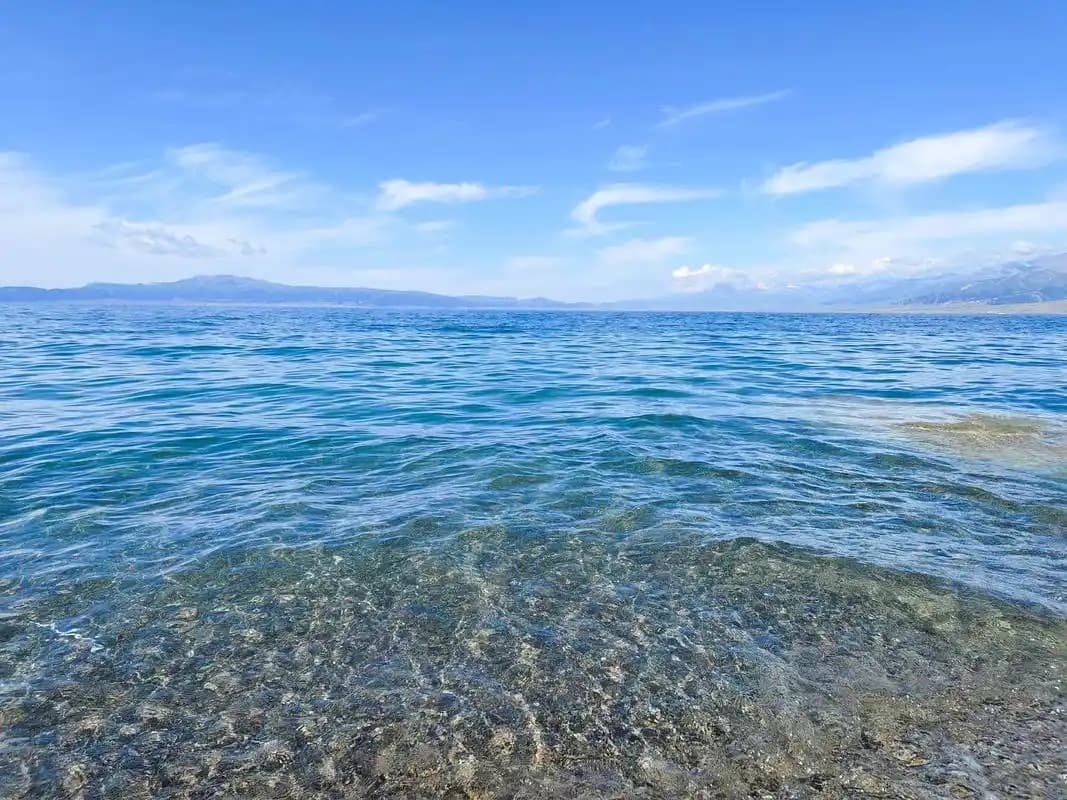
I expected a lake. What I got outside Korla was a wall of desert, a turn off the G218, and then 1,000 square kilometers of open freshwater with sailboats on it and dunes behind them. Bosten is the kind of place that breaks your mental model of Xinjiang — there’s no glacier, no pasture, just sand meeting water in a way that feels geographically wrong and visually perfect. I spent a day on a motorboat here and came back wondering why nobody puts it on the standard route.
It’s China’s largest inland freshwater lake, fed by the Kaidu River and drained historically by the Peacock River toward Lop Nor. The short version of the visit: rent a boat, eat the lake’s own fish, shoot the desert-water line at golden hour, and base yourself in Korla. Here’s how.

Geography: How a Desert Produces China’s Biggest Inland Lake
The Taklamakan is the second-largest shifting-sand desert on earth, and Bosten sits right on its northern edge. The trick is the Kaidu River, which drains the snowmelt of the Tianshan south range and dumps it into a closed basin. Water arrives faster than it evaporates, so the lake holds. It covers roughly 1,000-1,600 square kilometers depending on the season and the year’s snowpack — I measured nothing, but the local tourism board quotes 1,100 km² as the stable figure.
What makes it strange is the margin. On the south and west you can stand on a dune and see waves. On the east, the lake feeds the largest reed marsh in China — hundreds of square kilometers of tall reeds that supply a paper industry and shelter birds. Desert, open water, and wetland in one frame. That’s the photo everyone comes for, and it’s real.
Water Sports: Motorboat, Sailing, Swimming
The Dahekou (大河口) scenic area, about 50km from Korla, is where the action is. I paid ¥100 for a 20-minute motorboat run that threw spray halfway up the canyon of my jacket and got us to the open lake in minutes. There are paddleboats for ¥60 an hour if you want calm, and a small sailing operation that takes passengers for ¥120 a head in summer. The water is shallow and warm — 22-24°C in July — and there’s a roped swimming area with a lifeguard at Dahekou.

I’m not a strong swimmer and the lake bottom is silty and weedy close to shore, so I stayed inside the ropes. The locals swim out to the buoys and back without thinking. If you go in, wear sandals; the shallows are muddy and the reeds tangle your ankles.
Next step: buy the combined ticket at Dahekou (¥45 entry plus the boat at the dock), arrive before 11am when the wind is still, and book the motorboat directly — the resellers at the gate add ¥30. Wind picks up after 2pm and the sailboats get cancelled.
Bosten Lake Wetland Park
East of the open water, the Lianhai (莲海世界, “Lotus Sea”) area is the wetland proper. It’s a Ramsar-listed wetland and a UNESCO candidate, though the paperwork drags on. I walked the boardwalk through shoulder-high reeds and counted more dragonflies than I could name. In late July the lotus pads cover the channels and the bloom is loud — pink flowers against green, with the desert a tan line on the horizon.
Entry to Lianhai was ¥40 in 2024. Bring bug spray; the reed mosquitoes are honest savages in August. The wetland is also the bird side of Bosten — egrets, herons, and the occasional swan. Quieter than the boat scene and better for a slow morning.
Korla as Base City
Korla (库尔勒) is the capital of Bayingolin and your logical base — it has the airport, the train, and the beds. I flew in from Urumqi (50 min) and found hotels from ¥180 for a clean chain room. The city’s signature is the fragrant pear (香梨); the roadside ones in September are small, juicy, and nothing like the waxy imports. Eat them by the kilo.
Transport to the lake is easy: a taxi or hired car from Korla runs ¥120-150 each way to Dahekou, about 50 minutes on the G218. There’s also a county bus to the 博湖县 (Bohu County) seat for ¥15, then a local minivan to the gate. I hired a car for the day at ¥400 with a driver who knew the quiet west-side access road — worth it if you want the dune-and-water shot without the gate crowd.
My Korla overview guide has the hotel names and the pear-market timing. Eat at the night market by the Peacock River; the grilled lake fish there is half the price of the scenic-area restaurants.
Desert-Lake Contrast Photography
The money shot is the west shore, where the dunes drop to the water. I got there at 7:30pm in June and had 40 minutes of side-light that turned the sand gold and the lake steel-blue. A 16-35mm wide lens handles the scale; a polarizer kills the glare off the water so the dunes read. Drones are restricted near the scenic gates but allowed on the open west shore if you register at the ranger post — I did, and they waved me through in five minutes.
Avoid midday. The desert washout flattens everything and the heat haze blurs the far dune line. Golden hour only, and bring water — there’s none on the west shore and it hits 38°C in July.
Best Season
| Month | Condition | Verdict |
|---|---|---|
| Jun | Warm water, light wind | Great for boats |
| Jul–Aug | Lotus bloom, hot, bugs | Wetland peak |
| Sep | Cool, pears ripe | Best all-round |
| Oct–May | Cold, closed sports | Skip the water |
June through September is the window for anything on the water. I’d pick early September — warm enough to swim, no August mosquitoes, and the pear stalls are open. If you’re also doing the north of the region, my Barkol Lake wetlands guide pairs well as a second wetland stop on a longer loop.

The Lake’s Own Fish and What to Eat
Bosten’s other claim is its fishery — the lake produces the small silvery 池沼公鱼 (pond smelt) that gets dried and shipped across China, plus 赤鳞鱼 (red-scale fish) and fat common carp from the reed margins. At the Dahekou restaurants I had the smelt fried crisp with salt and pepper for ¥48 a plate; they eat like whitebait and you pop them whole. The carp went into a clay-pot stew with tofu that fed two for ¥60.
Skip the lakeside “seafood buffet” signage near the gate — it’s frozen stock at tourist prices. The Korla night market does the same fish half price and fresher. My rule everywhere in Xinjiang: eat where the locals queue, not where the banner is biggest.
A Two-Day Sample Itinerary
| Day | Plan |
|---|---|
| 1 AM | Korla → Dahekou, motorboat + swim |
| 1 PM | Lianhai boardwalk, lotus, birds |
| 1 Eve | West-shore dunes at golden hour, back to Korla |
| 2 AM | Korla pear market, fly or drive on |
If you’ve only got the one day, cut Lianhai and spend the saved time on the west shore — the desert-water line is the memory that sticks.
Safety and Practical Notes
The lake is calm but the wind is no joke — it builds fast after noon and small boats get pulled off course. Respect the lifeguard ropes. The west-shore dunes have no cell signal, so tell someone your plan. My travel safety update tracks current road and weather conditions for the whole region; check it before a long desert drive out here, because the G218 can close in a sandstorm.
Carry cash for the gate and the west shore — card readers fail, same as everywhere remote. And fill the fuel tank in Korla; the last reliable station before the lake is 20km out.
The Kaidu and Peacock Rivers
The lake doesn’t stand alone. The Kaidu River (开都河) is its lifeline, carrying Tianshan snowmelt in from the west and keeping the water fresh against the desert on every other side. Historically the lake drained out the Peacock River (孔雀河) and fed Lop Nor two hundred kilometers southeast — a connection that made Korla livable and is now dammed and managed. Standing at the Dahekou outlet and knowing the water once ran all the way to a dead sea gave me a weird sense of the scale of this place. The Kaidu is also famous farther west for the “nine bends and eighteen bends” sunset near Bayinbulak, but that’s a different trip.
For a visitor it matters practically: the inflow means the lake level and the reed health swing with the snow year. A dry winter shrinks the lotus beds; a wet one floods the boardwalk. Ask at the gate what the water’s doing before you pay for Lianhai.
Costs and What to Pack
| Item | Cost |
|---|---|
| Dahekou entry | ¥45 |
| Motorboat | ¥100 / 20 min |
| Lianhai entry | ¥40 |
| Korla taxi return | ¥120–150 |
Pack sandals for the silty swim, a polarizer for the dune shots, bug spray for Lianhai, and water — there’s none on the west shore and it hits 38°C in July. Fuel in Korla; the last station is 20km out. Register the drone at the ranger post if you’re shooting the dunes.
Summary
Bosten is the Xinjiang that doesn’t fit the brochure: a freshwater sea against the Taklamakan, reeds instead of rocks, sailboats where you expected camels. Base in Korla, hit Dahekou for the motorboat and the swim, walk Lianhai for the lotus and the birds, and shoot the west dunes at golden hour. Go June-September, register the drone, carry cash, and check the wind before you book a sail. It’s a half-day from Korla and a full reset from the desert drive — put it on the route and let the sand meet the water.