
Golden Hour Photography in Xinjiang: Best Spots & Times
I missed the Nine Bend River sunset the first time because I turned up at 19:00. Reasonable hour for a sunset, anywhere else. In Bayanbulak in late June the sun went down at 22:12 and I had spent three hours standing on a boardwalk in the wind, getting progressively colder and less certain that I had understood the assignment.
The clock is the single biggest thing that trips people up here. Get it wrong and you will shoot everything at the worst hour of the day for a fortnight.
The Time Problem, Solved
All of China runs on one time zone. Xinjiang sits between roughly 73° and 96° east, which puts Kashgar about 44 degrees of longitude west of the meridian that defines the clock. That is nearly three hours of solar offset.
Practically: solar noon in Kashgar falls around 14:55 on the clock in your phone. In Urumqi it is around 14:10. In the Altai around 14:12. Everything you know about when light happens needs shifting.
Working numbers, all in Beijing time, all approximate and worth checking against a sun app for your exact date:
- Kashgar, late June — sunrise 07:20, sunset 22:15.
- Kashgar, late December — sunrise 10:15, sunset 19:35.
- Urumqi, late June — sunrise 06:25, sunset 21:55.
- Urumqi, late December — sunrise 09:45, sunset 18:40.
- Kanas, late September — sunrise 08:15, sunset 20:25.
- Kanas, late June — sunrise 05:55, sunset 22:30.
The second thing worth knowing is that golden hour up here is genuinely longer than most people are used to. At Kanas, sitting near 48.7° north, the sun descends at a shallow angle in September and the usable warm light runs 50 to 70 minutes rather than the 25 you would get in the tropics. That changes your planning. You can shoot two locations in one evening if they are within fifteen minutes of each other.
Third thing: local life runs about two hours behind the clock. Restaurants serve dinner at 21:00. Scenic area gates typically open at 09:00 or 09:30, which is often after the good morning light has already happened. This matters and I come back to it below.
Karakul Lake and Muztagh Ata
The best single sunrise in Xinjiang, and the hardest to get.
Karakul sits at about 3,600 metres on the Karakoram Highway, four hours south of Kashgar, with Muztagh Ata at 7,509 metres directly across the water. On a still morning the reflection gives you the mountain twice. The problem is wind — the lake surface goes glassy for a short window around dawn and then the katabatic wind comes down off the ice and destroys it.
Four visits, one usable reflection. That was 07:40 on a September morning and it held for about eleven minutes.
How to maximise your chances. Sleep at the lake, in one of the yurt camps or the small guesthouses, not in Tashkurgan and not in Kashgar. Be on the shore 40 minutes before sunrise. Walk 300 metres north from the main viewing area to get the mountain clear of the parked cars. Shoot the alpenglow on the summit first — it lights up 20 minutes before the sun reaches the water — then reframe for the reflection.
Altitude will affect you. I have had a poor night’s sleep at Karakul every single time and it makes 05:30 alarm calls harder than they sound. Practical detail on staying at the lake and the permit situation is in our Karakul Lake and Muztagh Ata guide.
Kanas: Mist, Not Sunset
Kanas is a morning location. The lake runs roughly northeast to southwest in a steep valley, which means evening light disappears behind the western ridge long before actual sunset, and the water goes flat and grey.
What you are there for is dawn mist. Cold night air over relatively warm water produces a layer that sits on the surface, and when the first sun comes over the eastern ridge it lights the mist from the side. Best odds are late September, after a clear cold night, with no wind.
Three positions worth knowing:
Moon Bay boardwalk, north end. The classic curve. Get there for first light; the boardwalk fills by 09:30.
Guanyu Pavilion, above the lake head. A climb of a little over a thousand steps, or shuttle plus a shorter walk. This is the wide view and it works both morning and, unusually for Kanas, late afternoon.
Hemu ridge, 40 kilometres away. Not the lake at all, but the best photograph in the area — log village, wood smoke, larch forest, sun coming in low from the east. Walk up the eastern slope for 25 to 40 minutes and be in position by 08:00 in late September.
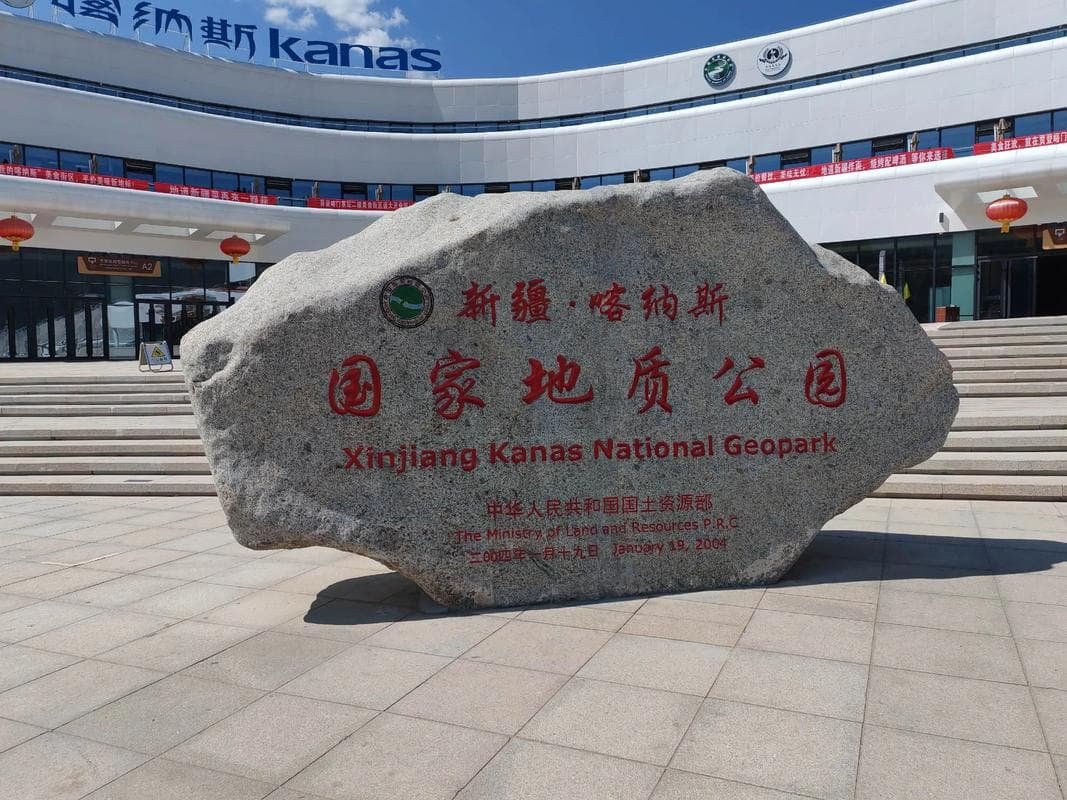
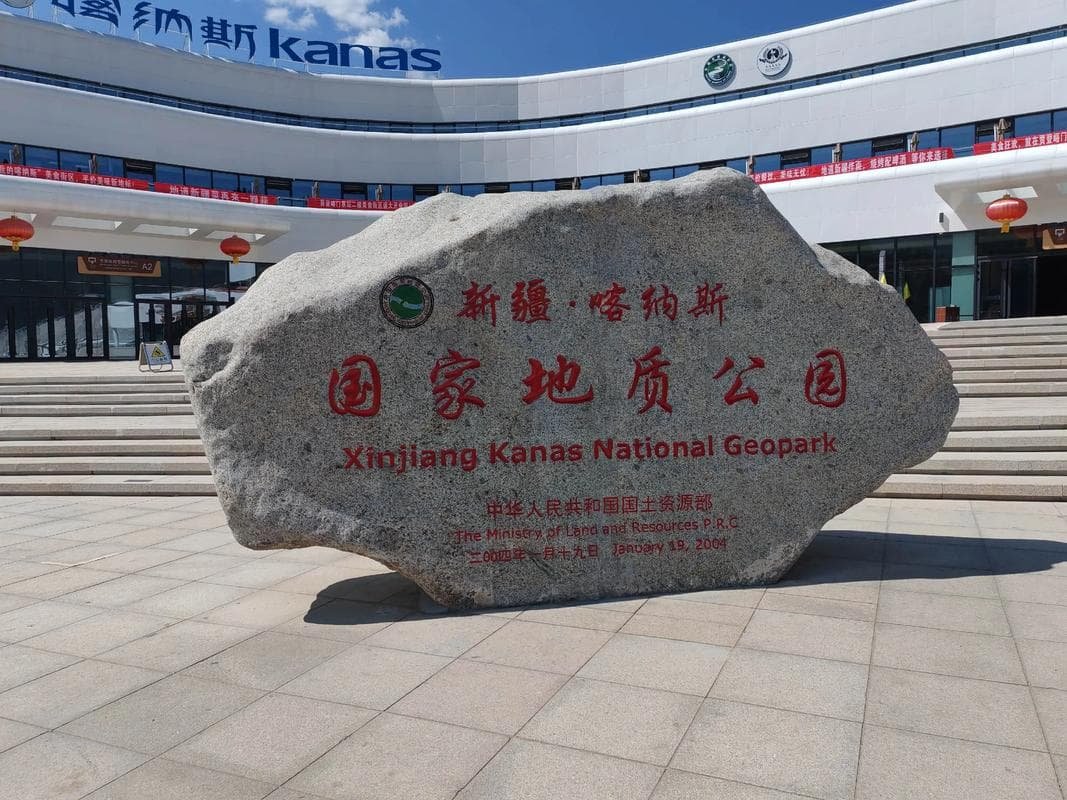
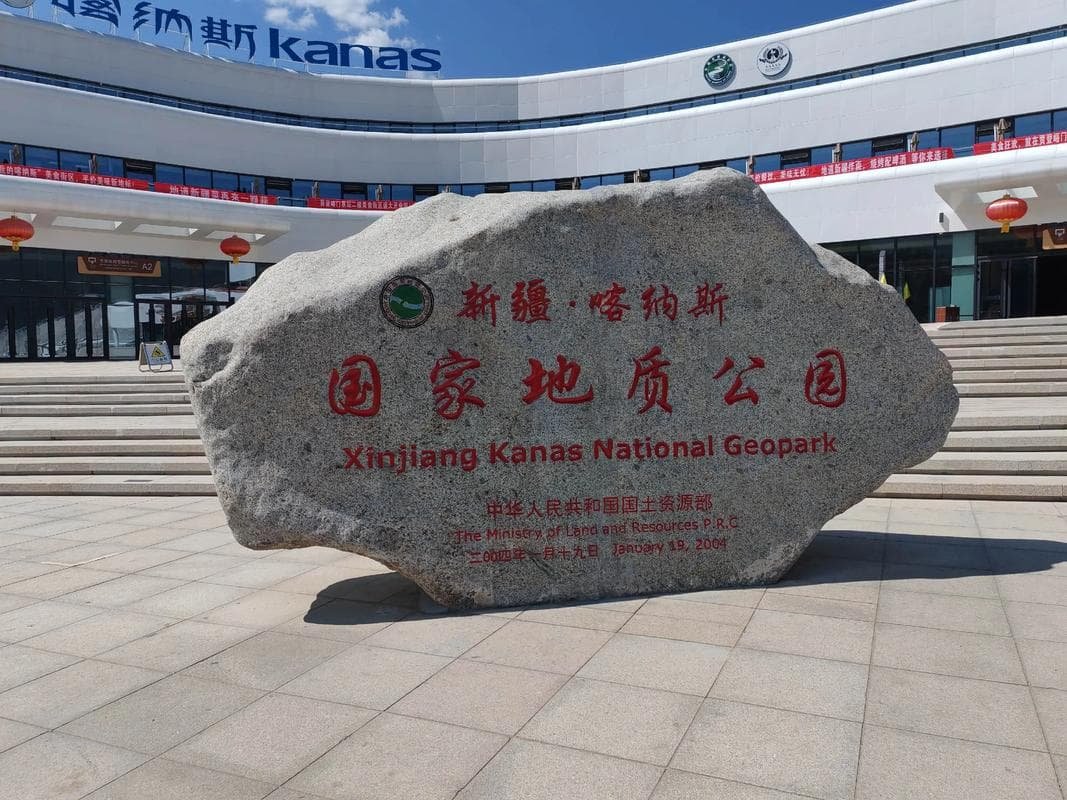
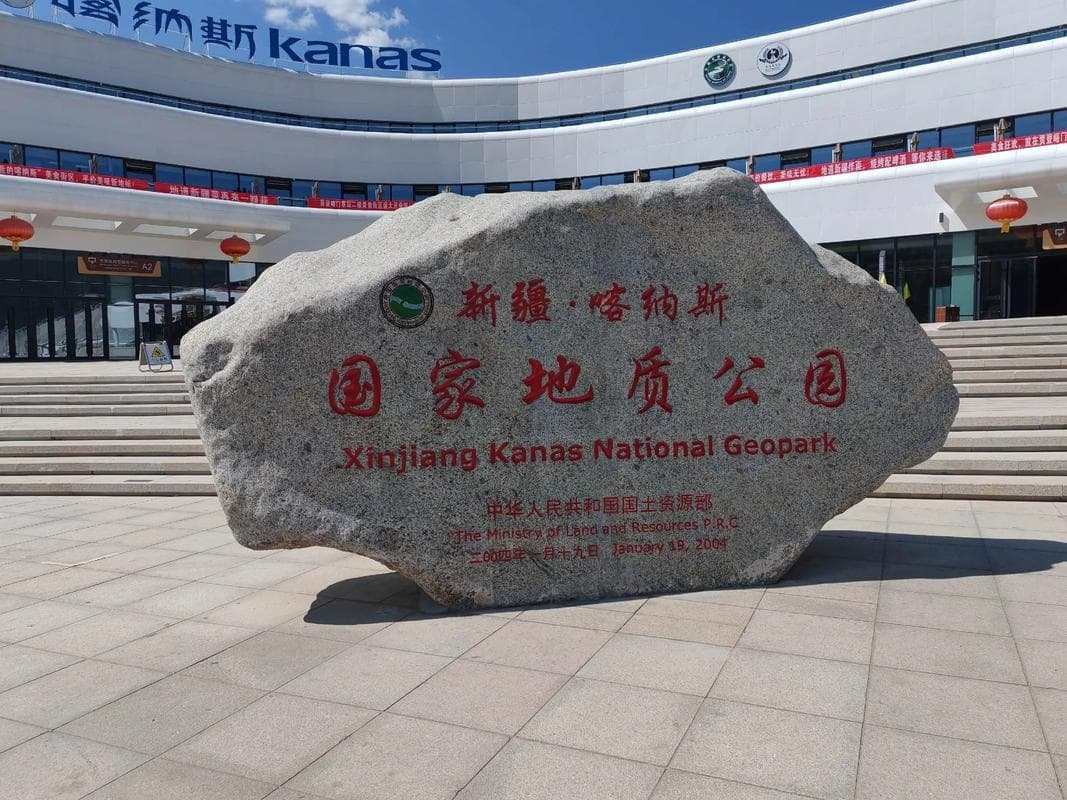
The gate timing problem bites hardest here. The Kanas scenic area shuttle system does not start early enough in some seasons to get you to the bays for actual sunrise, which is why staying inside the scenic area or at Hemu is worth the premium. Our Kanas three bays guide explains how the internal transport works.
World Devil City, Karamay
A yardang field northwest of Karamay — wind-eroded ridges of soft sedimentary rock, aligned with the prevailing wind, running for kilometres. In flat midday light it is a beige car park. Forty minutes before sunset it becomes one of the strongest landscape locations in the region.
The reason is texture. The rock is horizontally bedded and low sun rakes across the bedding lines, so each ridge picks up alternating bands of light and shadow. Shoot along the ridges rather than across them, so the eroded forms recede into the distance.
Wind is constant and it carries grit. I change lenses inside a jacket here or not at all. Sunset in June is around 21:50; the area technically closes earlier, so check with the gate on arrival and understand what time you actually need to be out. Access and layout in our World Devil City guide.
The Duku Highway
Five hundred and sixty-one kilometres of road across the Tianshan, open roughly June to mid-October, and the only location on this list where the light finds you rather than the other way round.
The southern section between Bayanbulak and Kuqa is the strongest — the Tianshan Grand Canyon country, red rock, and a road that switchbacks enough that you can shoot the road itself as a subject. Late afternoon puts sidelight on the canyon walls.
The northern section around Qiaoerma and the passes above 3,000 metres works better at dawn, when valley cloud sits below the road and you are shooting down onto it.
The practical constraint is that you cannot stop wherever you like. Much of the highway has no shoulder, and traffic in July and August is heavy. Drive it over two days, sleep at Bayanbulak or Nalati, and accept that half the good compositions will go past your window at 60 km/h. Route notes in our Duku Highway guide.
Bayanbulak Nine Bend River
The one I got wrong. A meandering river on a 2,400-metre plateau, photographed from a hillside boardwalk, and famous because at the right moment the sun appears reflected in several bends at once.
You need the sun low and slightly upstream of the meanders. In late June that is somewhere between 21:30 and 22:10. In September it is around 20:15. Get onto the hill two hours early because the shuttle stops running up and you do not want to be walking it.
Bring a windproof layer regardless of month. It is a high, open plateau and the temperature drops 10 degrees in the half hour after sunset.
Kashgar Old Town: A Different Kind of Golden Hour
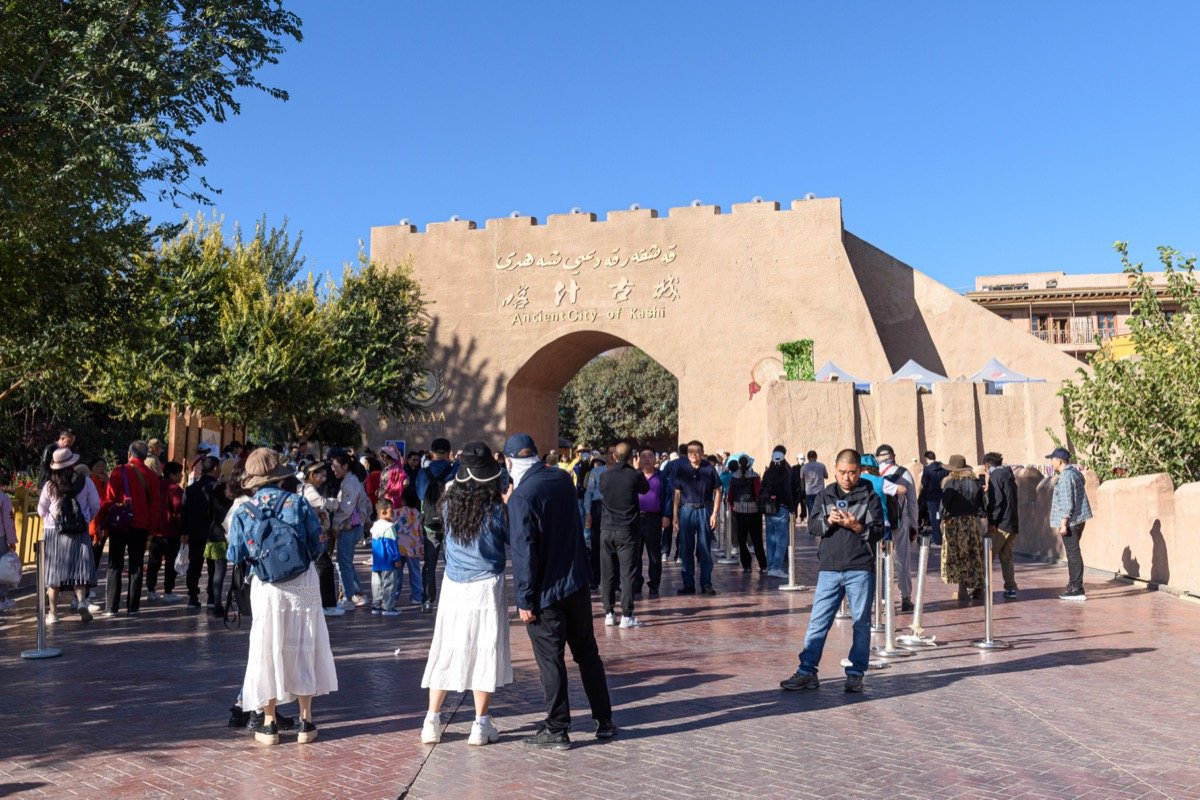
Landscape rules do not apply. In the old town the light you want is the two hours before sunset, when the sun drops low enough to enter the lanes from one end and everything becomes backlit — dust in the air, kids running, an old man’s beard rimmed with light.
Narrow lanes running roughly east to west are what you want. The restored streets around Ostangboyi and the residential lanes north of the main tourist axis both work. Shoot into the light, expose for the highlights, and accept the silhouettes.
The Id Kah square is a different problem: it is wide open and the mosque faces east, so its facade takes light in the morning and goes flat in the afternoon. Morning for the building, evening for the lanes.
Ask before photographing people. A raised camera and a questioning look is understood everywhere and I get refused perhaps one time in ten. Tip the musicians and the craftsmen whose photos you take — ¥10 to ¥20 is normal and it is not begging, it is a transaction. Lane-by-lane detail in our Kashgar Old Town guide.
Six More Worth Your Time
Sayram Lake, east shore. Sunrise over water at 2,073 metres with snow peaks catching first light on the far side. The road circles the lake so you can position freely.
Flaming Mountains, Turpan. Sunset only. The gullies on the south face fill with shadow and the ridge glows. Shoot from a distance with a long lens; up close the forms collapse.
Taklamakan Desert Highway. Dunes east of Luntai at dawn. Ripple patterns on the windward faces need the sun within 15 degrees of the horizon to read at all.
Tarim poplar forest, mid-October. Backlit yellow leaves at 08:00. A long lens compresses the trunks into a wall.
Kalajun and Nalati grasslands. Early June, late afternoon, when low sun models the folds in the hills. Flat light kills grassland completely.
Wucaitan, Burqin. Sunset over the Irtysh, eroded clay in red and green. It faces west; there is no morning version.
Kit That Earns Its Weight
A polariser does more here than anywhere else I have shot. High-altitude skies, water surfaces at Karakul and Sayram, wet leaves in autumn. It lives on my lens from April to October.
A three-stop graduated ND for the lake sunrises, where the sky-to-water range at dawn exceeds what a single frame handles cleanly.
A tripod, unavoidably. Dawn at Karakul and dusk at Bayanbulak are both below hand-holding thresholds, and the wind means you want something with actual mass rather than the lightest carbon thing you own.
Spare batteries, kept warm. Cold in the Altai in autumn takes maybe 30 percent off a battery’s life and winter takes far more.
A blower and a microfibre. Dust at the yardang sites and along the desert highway gets into everything.
On drones: rules in Xinjiang are specific and enforced, and there are large areas where flying is not permitted. Check the current situation for each location rather than assuming, and do not fly near border zones, airports or scenic area crowds.
A Ten-Day Photography Route
Days one to three: Kashgar. Old town lanes on two evenings, Id Kah in the morning, Sunday bazaar if the day falls right.
Days four to five: Karakoram Highway to Karakul. Two nights at altitude gives you two dawn attempts, which roughly doubles your reflection odds.
Day six: fly Kashgar to Urumqi, drive to Karamay.
Day seven: World Devil City at sunset.
Days eight to ten: north to Burqin, Wucaitan at sunset, then Kanas and Hemu with two dawns.
Best dates: 18 to 28 September. Autumn colour in the Altai, stable weather on the Pamirs, and sunset early enough that you get to eat dinner.
The Habit That Matters Most
Scout the evening before. Every location on this page has a spot that is 200 metres from where the coach stops and considerably better, and you will not find it at 06:00 in the dark with a headtorch. I walk the ground the previous afternoon, mark two positions, and pick between them based on cloud.
The other habit: stay after the sun goes. Blue hour in Xinjiang runs long because of the latitude, and the twenty minutes after everyone else has walked back to the car park have produced more of my keepers than the sunset itself.
I went back to Bayanbulak the following summer and got there at 20:00 with two hours to spare, a flask, and a windproof I should have owned the first time. The sun landed in four bends of the river at 21:58. Worth three hours of standing about, and worth the wasted evening that taught me the clock.