
Walking With Ships of the Desert: Camel Trekking on Xinjiang’s Sand Seas
Two Ways to Ride a Ship of the Desert
The first time a Bactrian camel folded its legs under me I thought the whole animal was tipping over. It wasn’t. The two humps slid me forward, the beast grunted, and then I was sitting three metres above the sand with my knees somewhere near my ears. That was a one-hour dune ride outside Shanshan, and I came away convinced I had seen the desert. I hadn’t. The real education came two years later, on a five-day crossing of the Taklamakan with a Kazakh guide whose family had walked those dunes for three generations.
There are two completely different things people mean when they say camel trekking in Xinjiang, and mixing them up will wreck your trip. One is the short, tame ride you buy at a desert camp: an hour or two on a lead line, a few photos, back to the yurt for tea. The other is a genuine multi-day expedition across living sand, where the camel is not a photo prop but your only transport, your luggage carrier and your water truck. Both are worth doing. They are not the same experience, and they should not be booked the same way.
I have done both, and this is what I wish someone had told me before I paid for either.
Short Rides From the Kumtagh Dunes
Kumtagh sits right at the edge of Shanshan, a town about 90 km southeast of Turpan. What makes it unusual is that the sand literally reaches the edge of the oasis, so you can stand in a date grove and watch the dunes begin twenty paces away. The camps here are built for the day-tripper. You arrive, you are matched with an animal, a handler walks beside you, and off you go.
A standard ride runs 60 to 90 minutes. You do not steer. The camel follows a worn loop through the lower dunes, maybe 3 to 5 km total, at a pace that would shame a slow walk. Children love it. Adults who have never been close to a two-ton animal find it unforgettable. I paid ¥120 for the hour during an April visit, and the camps near Turpan quoted me ¥150 in October when the weather was perfect. Sunset rides cost more, usually ¥180 to ¥220, because everyone wants the light.
What a one-hour dune ride actually feels like
The saddle is padded but the gait is a slow rocking sway, and first-timers often get stiff thighs from gripping. You sit high enough that the wind off the sand is cooler than you expect, and the silence once the engine noise of the car park fades is the real product. Bring sunglasses. The glare off pale sand at midday is brutal, and a ¥120 ride becomes a ¥120 squint if you forget them.
The handlers speak little English, but they will pose your camera, adjust the saddle, and make sure you get the shot of the camel against the ridgeline. Tipping is not expected but a ¥10 note is appreciated. These rides are safe, predictable, and a good way to test whether you actually like being on a camel before you commit to something longer.
The camps near Shanshan and Turpan
Most camps operate from March through November, closing in deep winter when nighttime temperatures drop below minus 15 and the wind turns vicious. The better ones have yurts, a toilet block, and hot water for tea. The rough ones have a tethered line of camels and a man with a thermos. Ask to see the animal before you mount. A healthy camel has clear eyes, a dry nose, and moves without limping. I once refused a ride because the camel I was offered favoured its left front leg, and the handler shrugged and switched me to another without argument.
For the self-drive traveller, Kumtagh is easy. You can reach Shanshan from Turpan in just over an hour on good road, and the desert edge is signed. If you are building a route around the region, our guide to the Kumtagh desert covers where to park, where the camps sit, and which entrance saves you the longest walk in the heat.
Crossing the Taklamakan With a Kazakh Guide
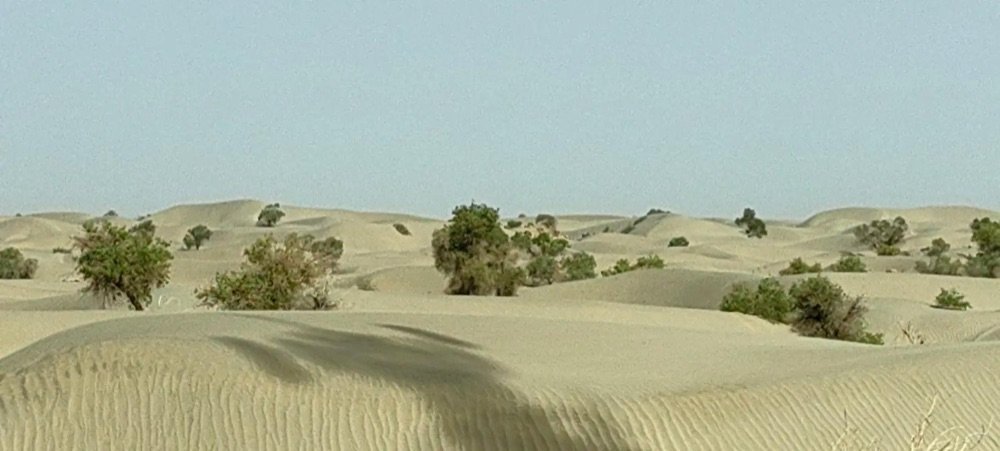
The Taklamakan is the second-largest shifting-sand desert on earth, roughly 1,000 km long and 400 km wide, and its name in the old Uyghur tongue is said to mean you go in and you do not come out. That is mythology, but the place earns its reputation. A multi-day camel trek here is not a ride. It is a small expedition, and the Kazakhs who guide it treat it with the seriousness it deserves.
I joined a five-day crossing that began at a village on the desert’s northern fringe and pushed south toward a line of dry riverbeds. We covered about 22 to 28 km a day. That sounds like nothing until you remember the camels move at 4 to 5 km an hour on soft sand, so we were in the saddle five to six hours daily, plus breaks. A fit walker covers more on foot, but a walker carries no water, no tent, and no food for a week. The camels did.
My guide, Askat, ran the day like clockwork. We moved at first light around 6:30, rested through the worst heat from noon to 3, and rode again until 6. Temperatures on the sand hit 38 degrees in the afternoon and fell to around 12 at night in early October. In spring, April and May, the swing is gentler: highs near 28, nights near 8. Either way you sleep cold and ride hot.
Hours, kilometres and water
Water is the whole game. We each carried three litres of drinking water per day, and the camels hauled another forty litres between them in slung jerry cans for cooking and topping up. You do not drink from anything you find. Every pool in the Taklamakan is either brackish or a mirage. Askat measured our intake like a chemist. On the long middle day we walked 30 km and I finished my three litres with a mouthful to spare.
The distances are honest but the sand lies. A ridge that looks two kilometres away can take an hour to reach because the camel sinks to its ankle at every stride. Plan your daily km around the animal, not your fitness. A good guide keeps days to 25 km or less on deep sand, pushing to 35 only where the surface is packed near old river courses.
What you carry and what the camels carry
You carry a daypack with water, a windproof layer, sunscreen, and a camera. The camels carry everything else: tents, food, fuel, the guide’s gear, and your duffel. A loaded trekking camel takes 120 to 160 kg, and we used two animals for three people plus the guide’s own mount. That load math matters. If a camp or operator proposes one camel for two riders plus all luggage on a five-day trip, walk away. The animal will be worked to exhaustion and you will feel it in the sway.
For background on the country itself, our Taklamakan desert travel guide explains the geography, the old Silk Road towns buried at its edges, and which approaches are realistic for a foreign traveller without a permit headache.
What It Costs
The short rides are simple. Expect ¥120 to ¥220 for an hour depending on season and time of day, with sunset at the top of that range. Multi-day treks are a different budget entirely and the price is mostly the guide and the animals, not the sand.
A private Kazakh-guided Taklamakan crossing ran me about ¥900 per person per day, all in, for a small group of three. That covered the camels, the handler, all food, tents, and water. Solo travellers get quoted closer to ¥1,400 a day because the fixed cost of the animals does not shrink. The cheaper listings you see online, around ¥400 a day, are usually group departures with eight strangers and shared tents, and they cut corners on water and camel rest. I would not book the cheapest option for a place that can kill you through simple dehydration.
Cash rules out there. Carry ¥200 notes and smaller. Mobile payment works in Turpan and Shanshan but the moment you leave the oasis it does not, and your guide will expect settlement in paper before the camels are loaded.
Booking Without Getting Burned
The single most useful thing I learned was to book the long trek through a named operator or a personal recommendation, never a random WeChat post promising camels at the edge of the sand. Ask three questions and judge the answers. How many camels per person of luggage. How much water per person per day. What is the contingency if a camel goes lame forty km from the road.
A serious guide answers without hesitation: two camels minimum for a loaded three-day trip, three litres per person per day drinking plus group reserves, and a satellite phone or a pre-arranged pickup point with a vehicle on standby. If the person cannot tell you the water plan, do not go. The desert does not argue.
For the short rides you can mostly show up, but in October the good camps near Turpan fill by mid-morning. I now book the camp the night before through our desert camp self-drive guide, which lists operators I have actually used and the ones I would avoid. Self-drive matters here because the camps are rarely on a bus route and a rental car gives you the freedom to leave when the heat peaks.
If your interest in the animal runs deeper than the saddle, our wild Bactrian camel guide for the Lop Nur region covers the genuinely wild herds that survive out where almost no tourist ever goes, and why the domesticated trekking camel is a different animal altogether.
Temperatures and the Months That Matter
Xinjiang’s deserts have a narrow window that is actually pleasant, and two of them a year. The best months are April to May in spring and September to October in autumn. I would not trek the Taklamakan in June, July, or August for any price. Midday sand temperatures pass 45 degrees, the glare cooks your forearms through a shirt, and the camel suffers as much as you do.
Winter is the other extreme. December through February brings nighttime lows near minus 18, and while the daytime can be sunny and still, a multi-day trip means sleeping in that cold with no trees and no shelter from a wind that cuts straight through a tent. The short Kumtagh rides still run on clear winter days, but I found an hour was plenty when my fingers went numb at the reins.
Spring has the advantage of wildflowers along the desert edge and milder heat, but also the occasional dust storm rolling off the Tarim basin, and those can shut a trek for a day. Autumn is my pick. The air is dry, the light is gold, the nights are crisp but survivable, and the camels are fat from summer grazing. I rode the Taklamakan in the first week of October and would do it again in exactly that window.
Safety on the Sand
The desert is boring until it isn’t, and then it is serious. The rules that kept me safe were dull and absolute. Tell someone on the outside your route and your return day before you leave the oasis. Carry a satellite messenger even if your guide has a phone, because two devices fail less often than one. Drink on a schedule, not on thirst, because by the time you are thirsty you are already behind. Cover every inch of skin at midday; a sunburn on a camel saddle day is its own special punishment.
Watch the camel as much as the horizon. A calm animal that suddenly refuses to kneel, or that swings its head and vocalises, is reading something you cannot see, often a sudden wind shift or an uneasy scent. Askat taught me to read the lead camel’s ears the way a sailor reads a flag. When the ears pinned back, we stopped and waited. Three times that saved us from riding into a wall of blown sand we could not yet feel.
Do not wander off alone beyond sight of the group, even for a photograph. The dunes all look alike, the light flattens distance, and a ten-minute walk can become a lost afternoon. I stayed within a hundred metres of the animals at all times, and on the open sand that was the only landmark that did not move.
A Note on the Animals Themselves
The camels that carry you are Bactrian, two humps, and most trekking animals in Xinjiang are domesticated and patient to a fault. They are not pets. They bite, they spit a foul green cud when annoyed, and a kicked leg from a resting camel will drop you. Give them space at the front, never walk behind a loaded animal, and let the handler do the loading. I learned the spit the hard way on day one and kept a respectful two metres ever after.
The Kazakh relationship with these animals is older than the Silk Road and it shows. Askat spoke to his camels by name, fed them before himself at every stop, and never struck one. A guide who beats his animals is a guide who will cut the same corner with your safety. Choose the operator by how the camels look at the end of the trip. Ours finished the five days with weight still on their ribs and a spring in the walk. That, more than any brochure, told me the trek had been run right.
If you want the fuller picture of the nomadic life these guides come from, our Kazakh nomadic life and yurt stay guide goes into the herding culture, the horse treks, and what a visitor can reasonably expect from a few days inside that world. The camel is only one thread in it.
I left the Taklamakan with sand in places sand should not be and a respect for the animal that surprised me. The one-hour ride at Kumtagh is a postcard. The crossing is something else, a slow conversation with distance and heat and a creature that has been crossing this sand longer than any of us. Do the postcard if you are passing through. Save the crossing for when you mean it.