Hot-Air Balloons and Paragliding: Aerial Adventures in Xinjiang
The first time I went up over Xinjiang, I did it sideways. A paraglider pilot at the edge of a Tianshan meadow ran a few steps, the wing filled, and suddenly the whole valley dropped away underneath us like a green tablecloth someone had yanked flat. I had spent two weeks driving the region at ground level, and I had no idea how different it reads from the air. The grasslands are not flat. They are folded, stitched with rivers, and patched with the white of distant snow peaks. If you have the stomach and the season lines up, an aerial trip is the best single upgrade you can add to a Xinjiang itinerary.
This guide covers the two experiences that are actually bookable for visitors: hot-air balloon flights over the Bayinbuluke grassland, and paragliding off the ridges of the Tianshan and the Ili highlands. I have done the balloon twice and tandem paragliding once, and I have chased both across two summers of false starts. The window is short, the weather is bossy, and the payoff is enormous. Here is how to make it happen without wasting your trip.
Bayinbuluke balloon flights over the grassland
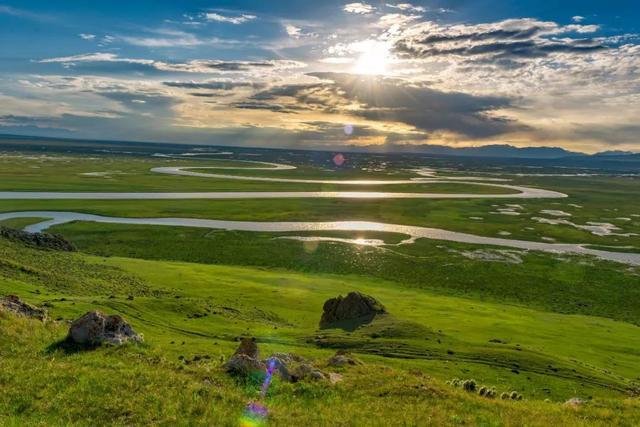
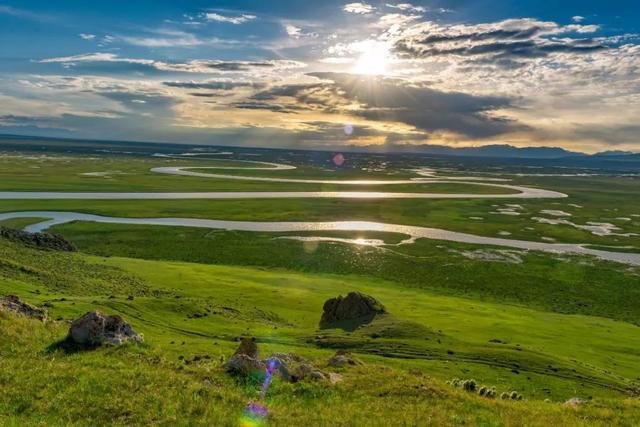
The balloon ride at the Bayinbuluke grassland is the headline act, and for good reason. Bayinbuluke is a high alpine meadow at about two thousand five hundred meters, fed by the winding Kaidu River, and from the basket you see the river braid itself into loops that look drawn with a compass. On my June flight we lifted at 5:40 a.m. from a launch field near the wetland edge and drifted for roughly an hour, never higher than four hundred meters above the grass. The silence up there, broken only by the burner’s cough, is its own kind of tourism.
What makes Bayinbuluke special is the scale. The meadow runs for kilometers with no trees to break the sightline, so the balloon feels like it is floating over a green ocean. You will see herds of brown yak and white sheep as tiny commas far below, and if the light is right, the famous nine-turn stretch of the Kaidu catches the sun and flashes silver. I have a photo from that morning I still use as a desktop background, taken at the moment the burner lit and the whole basket tipped toward the water.
Be warned that the flight is weather-dependent in the strict sense. The operators fly only in calm, cold morning air, and on two of my four attempted mornings the wind scrubbed the launch by 5 a.m. You get a refund or a rebook, but you do not get your missed sunrise back, so build a buffer day into your Bayinbuluke stay rather than treating the balloon as a sure thing on a tight schedule.
Paragliding off Tianshan ridges
Tandem paragliding is newer here and more scattered, but it is real and growing. The most reliable spots I found were near the grassy shoulders above the Ili valleys and at a couple of launch ridges on the northern Tianshan where local clubs run summer operations. The setup is standard: a certified pilot, a seated harness, and a run off a slope into rising air. My own flight lasted about eighteen minutes and gained maybe three hundred meters of ridge before we spiraled down to a pasture landing.
The thrill is different from the balloon. A paraglider moves. You bank, you dive a little, you feel the air tip the wing, and the mountains come at you in a way a basket never allows. For the Nalati grassland and the nearby Sayram Lake, which sit at the western end of the Tianshan, the ridge launches give you a view that combines meadow, forest line, and cold blue water in a single arc. I landed near Nalati with my legs wobbly and my camera full.
Paragliding here is not a daily carnival ride. It runs through the warm months when thermals are strong, tends to cluster on weekends, and depends entirely on a pilot being free and the wind being kind. Treat it as a bonus you might catch, not a fixed appointment. If you are serious, ask at your guesthouse a few days ahead so the club can fit you into a good-weather window rather than a forced one.
Booking, season and cost
Timing is everything. The balloon at Bayinbuluke operates roughly from late May through early October, with the sweet spot being June and September, when mornings are cold, clear, and windless. July and August fly too, but the meadow gets busy and the midday heat makes the calm window shorter. Paragliding runs a similar band, June through September, with the best lift in the warm afternoons of July and August rather than the cold dawns the balloon wants.
Costs are reasonable by international standards but high for China’s west. The Bayinbuluke balloon ran me about nine hundred eighty yuan for the standard flight, with a longer premium slot closer to thirteen hundred. Tandem paragliding was in the range of six hundred to nine hundred yuan depending on flight time and the club, and some operators charged extra to hand over the raw GoPro footage. None of this includes park entry, which at Bayinbuluke is a separate ticket of around sixty five yuan plus the shuttle.
Book through your accommodation or a registered operator rather than a stranger at the car park. I learned this the hard way near Sayram when a man with a van quoted half price and then had no balloon. The legitimate operators are posted at the scenic-area desks and through the better hotels in Bayinbuluke and Yining. Pay a deposit, get a receipt with the company name, and confirm the weather call the night before. A real operator will cancel freely and refund, because they lose money on a grounded morning too.
Safety and altitude considerations
Altitude is the quiet factor most visitors underestimate. Bayinbuluke sits near two thousand five hundred meters, and Sayram is even higher at over two thousand meters. If you have just arrived from Urumqi or the plains, give yourself a day to adjust before you float. I felt a mild breathlessness on my first balloon morning that had nothing to do with the height of the basket and everything to do with the ground being thin up there.
For the balloon, the risks are low and the operators are careful. You stand in a partitioned basket, the pilot handles everything, and the only real danger is the landing, which can be a gentle tip into the grass or a slightly harder drag if the wind picks up. Wear long trousers and closed shoes, not sandals, because the basket edges and the landing field are rough. Listen when they tell you to keep your head down on touchdown. I ignored that once and clipped a knee on the rim.
Paragliding asks more of you. Check that the pilot shows a valid tandem license and that the gear is recent, and do not be shy about asking. The reputable clubs in Ili and at the Tianshan sites are happy to show paperwork. Tell the pilot frankly if you have back trouble, a fear of heights that turns to panic, or any condition that the harness might aggravate. A good pilot will talk you through the launch so the few running steps feel natural rather than frightening. The one time I felt unsafe was with an operator who rushed the briefing, and I should have walked away.
Children, pregnant travelers, and anyone with a heart or ear-pressure condition should skip the flights. The balloon is calm but cold and high, and paragliding involves sudden pressure changes on the way down. None of this is meant to scare you off. Thousands ride these every season without a problem. The point is to choose a real operator, respect the altitude, and not let excitement talk you past a red flag.
One more practical word for foreign visitors. Check that your travel insurance actually covers recreational flying before you book, because some cheap policies exclude any aerial activity above a certain height. I carry a plan that lists ballooning and tandem paragliding explicitly, and it cost me almost nothing extra but saved a real worry. Keep the operator’s receipt and the pilot’s license number in your phone, and you will be fine if anything ever needs a claim.
Combining flights with photography
If you care about images, the balloon is the gentler shoot and the better one for landscapes. You have both hands free, the movement is slow, and the low angle along the grass is gorgeous. I shot in burst mode during the first ten minutes, before the sun climbed and flattened the light, and those frames are the keepers. A neck strap is essential. You do not want to fumble a phone over the side at three hundred meters.
Paragliding gives wilder, more personal shots: the wing, the pilot’s hands, the ridge rushing past. But you are strapped in and one-handed at best, so a small action camera on a chest or helmet mount beats a big lens every time. Ask the pilot before you mount anything, because loose gear near the lines is a hazard. My best paraglider photo was a chest-cam still of the Nalati tree line curling away below us, taken exactly when we rolled into the turn.
Plan your air days around the ground you came to see. I paired the Bayinbuluke balloon with a later drive along the Xinjiang photography routes that run the southern Tianshan, so the morning float set up the afternoon light on the same hills. Up north, a Sayram balloon or ridge flight folds neatly into a loop that also takes in the lake shore and the Kanas Lake forests if your route runs that far. The air shows you the shape of the land. The roads then let you walk it.
Bring layers even in summer. At launch the grass is cold and the basket is open to the wind, so I wore a fleece and a light wind shell over a t-shirt and was comfortable. The paraglider harness adds its own chill once you are up, and the landing field is often wet with morning dew. Pack a thin pair of gloves if you want steady hands for the camera. Small things, but they are the difference between enjoying the silence and shivering through it.
My honest advice after three summers of trying: treat the flight as a gift the weather gives you, not a box to tick. The mornings I let go of the schedule and simply waited for a clear dawn at Bayinbuluke were the mornings I actually flew, and they stay with me more than any fixed plan. Xinjiang is enormous from the road. From the air it is something else entirely, a green and white and blue puzzle that finally makes sense once you are above it.