
The Pallas’s Cat of Xinjiang: Searching for the Grumpiest Cat in the Tianshan and Pamir
Meet the manul
Last March, somewhere around 2,800 meters on the southern flanks of the Tianshan, I pulled my rented 4×4 over to the shoulder and switched off the engine. A marmot was scolding something near a pile of stones, and our guide, a quiet man from a village outside Urumqi, was staring at the slope with the particular stillness of someone who has seen something worth stopping for. He pointed to a grey smudge on a boulder and whispered a single word: “Manul.”
I held my binoculars up and stared for a full minute before I understood that the rock was breathing. The Pallas’s cat is roughly the size of a domestic tabby but built nothing like one. Short legs, a round face, and a coat so dense it looks like a small, flat cushion of fur, and on top of all that it wears the most disgruntled expression in the entire cat family. I have met angry badgers with friendlier faces.
Nobody drives 1,200 km across Xinjiang hoping to tick the manul off a list. You go for the wide brown steppe, the snow lines on the peaks, and the particular silence that high country keeps, and the cat finds you only if the mountain decides to be generous. I was lucky for about ninety seconds. Then the cat folded itself between two boulders and was gone, the way these animals always are, leaving nothing behind but a faint paw print in the frost.
What stays with me is the expression. Scientists call it Otocolobus manul, a name that roughly means ugly-eared, which feels unfair to an animal that is only ugly if you expect a cat to look pleased about existence. Travellers and locals along the Pamir simply call it the grumpiest cat in Central Asia, and after watching one flat-refuse to acknowledge my presence, I am not inclined to argue.
I had prepared badly for the encounter, if preparation means anything. I had read that the manul hunts pikas and voles, that it dens in rock fissures, that it ranges from Iran across the steppe to western China, and none of those facts prepared me for the small shock of seeing one breathe. The guide laughed at my face later and said most first-timers look exactly like that.
Where it lives in Xinjiang
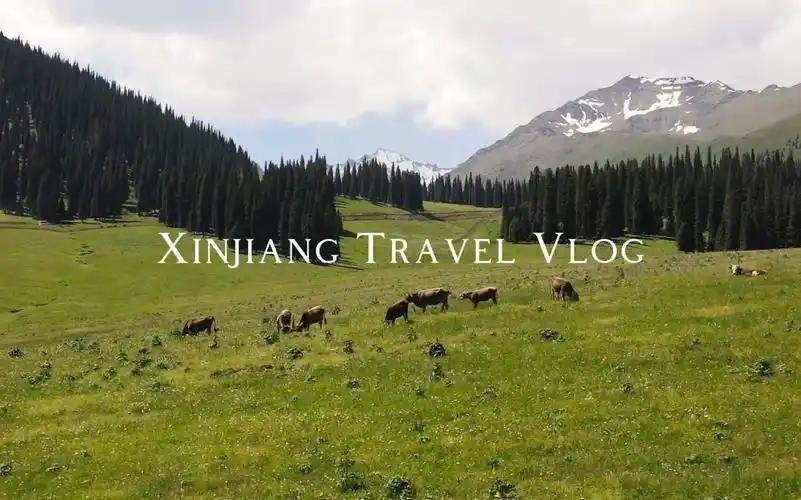
The manul prefers cold, open country with just enough cover to disappear into: rocky steppe, alpine meadows above 2,500 meters, and the scrubby valleys where the grass finally gives up and the stones begin. In Xinjiang that description points to two great mountain systems. The Tianshan runs east to west through the heart of the region, a wet, green spine that feeds the cities, and the Pamir rises in the far southwest, a high plateau near the borders with Pakistan, Afghanistan, and Tajikistan.
I have driven through the right kind of habitat on the long haul south from Urumqi toward the Pamir Highway, a route that climbs past Sayram Lake and over the passes toward Taxkorgan. The land turns lean and silver up there, the way high country does when it runs out of things to grow. Junipers thin to nothing, the wind picks up a hard edge that never quite leaves your jacket, and the only movement for kilometers is an occasional herd of grazing sheep or a raptor riding the thermals beneath the white cone of Muztagh Ata.
The Pamir rim
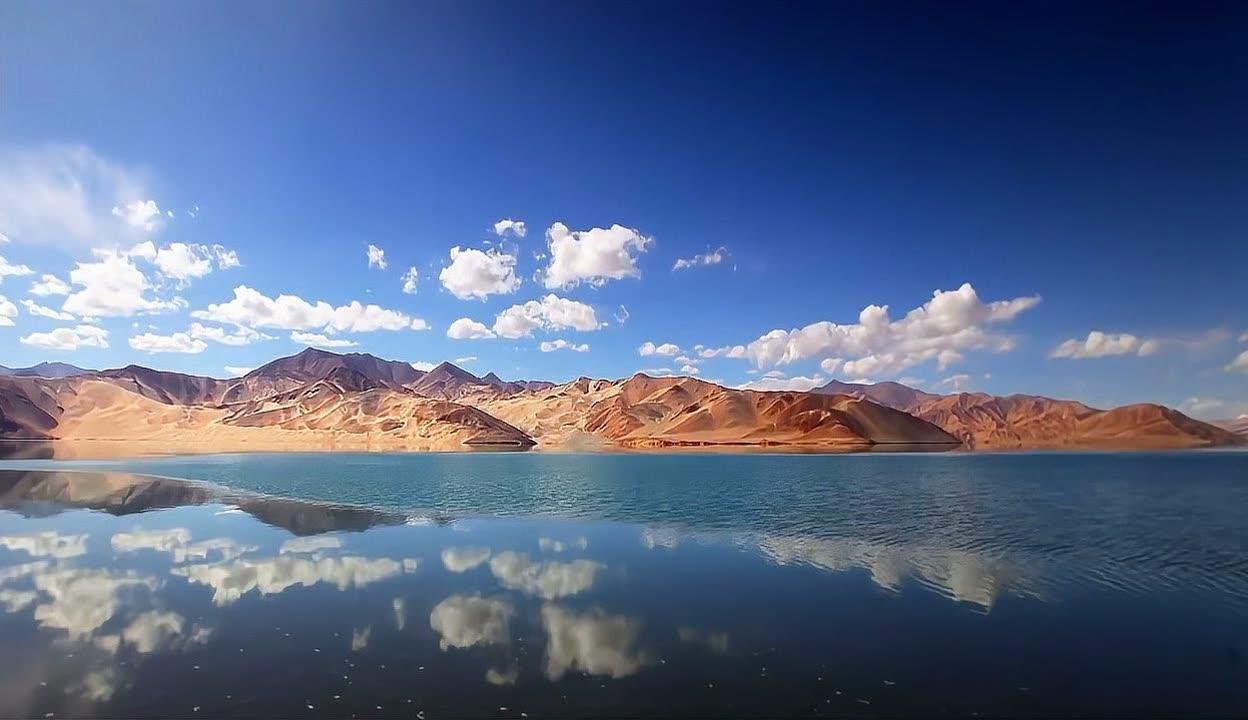
Near Karakul Lake, at about 3,600 meters beneath Muztagh Ata, the manul shares the high plateau with the snow leopard and with the wild ibex and argali that both cats quietly hunt. This is the roof of the world, and the manul is one of the few small predators that can actually make a living this high. The air holds little moisture, the winters drop well past minus twenty, and the cat’s dense fur is its entire survival plan, a personal insulation that lets it sit still on a freezing rock for hours.
The Pamir rim is also where the manul’s world overlaps most tightly with human life. Herders move yaks and sheep across the same meadows in summer, and the cats learn to hunt the rodents that follow the livestock. It is a fragile arrangement. Too many dogs, too much grazing pressure, and the pika population collapses, and the manul with it.
The Tianshan corridors
Back in the Tianshan, the suitable ground is more broken, cut by winter pasture and by the occasional mining road that scars the lower slopes. I spent two nights camped near a quiet canyon about 90 km west of the Dushanzi-Kuqa highway, the famous road that scissors through the mountains in a single dramatic day of driving. Even there, where the steppe looked empty enough to be mistaken for barren, a researcher later told me their camera traps had filmed a male on the same ridge three nights running, moving along a line only a cat would choose.
What surprised me was how close the habitat sits to places people actually go. The manul does not need wilderness in the postcard sense. It needs rocks, rodents, and to be left alone, and those three things turn up surprisingly near the main roads if you know the elevation and the aspect. North-facing slopes hold snow and voles longer into spring, and that is where you look first.
Why it is so hard to see
The manul is not rare in the way a giant panda is rare, with a population counted in the low thousands and a face on every poster. It is rare in the way a rumor is rare: you hear about it constantly, from guides and rangers and the backs of tourism brochures, and you never actually meet it. Part of that is simple biology. The cat is crepuscular and largely nocturnal, most active at dawn and dusk when the light is too soft and the air too cold for most travellers to be standing on a ridge with binoculars.
Part of it is pure behavior. A manul will lie flat against a sun-warmed rock and simply stop moving, and its coat, a mix of grey, tan, and faint bands, blends so perfectly with the stone that your eye slides right past it. On the Pamir I watched one through a spotting scope for ten minutes before it turned its head, and the small turn of the skull was the only thing that gave it away. They are also famously unbothered by cars, which sounds helpful until you realize they are equally unbothered by you and will not perform, pose, or acknowledge the camera in any satisfying way.
The distances work against you as well. Good habitat sits far from anywhere worth calling a town. To reach the western Tianshan sites from Urumqi is a 500 km drive each way on roads that climb and fall for hours, and the Pamir outposts are another 1,000 km beyond that, two long days of driving through checkpoints and passes. Most visitors simply pass through the edges of manul country on the way to somewhere else, and the cat stays deep in the unvisited middle where the roads do not go.
Then there is the season problem. Spring, when the cats are raising kittens, is also when the high passes are still buried in snow and the Pamir is effectively closed to casual travel. By the time the roads open in June, the kittens are hidden in dens you will never find, and by October the first snows have driven everyone back down. The window for even hoping is narrow.
Camera-trap and research tourism
Here is the practical heart of the matter. If you want a genuine manul experience without disturbing the animal, the best route is through the people who study it. Several Chinese universities and the regional forestry stations run camera-trap grids across the Tianshan and the Pamir, and a few of those teams welcome visitors at their field bases during the summer season, roughly June through September, when the access roads are clear and the researchers are actually in residence.
I arranged a single day at a small research station about 60 km off the main Pamir road, reached by a side track that chewed through my fuel and my suspension in equal measure. For a guiding fee of around ¥200 the ranger showed me how the infrared cameras work, how they strap them to rocks at exactly the height a cat will pass, and how the memory cards get pulled and checked every two weeks by a rotation of students from Urumqi.
We scrolled through weeks of footage together on a battered laptop. There were red foxes picking their way along a drainage, there were mountain hares turning white for the coming winter, and then, near the end of the file, a manul walked straight across the frame at 4:12 in the morning, tail held low, expression exactly as unimpressed as the one I had seen on the ridge. The ranger paused the video and grinned. That, he said, is why we sit up here.
For me that was the real sighting. Not a wild glimpse on a windswept ridge, but a quiet, honest look at an animal living its secret life without any idea it was being watched. The researcher explained that tourism done this way, where you watch the record instead of the living creature, costs the cat nothing at all. No human scent on the rocks, no headlights in its hunting hour, no engine noise at the wrong moment of the night.
These stations also plug into a much broader conservation effort. The same grids that film manuls also document the lynx moving through the higher forest edge, and the pooled data feeds directly into protection plans for the whole plateau ecosystem. If you are self-driving, ask at the county forestry office in Taxkorgan about which bases accept visitors that month, because the access rules shift with the season, the snow line, and whatever the provincial permit system happens to require that year.
The zoo and rescue angle
Not every manul story ends on a mountain. Some end in Urumqi, at the regional zoo where a small breeding and rescue program keeps a handful of these cats in enclosures built to mimic the cold steppe they came from. I stopped there on my way out of the region, a little reluctantly, because a zoo after the Pamir felt like trading a cathedral for a postcard, and it was the first time I had seen a manul up close, close enough to count the black rings on its tail and the pale fur beneath its eyes.
The keepers were candid about how hard the work is. Manuls do not breed easily in captivity, they are prone to stress that can turn fatal, and a cat that spends its wild life pretending to be a rock does not thrive under bright lights and the noise of school groups. What the program does well is education and rescue in equal measure: injured wild cats that cannot return to the plateau get a safe enclosure for life, and visiting children from Urumqi learn why the empty-looking steppe thirty hours away actually matters.
For a foreign traveller short on time, or one arriving in deep winter when the mountains are closed, the zoo is the reliable option. You will not get the wild thrill of a ridge-top glimpse, but you will get the face, the fur, and a real conversation with people who have devoted years to a cat almost nobody sees. I left Urumqi convinced that the rescue work and the camera-trap work are two halves of the same quiet effort, one keeping the individuals alive and the other keeping the wild place worth returning to.
Photographing from a distance
If you do get a wild sighting, the rule is simple and thoroughly unglamorous: stay far, stay quiet, leave. A manul stressed by a close approach will abandon a den site, and in this unforgiving terrain an abandoned den can mean lost kittens and a failed season. I keep a 400mm lens and a small spotting scope in the car at all times up there, and I have learned to be content with a blurry grey shape at 80 meters rather than a crisp portrait taken at 8.
Light is the real enemy of the photographer. The cat is most active at the blue hours when even good cameras struggle to find a clean exposure, so I shoot in short bursts and simply accept the grain. A tripod helps on the Pamir wind, which can shake a long lens into nonsense, and a neutral expression from the photographer helps the cat far more than any piece of gear ever will. Never use a call to draw it out, never bait with food, and never follow one that is already moving away from you across the stones.
I think the best manul photographs I own are the ones I did not take. There is a particular joy in lowering the camera, letting the animal be a wild thing rather than a subject, and just watching it decide whether you are worth its attention. Most of the time it decides you are not, and that verdict, delivered with a flat yellow stare, is its own kind of portrait.
Sharing the high steppe with predators
The manul is only the smallest of the predators that own this cold country, and keeping it means keeping the whole system around it. On the same ridges you might find the signs of bears and wolves, and the entire arrangement operates on a balance that a careless visitor can tilt in a single careless afternoon. Camp well away from obvious den mouths, pack out every scrap of food and plastic, and read up on wildlife safety before you point a vehicle at the high country for the first time.
The herders who actually live on the Pamir have the right instinct, which is to notice the cat without needing to possess the sighting. I learned more about manuls from a Taxkorgan shepherd in twenty minutes than from a shelf of field guides, because he watches the same slope every day and knows which rock the male favors in autumn. Travelling slowly, asking before photographing people, and leaving the plateau as quiet as you found it is the whole job.
I think about the manul now the way I think about the best parts of Xinjiang: earned, never given. You drive the long roads, you respect the silence, and now and then the steppe lets you see one of its secrets for the length of a single breath. The grumpiest cat in the mountains asked nothing of me except to keep my distance, and that felt like exactly the right amount of relationship to have with a wild thing that owes me nothing at all.