
Wildlife Encounters on a Xinjiang Road Trip: Staying Safe Around Animals
The most dangerous animal I met on a Xinjiang road trip was a sheep. Not a bear, not a wolf, a sheep, standing dead center in my lane on a straight desert highway at seventy kilometers per hour. I braked hard, the goat behind it scattered, and I sat there with my heart in my throat while a herder walked out of the dust and waved me on without a word. That is the joke nobody tells you before you drive here. The wildlife risk is real, but the everyday risk is livestock, and it is everywhere.
This is not a guide to spotting rare cats with a telephoto lens. That is a different trip, and I cover it separately. This is about staying safe around the animals that share these roads, fields, and campsites, and about what to do when something large and alive steps into your path. After three winters and two summers of solo driving across the region, these are the habits that kept me upright.
The real number one hazard
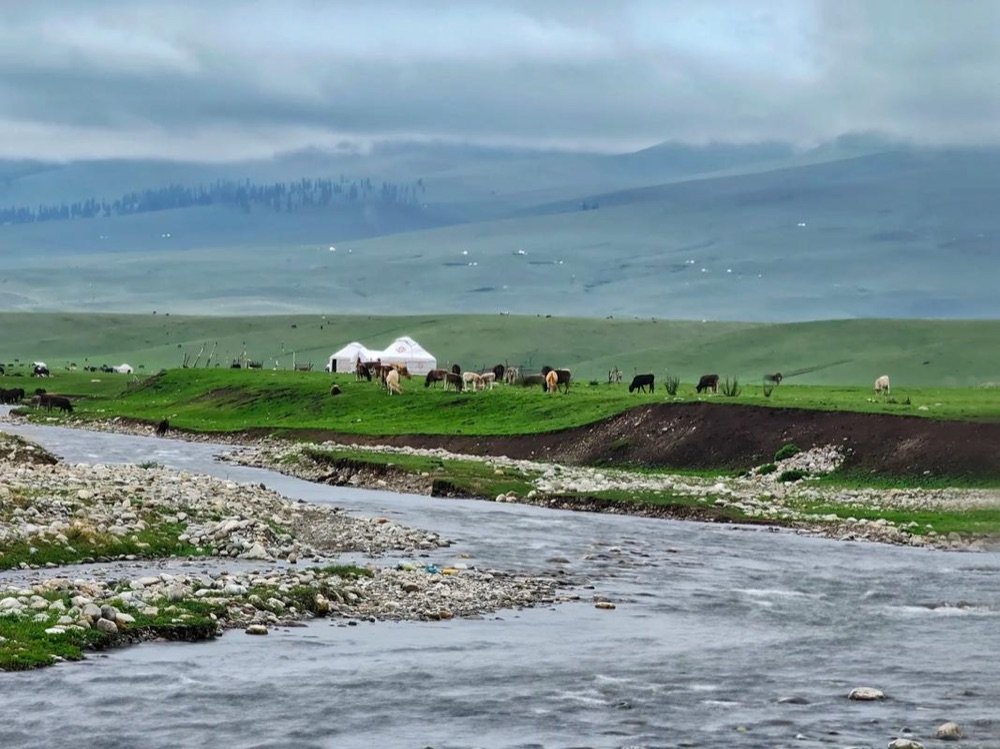
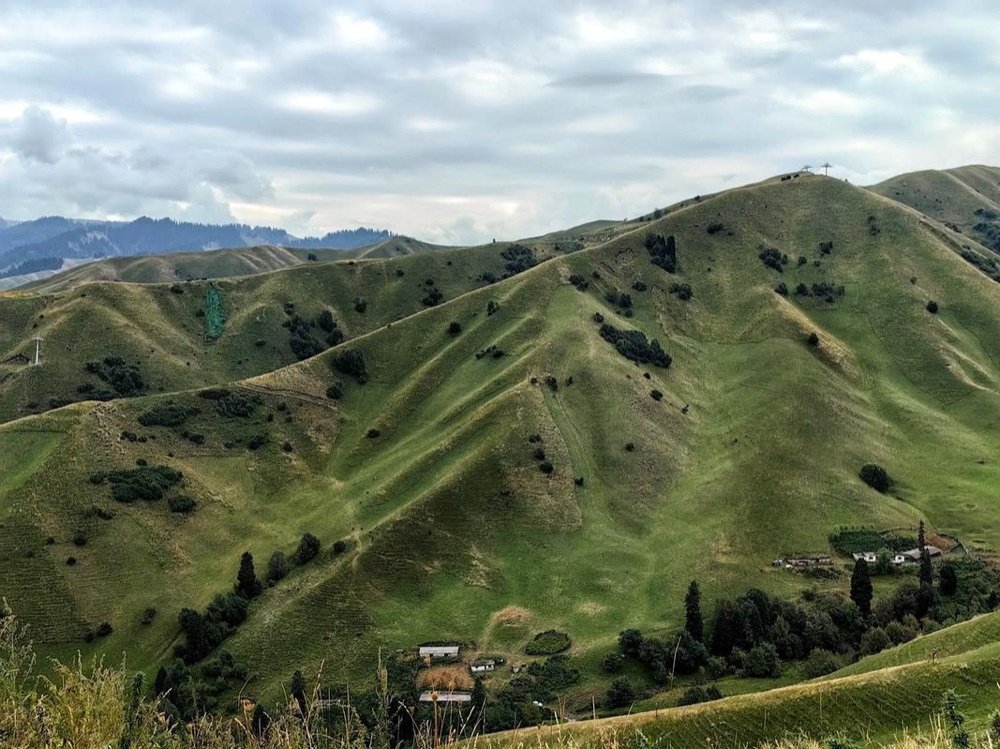
Forget predators. The animal most likely to end your trip is a hoofed one that belongs to a nearby family and answers to a whistle you cannot hear. Flocks and herds move across northern Xinjiang and the southern oasis roads with a calm sense of ownership. They use the asphalt because it is flat, dry, and warm in the early morning. To a sheep, a highway is just a wide, smooth path.
The pattern is consistent enough to plan around. Livestock are moved at dawn and dusk, when the light is low and the temperatures are kind. If you are covering distance at those hours, drop your speed on any stretch near farmland, a village, or open pasture. I treat every curve with a fence line as a probable animal crossing.
Sheep, goats and the dawn shift
Goats are the worst. They spook in knots, one bolts, the rest follow, and suddenly twenty animals are fanning across both lanes. Sheep at least tend to drift as a flock. Either way, the correct response is the same: ease off the throttle early, cover the brake, and give them the road. Do not lean on the horn at close range, because a startled animal runs forward, not away, and straight into your bumper.
I learned to read the herder before the herd. A figure on a motorcycle or a horse at the roadside almost always means animals are about to appear. Slow then, even if the road looks empty. The few seconds you lose are cheaper than a grille full of wool.
Cattle and horses on village roads
Around the oasis towns and the smaller county roads, cattle and horses wander loose, often tethered just off the tarmac but sometimes not. A horse weighing half a ton has no business on a blind bend, yet there it is. On these roads I keep to forty kilometers per hour or less, because a horse can step out from behind a wall with no warning at all.
The southern routes toward Hotan and Aksu have long straight runs where camels graze near the verge. More on them below. The point for now is simple: outside the big expressways, assume an animal owns the road, and you are the guest.
Camels by the desert highway
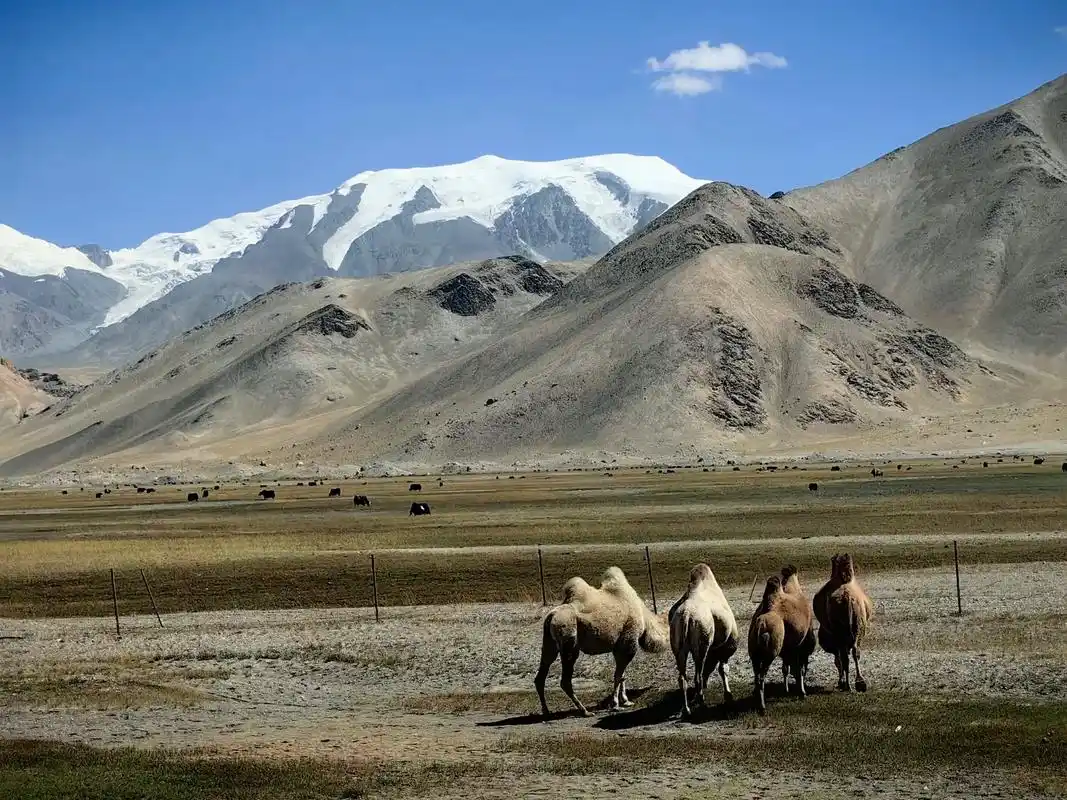
The Taklamakan’s edge and the open corridors toward Kuqa and Aksu are camel country. Bactrian camels, two humps, owned by herders, and calm to the point of indifference. That calm is the danger. A camel will stand beside the road chewing, then amble across without a glance at your approaching car. At speed, a camel is a wall.
They favor the warm shoulder and the dips where scrub grows. I slow through any stretch where I see tracks crossing the tarmac or a herder’s shelter within a few hundred meters. If a camel is on the road, stop and wait. The herder will move it. Do not try to shoulder past; a camel that decides to turn into you will win, and the repair bill will be yours.
For travelers who want the patient, camera-in-hand version of all this, my notes on wildlife watching and photography go deeper on where to sit quiet and let the animals come to you.
The predators you will probably never see
Let me be honest about scale. Your odds of a dangerous encounter with a large predator in Xinjiang are low. The animals exist, and the forests and high country are wild, but they are also shy and mostly nocturnal. The risk is not zero, though, and the cost of a mistake is high, so the habits are worth building.
If rare sightings are your goal, the longer field guide to snow leopards, wild camels and birds explains where patience pays off. For safety, the rules below are what matter.
Bears in the Altai forests
The Altai, up around Altay and the forested river valleys, holds brown bears. They are most active at dawn and dusk and during the late summer when berries ripen. On forest roads I keep the windows up at stops and never leave food or scraps where a bear can reach them. If you see one, stop the car, stay inside, and let it move away. Do not get out for a photograph. A bear that feels cornered is a bear you will not outrun.
Wolves at altitude
Wolves live in the high grasslands and the remote mountain zones. Solo travelers almost never see them, and packs tend to avoid people and vehicles. The one place they matter is camp. A wolf will not attack a tent, but it will investigate food, and a confident pack can become bold around an unsecured site. The fix is discipline, not fear, and I cover it in the camping section.
Birds and the collision you do not expect
The bird strike is the one new drivers forget. Xinjiang’s wetlands, the shores of Bosten Lake, and the Ili river lands hold enormous flocks of geese and cranes that lift off in a mass when a car approaches. A bird through the windscreen at speed is a genuine hazard, and a flock can blind you for a second at the worst moment.
On the approaches to lakes and reed beds I drop to a sensible speed and watch the margins for movement. If a flock is feeding close to the road, slow and let them flush. The few seconds cost nothing, and a cracked windscreen in a town with no quick glass shop costs a day.
What to do if you hit an animal
Despite every precaution, it happens. Here is the sequence I was given by a patrol officer near Korla, and it has stuck with me. First, pull over safely and switch on your hazard lights. Second, photograph the scene and the animal from a distance, with the road and any landmarks in frame. Third, contact the nearest checkpoint or call the local police, because in rural Xinjiang a roadside incident often involves someone’s livestock and the matter needs to be reported properly.
Do not move a live, large, or injured animal. A wounded camel or cattle beast can kick or charge, and you are not a vet. Keep your distance, mark the spot, and wait for help. If the animal is clearly dead and on a busy road, report it anyway so the owner can be found. The herder has a right to know, and the local police will know how to reach them.
For the night side of this problem, the risk of encountering animals grows after dark, and so does fatigue. My separate piece on night driving and fatigue explains why I avoid unlit rural roads after sundown unless I have no choice.
A herd at 80 kilometers per hour
The moment I described at the top was on the road south of Korla, a long straight where the desert opens up and the eye relaxes. I was doing about eighty, maybe a little more, because the road was empty and the surface was good. From a dip on the right came a line of sheep, unhurried, led by one old ewe with a plan.
I braked, the car dipped, and the ewe stopped in the center line and looked at me. Behind her, perhaps thirty animals fanned out. I killed the engine and waited. The herder, a young man on a battered motorcycle, rode up, clicked his tongue, and the flock flowed off the road like water. Total elapsed time, maybe ninety seconds. No damage, no anger, just a reminder that the desert belongs to more than drivers.
That day I lowered my cruising speed on open rural roads from eighty to sixty, and I have kept it there since. The time penalty across a long day is small. The margin it buys when something steps out is everything.
What I keep in the car
My animal-safety kit is light because most of it is behavior, not gear. A good pair of binoculars lives in the door pocket, useful for spotting a herd ahead before it reaches the tarmac. A basic first-aid kit and a reflective vest sit in the boot; the vest matters if you are stopped on a dark road with animals nearby. I carry a paper map, because the best way to avoid a night encounter is to know where you are and reach town before dark.
Water and a few snacks are standard, but for animal country I add a small roll of flagging tape and a bright cloth. If you must stop on a rural road, mark your position so the next driver sees you in time. The animals will not warn them. You have to.
Camp discipline keeps predators away
If you are sleeping rough or at a quiet lakeside site, the rule that protects you from wolves, foxes, and bears is the same one that protects your food: nothing edible left out. I cook away from the tent, store all food in the locked car or a sealed container hung well clear of the ground, and never keep snacks in the sleeping area. A clean camp is a safe camp, and it is also a courteous one for the next traveler.
The fuller picture of camping on a Xinjiang road trip covers where you can legally pitch, how to find water, and how to leave no trace. The animal part is the part people skip, and it is the part that matters most once the sun goes down.
The bigger question of safety
It is fair to ask whether any of this means the region is risky to visit. In my experience, the animals are far less of a threat than the weather, the distances, or a tired driver at the wheel. The locals live alongside these creatures every day, and a little caution goes a long way. For a frank look at the wider picture, I have written about whether Xinjiang is safe for tourists, and the short answer is that solo drivers who prepare well have a wonderful, safe time.
Drive like the road is shared, because it is. Slow for the flock, stop for the camel, secure the camp, and report anything you hit. Do that, and the wildlife becomes the best story of the trip rather than the worst part of it.
Karl Huang drove these routes across Xinjiang between 2019 and 2026. He updates guides when road conditions, prices, or permit rules change. You can reach him through the Contact page.