

Xinjiang Shisha & Hookah (Chilim) Culture
The First Puff in a Kashgar Courtyard
In a Kashgar courtyard I was handed a chilim by a man I had met only ten minutes earlier. The bowl was wrapped in foil, a small coal glowing on top, and a long hose curled across the low wooden table like a sleepy cat. He did not explain much. He simply passed the mouthpiece to me, nodded at the coal, and waited. That is the whole invitation. In Xinjiang, the water pipe is rarely about the smoke. It is about the pause.
I had read about hookah in travel blogs before arriving, but none of them prepared me for how ordinary the moment felt. Nobody performed the ritual for my benefit. A group of neighbors were already halfway through their evening, and I had simply been pulled into the circle. That first draw was sweet, cool, and heavier than I expected. The fruit in the bowl took the edge off any harshness. I leaned back against the mud-brick wall and understood, slowly, why this habit has outlasted empires.
The chilim, known across the region as a water pipe, is one of the quiet anchors of Uyghur social life. You will hear it called a hookah or shisha too, and travelers use all three words. Locals will know exactly what you mean. This article is about the pipe and the smoke itself, the way it structures an evening, and how you can join without embarrassing yourself. If you want the drink side of the same gatherings, our guide to Uyghur tea culture covers that in detail.
What a Chilim Actually Is
The object on the table looks simple and is not. A chilim has four working parts. The bowl on top holds the flavored material. Beneath it sits a clay or metal column that drops into a base filled with water. A hose attaches to that base, and the mouthpiece at the end is what you draw from. Smoke passes from the bowl, down through the stem, into the water, and back up the hose as a cooled, filtered breath.
The design traveled here along old trade routes, and you can spot cousins of it from Istanbul to Delhi. What makes the Xinjiang version distinct is the pacing. Elsewhere the pipe can feel like a café product, ordered and billed like a coffee. Here it still reads as a household object, something a grandfather built and a grandson now tends. The glass might be newer, the hose might be plastic instead of leather, but the rhythm of the evening has barely shifted. That continuity is the part worth noticing.
The water is the trick. Pulling air through liquid cools the smoke and strips some of the bite. That is why a chilim feels nothing like a cigarette, even when tobacco is involved. The draw is long and lazy. A single inhale can take a full two seconds, and the exhale lingers in the cool night air. You are not chasing a nicotine hit. You are filling a silence.
Most pipes you will meet hold enough for three or four people to share one hose over the course of an hour. In homes the pipe is often older than the furniture. In tea houses it may be a newer imported model with colored glass, but the mechanics have not changed in centuries. The shape varies from village to village, yet the purpose stays constant: a reason to sit still together.
What Goes in the Bowl
This is where travelers get confused, because the answer is not one thing. What you smoke depends on the house, the season, and who is paying.
Fruit Molasses
The most common fill by far is a sweet paste made from fruit molasses, sometimes called shisha tobacco even when the tobacco content is low. Apple, grape, and rose are the everyday flavors in Kashgar and Yining. The paste sits on a small screen inside the bowl, the foil goes on top, and the coal does the rest. The result tastes more like warm fruit candy than anything a doctor would worry about, though the sugar is real.
Local Herbs
In some courtyards, especially in the warmer months, people skip the commercial paste and pack the bowl with dried local herbs and fruit peel. Apricot leaf, dried mulberry, and rose petals turn up often. These mixes carry almost no nicotine and smell like a tea shop that caught fire gently. They are the version you are most likely to be offered if a family wants you to try something distinctly theirs rather than something from a shop.
Plain Tobacco
Yes, plain tobacco exists here. Older men in certain neighborhoods still pack raw leaf, and it hits harder. If you are a non-smoker, ask what is in the bowl before you draw. A quick phrase like “what is the flavor” gets a straight answer, and hosts are usually proud to tell you. Nobody hides it.
How the Pipe Is Prepared
Watching a chilim being built is half the pleasure. The host rinses the base and fills it with cold water, often from the tap but sometimes with a few ice cubes in summer. He packs the bowl, lays the foil, and pokes a ring of tiny holes with a pin. Then comes the coal.
The coal is not a match. It is a compressed block heated in a small brazier until it glows orange at the edges. Tongs lift it onto the foil. Within a minute the bowl warms, a thin sweetness rises, and the first bubbles break the surface of the water. The host takes the opening draw himself, not out of selfishness but to test the pull and clear any bitter start. Only then does he pass it to the guest of honor, which on my first night was me, still unsure where to put my hands.
Good preparation is quiet and efficient. A poorly packed bowl sputters, tastes like ash, and dies in twenty minutes. A well-built one holds for an hour or more, the coal turned once halfway through. You will learn to tell the difference by the third session, and by then you will also have stopped checking your phone.

Where Travelers Can Join In
You do not need an invitation to most of these settings. You need a willingness to sit.
Kashgar Old Town
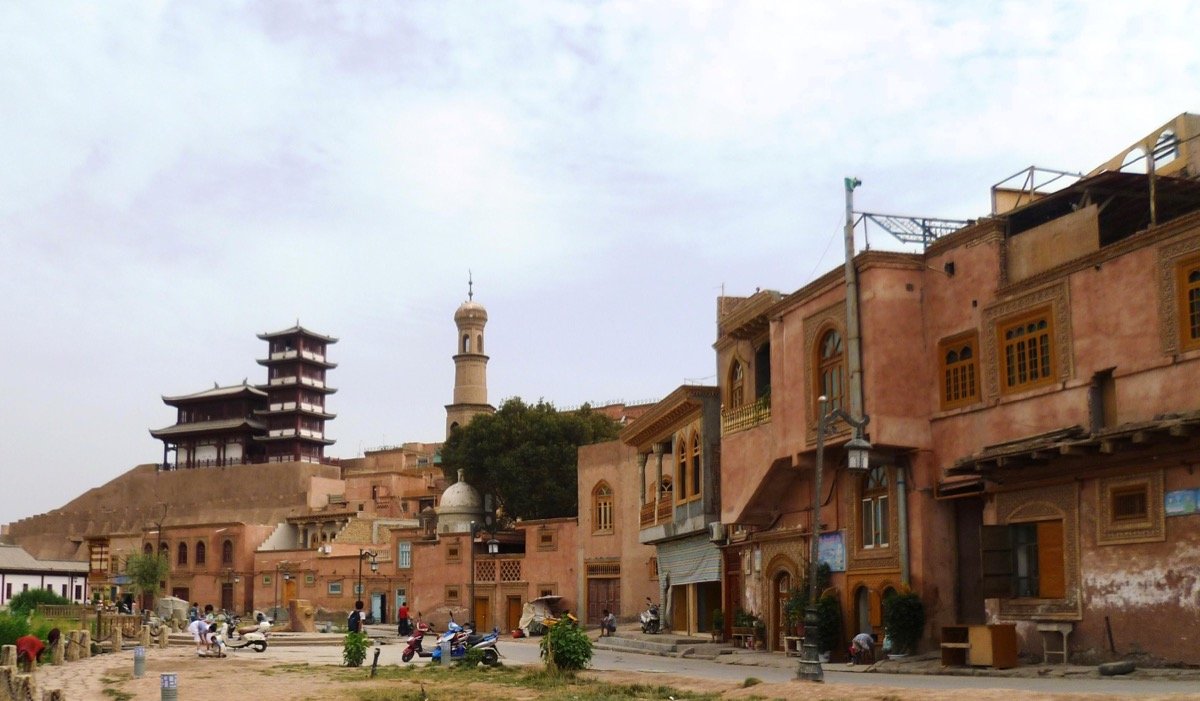
The narrow lanes of Kashgar’s old town hide dozens of courtyard tea houses where a chilim circulates all afternoon. Walk past the Id Kah Mosque and drift into the side streets near the handicraft section. A session with a shared pipe and a pot of tea runs roughly 20 to 40 yuan per person, depending on the flavor and how long you stay. The atmosphere is unhurried, and solo travelers are welcome as long as they respect the pace.
Urumqi and Yining
In Urumqi, the neighborhoods around the southern bazaar district have larger tea houses that stay open late. Yining, on the western edge, keeps a more intimate style, with pipes appearing on private courtyards after dinner. If your trip lines up with a market day, our bazaar bargaining guide will help you move through those crowded mornings before the evening pipe calls.
Respectful Entry
The easiest way in is to order tea and look interested. Hosts read body language fast. Sit, accept the first offer of the mouthpiece, and let the circle absorb you. You will find that the same places doubling as evening gathering spots are listed in our night market and street food guide, since the smoke and the snacks tend to share a street.
Etiquette: How to Be a Good Guest
The rules are few and mostly about not rushing. A chilim is slow by design, and the worst thing a guest can do is treat it like a cigarette break.
Do Not Refuse Abruptly
If the pipe comes to you and you do not want to smoke, do not wave it away with a sharp no. Touch the mouthpiece briefly to your forehead or simply pass it on with a small smile. A blunt refusal reads as rejecting the host, not the tobacco. I learned this the hard way in a Yining courtyard, where my fast “no thanks” landed like a slammed door before the older man beside me laughed and showed me the polite gesture.
Do Not Overuse
Sharing means restraint. Take one draw when the pipe reaches you, then pass it on. Grabbing the hose and holding it through a whole conversation is the move of a regular, not a visitor. If the bowl is strong tobacco, two draws are plenty for a newcomer. The point is presence, not consumption.
Mind the Mouthpiece
Some houses offer a small disposable tip, and you should use it. Others pass the same mouthpiece around, which is normal locally but worth noting if you are germ cautious. A quick wipe with the napkin provided is acceptable and expected. Our dining etiquette guide covers the wider table manners that overlap with these gatherings.

Chilim Versus a Quick Cigarette
Travelers who smoke back home often assume the chilim is just a slower cigarette. It is not, and the difference matters for how you behave.
A cigarette is a private punctuation mark, something you step outside to do alone for five minutes. A chilim is a collective event with a beginning, a middle, and a slow fade. The smoke is cooler, the flavor is sweet or herbal rather than bitter, and the nicotine, when present, arrives gently. You cannot rush it. You cannot “step out for one.” The moment you try, you have missed the point.
There is also the social weight. Lighting a cigarette marks a break from the group. Drawing from a chilim marks belonging to it. In a Kashgar courtyard the two acts would look almost like opposites. One says I need a minute. The other says I am staying.
A Few Practical Notes
Prices stay low. A shared pipe in a tea house runs about 20 to 40 yuan, while a private bowl for your own table might reach 60. Sessions last from forty minutes to two hours, and nobody checks a watch. Bring small bills, since change can be slow in the old town lanes.
Health-wise, be honest with yourself. The water does not make the smoke harmless, and if you have asthma or a sensitive chest, watch the coal and pick an herb bowl over tobacco. Pregnant travelers should skip it entirely. None of this stops you from joining the circle with tea instead, and hosts will not think less of you for sitting out the smoke.
Season shapes the habit too. Winter pushes the pipes indoors, where courtyards close and the sessions run longer against the cold. Summer spills them onto rooftops and open alleys, with herb bowls favored because they sit lighter in the heat. If you travel in autumn, expect the richest fruit flavors, since the grape and apricot harvests have just come in. I found late September the easiest time to wander into a circle, the weather mild and the mood unhurried before the winter crowds arrive.
The best evenings I had in Xinjiang were not at monuments. They were on low chairs, a coal glowing, a hose moving hand to hand, and a conversation that needed no translation. The chilim is not a souvenir or a performance. It is an invitation to slow down, offered by people who have been practicing the art for longer than any of us will stay. Accept it the right way, and the region opens a little further than the guidebooks suggest. For the broader context of where these circles happen, our tea house guide maps the rooms worth seeking out.