
Xinjiang Travel Budget 2026: Real Costs Breakdown by Travel Style
I’ve been traveling independently in Xinjiang since 2014. One question comes up more than any other: how much does it actually cost? Not the brochure version. The real number that hits your bank account after two weeks on the road.
The Honest Numbers (Updated August 2026)
Xinjiang is not cheap anymore. That needs to be said upfront. In 2018 you could get by on ¥200/day without trying hard. In 2026, even backpackers should budget ¥350-450/day in peak season (June–September). The good news: it’s still cheaper than Tibet or coastal China, and the value-for-money ratio remains strong if you know where to spend and where to save.
| Expense Category | Backpacker (¥/day) | Mid-Range (¥/day) | Comfort (¥/day) |
|---|---|---|---|
| Accommodation | 80–150 | 250–450 | 600–1200 |
| Food | 60–100 | 120–200 | 200–400 |
| Transport (intercity) | 80–150 | 200–400 | 500–1000 |
| Local transport | 20–40 | 50–80 | 100–200 |
| Attractions / permits | 30–60 | 60–120 | 150–300 |
| Misc (SIM, supplies) | 10–20 | 30–50 | 50–100 |
| Daily Total | 280–520 | 710–1300 | 1600–3200 |
Accommodation: The Biggest Variable
Where you sleep determines half your budget. Here’s what each tier actually gets you:
Budget (¥80–150/night)
You’re looking at youth hostels, family-run guesthouses (where to stay in Xinjiang covers the full range), and basic hotels in county towns. Expect shared bathrooms, firm beds, and hit-or-miss Wi-Fi. In Kanas or Hemu during July–August, even these places push ¥200+. Book at least a week ahead.
My go-to strategy: arrive in a city, walk the streets near the old town or bus station, check three places in person, negotiate for stays of three nights or longer. Most independent guesthouses will drop 15–20% for multi-night bookings, especially outside peak months.
Mid-Range (¥250–450/night)
This is the sweet spot for most independent travelers. You get private bathroom, air conditioning (non-negotiable in Turpan summer), reliable hot water, and usually breakfast included. Chains like Jinjiang Inn, Home Inn, and Atour have solid coverage in Urumqi, Kashgar, Korla, and Yining. Independent boutique hotels in Kashgar Old Town charge ¥300–500 but include character you won’t find at chains.
Comfort (¥600–1200+/night)
Four-star hotels in prefecture capitals. Hilton Garden Inn (Urumqi), Sheraton (Urumqi), and luxury properties in Kanas Scenic Area. Worth it if you’re doing a shorter trip and want guaranteed quality. Not worth it if you’re spending most of your time outdoors anyway.
Food: The Best Value Category
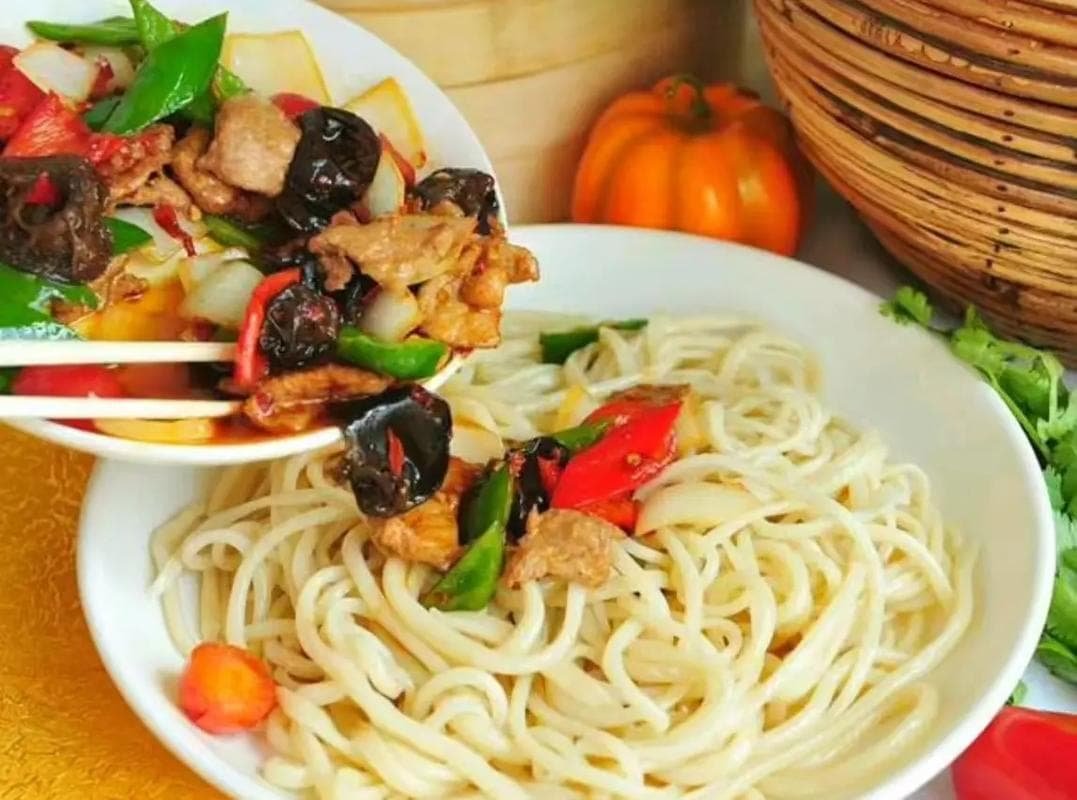
This is where Xinjiang shines. A massive plate of laghman noodles costs ¥15–25 in local restaurants. Big plate chicken (dapanji) for two people runs ¥68–108 depending on the city and portion size. Skewers of chuanr are ¥3–5 each. Naan bread is ¥2–4 a piece.
I’ve eaten well on ¥70/day and I’ve splurged on ¥200/day. The difference isn’t happiness — it’s beer and meat quantity. For a complete breakdown of what to order and how much each dish costs, see our dedicated food guide.
Getting Around: Where Your Money Goes
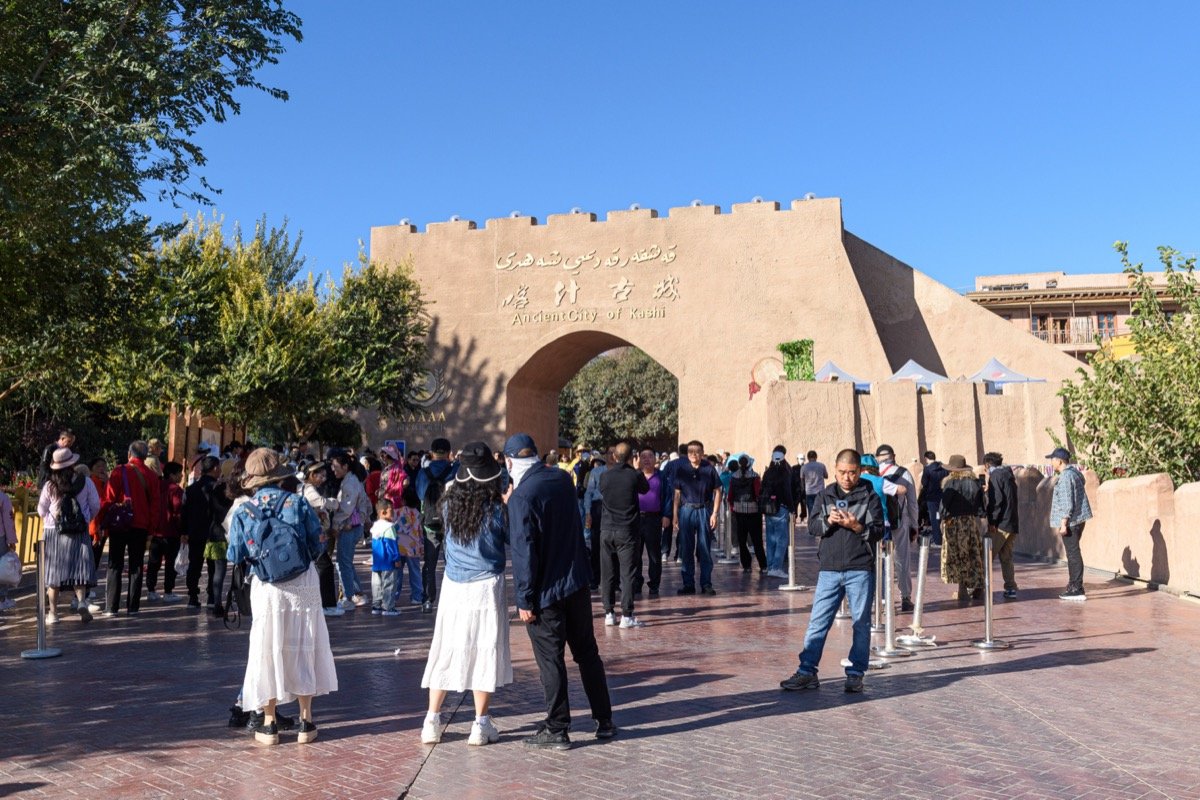
Transportation is the expense category that hurts the most, especially if you’re not driving yourself. Here’s the reality:
By Bus
Intercity buses connect every county seat. Urumqi to Burqin (gateway to Kanas): ¥220–280, 9–10 hours. Urumqi to Kashgar: ¥280–340 by sleeper bus (22 hours) or ¥600–900 by plane (2 hours). The full transportation guide has route-by-route pricing.
Car Rental (Self-Drive)
This is how most Chinese tourists do it, and it’s increasingly popular with foreigners who hold valid Chinese licenses. A compact SUV (Haval H6 or similar) costs ¥300–450/day including insurance. Gasoline is roughly ¥7.8–8.5/L in 2026 (prices fluctuate). A 10-day loop covering the Duku Highway, Kanas, and returning via the southern route burns through roughly ¥4,000–6,000 in rental + fuel + tolls + parking combined.
The Duku Highway alone has toll sections totaling about ¥180 one way. Scenic area parking ranges from ¥10–30 per entry. Factor these into your calculations.
Trains and Flights
The new high-speed rail connections (Urumqi–Turpan, Urumqi–Kuytun) are game-changers — ¥55–85 for second class, under 2 hours. Domestic flights within Xinjiang have become competitive too; China Southern and Air China frequently run promotions. Check our flights update for current routes and typical fares.
Scenic Area Fees: The Hidden Cost
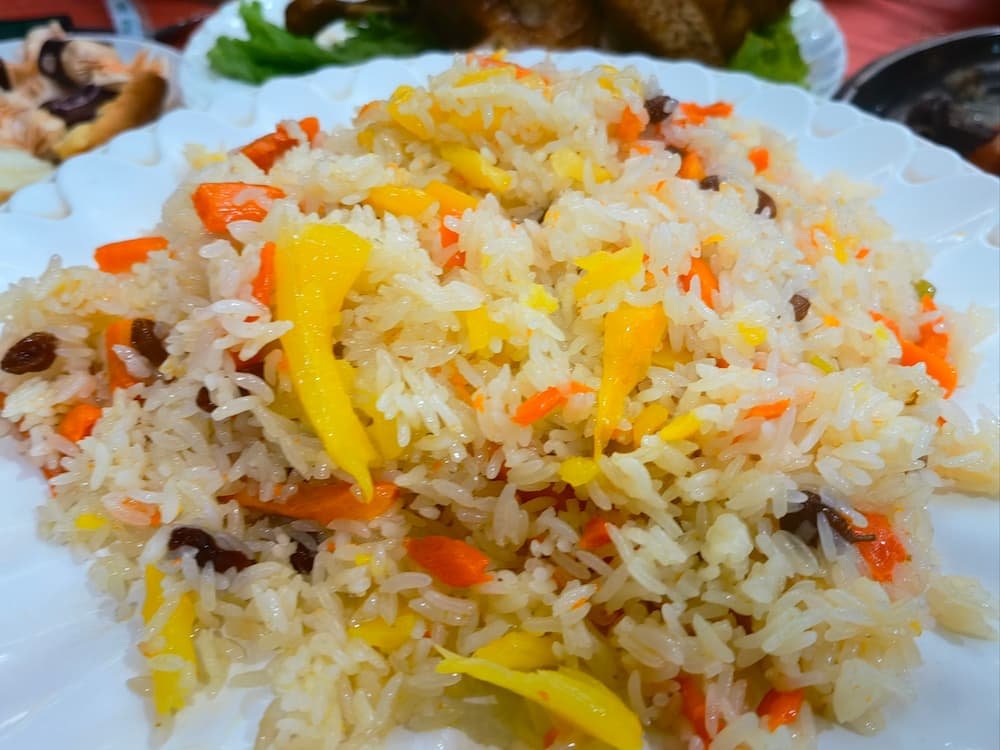
This catches people off guard. Xinjiang’s major scenic areas charge serious admission fees, plus mandatory shuttle bus fees inside the park. Some examples from 2026:
- Kanas Lake scenic area (including shuttle): ¥230 total (seasonal variation applies)
- Hemu Village: ¥75 + shuttle ¥52
- Sayram Lake: free entry, but ring road car fee ¥145/vehicle
- Nalati Grassland: sky grassland section ¥135, forest valley section ¥95
- Tianchi (Heavenly Lake): ¥155 + shuttle ¥60
- Duku Highway: no gate fee itself, but you pay individual park fees along the way
- Flaming Mountains: ¥60
- Karakul Lake: ¥45
A 14-day trip hitting the major spots can easily rack up ¥1,200–1,800 in tickets alone. Plan for this. The best time to visit guide notes which parks offer low-season discounts (typically November–April, when many reduce fees by 30–50%).
Sample 10-Day Budgets
Northern Loop (Urumqi → Kanas → Hemu → Duku → Urumqi)
| Item | Backpacker | Mid-Range |
|---|---|---|
| Accommodation (9 nights) | ¥900–1,350 | ¥2,700–4,050 |
| Food | ¥540–900 | ¥1,080–1,800 |
| Intercity transport | ¥720–1,350 | ¥1,800–3,600 |
| Park tickets | ¥650 | ¥650 |
| Misc | ¥180 | ¥450 |
| Total | ¥2,990–4,430 | ¥6,680–11,550 |
Southern Route (Urumqi → Korla → Kuqa → Kashgar → Tashkurgan → Kashgar → fly out)
| Item | Backpacker | Mid-Range |
|---|---|---|
| Accommodation (8 nights) | ¥800–1,200 | ¥2,400–3,600 |
| Food | ¥480–800 | ¥960–1,600 |
| Transport (bus/train) | ¥600–1,000 | ¥1,200–2,400 |
| Park tickets | ¥420 | ¥420 |
| Kashgar→Urumqi flight | ¥600–900 | ¥600–900 |
| Misc | ¥160 | ¥400 |
| Total | ¥3,060–4,480 | ¥6,780–9,320 |
Money-Saving Tips That Actually Work
A few things I’ve learned over a dozen trips:
- Eat where locals eat. Restaurants packed with Uyghur or Kazakh families charging ¥18 for a bowl of laghman beat the tourist-facing places charging ¥35 for the same dish. Follow the crowds at mealtime.
- Travel in shoulder season. Late May, early June, September, and October offer 20–30% lower accommodation prices and thinner crowds. Weather is still good. See month-by-month breakdown for details.
- Share rides. Between cities, ask at your hostel/hotel about shared taxi departures. Often cheaper than buses and faster. Urumqi to Fukang for Kanas: shared taxis leave when full (~4 passengers), costing ¥80–100 per person vs. ¥140 by bus.
- Buy snacks at markets, not scenic areas. A bottle of water inside Kanas scenic area costs ¥8. Same bottle at a Urumqi supermarket: ¥2. Stock up before entering parks.
- Negotiate multi-day tours directly. If you want a driver for the Duku Highway or Pamir highway, skip the online agencies. Go to a local travel service in Urumqi or Kashgar. You’ll pay 30–40% less for the same vehicle and driver.
What I Spent (Real Receipts)
Last trip: 12 days, June 2026, solo, mid-range style. Northern loop (Urumqi–Fukun–Burqin–Kanas–Hemu–Duku–Nalati–Yining–Urumqi). I kept every receipt.
- Accommodation (11 nights, mix of guesthouses and 3-star hotels): ¥3,840 (avg ¥349/night)
- Food (all meals, including several big meals with other travelers I met): ¥1,670 (avg ¥139/day — I like to eat)
- Transport (bus Urumqi→Burqin, shared taxi Burqin→Kanas, bus+taxi combinations, train Yining→Urumqi): ¥2,130
- Park tickets (Kanas, Hemu, Nalati, Duku-related stops): ¥980
- Misc (SIM card, souvenirs, snacks, one round of drinks with fellow travelers): ¥620
- Total: ¥9,240 for 12 days = ¥770/day
I could have done it for ¥5,500 if I’d stayed in hostels and skipped the big restaurant meals. I could have spent ¥14,000 if I’d rented a car and stayed in better hotels. The point: pick your tier and plan around it. Don’t wing it and hope.
Currency & Payment Practicalities
Cash still matters in Xinjiang, especially in rural areas, small eateries, and with taxi drivers. But Alipay and WeChat Pay are accepted almost everywhere in cities and even at many scenic area entrances. Foreign cards (Visa/Mastercard) work at larger hotels, airports, and some upscale restaurants — but don’t rely on them for daily expenses.
I carry ¥1,500–2,000 in cash as backup, use Alipay (linked to my Chinese bank account) for 80% of transactions, and keep a foreign Visa card for hotel deposits and emergencies. If you don’t have a Chinese bank account, cash is your primary option outside major cities.
Prices updated August 2026 based on personal travel and traveler reports. Exchange rate assumption: USD 1 ≈ CNY 7.25. Actual prices vary by season, booking timing, and negotiation skills. I update this guide after each trip — next revision planned after October 2026 foliage season.