

Xinjiang Travel Insurance: What You Actually Need
A German traveller I shared a vehicle with in 2023 dislocated his shoulder falling off a horse near Bayanbulak. The hospital in Korla treated him for about ¥4,200. His insurer paid it, eventually, after eleven weeks and three rounds of translated paperwork. What nearly sank the claim was not the injury. It was that he had no receipt in the format Chinese hospitals issue and had thrown away the discharge summary.
Travel insurance for Xinjiang is not complicated, but the standard policy sold to someone going to Barcelona has gaps that matter here. Distances are large, altitudes are high, and the claims process assumes documentation you have to know to ask for.
Is It Actually Required?
China does not mandate travel insurance for tourist visa holders, and immigration will not ask to see a policy at Urumqi. Some organised tours and most trekking operators will require proof before they take you.
So the honest answer to “do I need it” is: not legally, and yes practically. My reasoning is not about the ¥4,000 hospital bill. Chinese healthcare is affordable by Western standards and you could pay that out of pocket. It is about the tail risk. A medical evacuation from the Pamir to a tertiary hospital, or a repatriation flight with a medical escort, runs into five or six figures in US dollars. That is the thing you are insuring against.
Four Things Xinjiang Does to a Standard Policy
1. Altitude exclusions
Most travel policies cover “trekking” up to a stated altitude and exclude everything above it. Common ceilings are 3,000 m, 4,000 m, 4,500 m or 6,000 m depending on the insurer and the tier you buy.
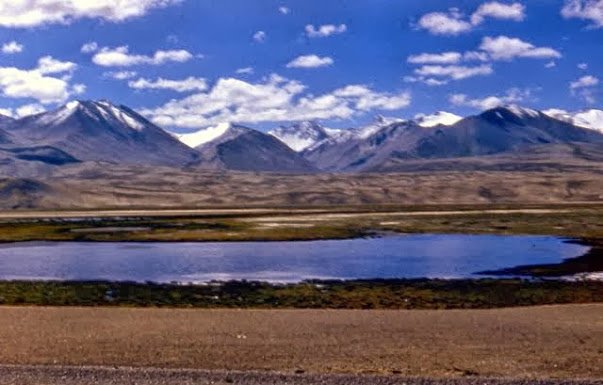
Look at where Xinjiang actually puts you. Karakul Lake is 3,600 m. Tashkurgan is 3,090 m. The Duku Highway passes touch about 3,400 m. Khunjerab Pass is 4,733 m. A policy with a 3,000 m ceiling excludes most of the Pamir portion of a classic southern Xinjiang trip.
Read the definition carefully too. Some policies distinguish between being at altitude and trekking at altitude, so sitting in a vehicle crossing a 3,400 m pass may be treated differently from walking up a slope at 3,600 m. Others do not distinguish at all. If your route includes the Karakoram Highway, buy a policy with a stated ceiling of at least 5,000 m and get the confirmation in writing. What that altitude does to your body is covered separately in the Xinjiang altitude sickness guide.
2. Evacuation distance
Xinjiang is 1.66 million square kilometres with hospitals concentrated in a handful of cities. Here is what a serious medical problem means in travel time.
| From | Nearest major hospital | Road distance | Realistic transfer time |
|---|---|---|---|
| Karakul Lake | Kashgar | ~190 km | 3.5–4.5 hours |
| Tashkurgan | Kashgar | ~290 km | 4.5–6 hours |
| Khunjerab Pass | Kashgar | ~420 km | 7–9 hours |
| Kanas Lake | Altay city | ~160 km | 3–4 hours |
| Kanas Lake | Urumqi | ~700 km | Flight from Kanas or Altay |
| Bayanbulak | Korla | ~330 km | 5–6 hours |
| Koktokay area | Fuyun then Altay | ~150 km | 2.5–3.5 hours |
| Taklamakan Highway midpoint | Korla or Hotan | ~250 km either way | 4–5 hours |
There is no tourist-facing helicopter rescue service operating in Xinjiang. Evacuation means a road transfer, then possibly a commercial or air-ambulance flight from a prefecture airport. Your insurer’s assistance company arranges this. What you are buying is their ability to coordinate it and pay for it, not a helicopter appearing over the ridge.
3. Adventure activity definitions
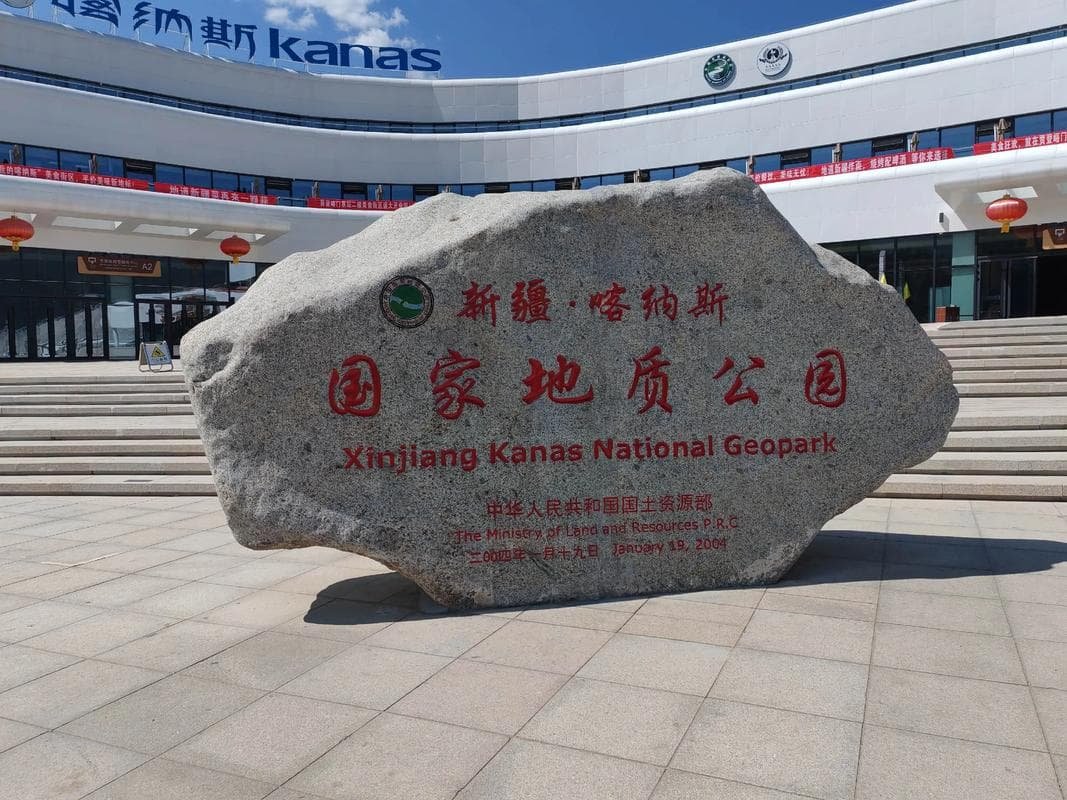
Hiking the granite canyons at Koktokay National Geopark is walking on marked trails. Scrambling off-trail on granite slabs is something else, and some policies call it mountaineering. Horse riding on the grasslands is covered by many policies and excluded by others, or covered only if a helmet was worn. Winter skiing in the Altay needs a specific winter sports add-on. Riding a motorbike requires a valid licence for that class, in the right country, which is a problem in China.
Check the activity schedule, which is usually a PDF list buried on the insurer’s site. If your activity is not on it, it is not covered.
4. Self-drive
Your home driving licence and an International Driving Permit are not valid in mainland China. You need a temporary Chinese driving permit, obtainable at major entry points and city vehicle administration offices with your passport, licence and a translation.
If you drive without a valid Chinese permit and have an accident, your rental insurance and your travel policy will both decline. I have never seen an exception to this. Anyone planning to rent a car for the Duku Highway needs to sort the permit before anything else.
What Policies Actually Pay Out On
Based on claims I have made or watched colleagues make, ranked by how smoothly they went.
Paid readily: emergency medical treatment with proper documentation, hospital stays, prescription medication tied to a diagnosis, emergency dental, trip curtailment for a documented family emergency, and delayed baggage over the stated threshold.
Paid with a fight: trip cancellation for reasons not on the named-peril list, stolen electronics without a police report, missed connections on separately booked tickets, and anything where the receipt does not clearly show what was purchased.
Declined: incidents involving alcohol, pre-existing conditions not declared at purchase, activities outside the schedule, altitude above the ceiling, driving without a valid permit, and items left unattended. Also, and this catches people, treatment you paid for without contacting the assistance line first when the policy required pre-authorisation above a threshold.
That last one is the most avoidable mistake. Most policies require you to call the 24-hour assistance number before non-emergency treatment above a few hundred dollars. Save the number offline in your phone and write it on paper in your wallet, because your phone may be the thing that is broken.
Comparing the Main Options
Indicative quotes below are for a healthy 35-year-old on a 14-day trip to China, quoted in mid-2026. Prices vary hugely by home country, age and cover level, so treat these as a starting point rather than gospel.
| Provider | Indicative 14-day cost | Altitude ceiling | Best for | Watch out for |
|---|---|---|---|---|
| SafetyWing | USD 25–45 | Limited, check tier | Long trips, budget travellers, monthly rolling cover | Lower medical caps, adventure limits |
| World Nomads | USD 70–140 | Varies by plan and country of residence | Multi-activity trips, broad activity schedule | Not available in all countries |
| Allianz Travel | USD 80–160 | Usually modest without add-on | Standard trips, strong cancellation cover | Adventure activities often need an upgrade |
| IMG Global | USD 60–130 | Add-on available | Higher medical limits, US travellers | Complex plan structure |
| Battleface | USD 55–120 | Configurable | Remote destinations, customisable cover | Read the schedule carefully |
| Global Rescue | USD 120–350 | Evacuation focused | Serious high-altitude or remote itineraries | Evacuation membership, not full medical insurance |
My own approach for Xinjiang trips involving the Pamir: a mid-tier medical policy with an explicit high-altitude endorsement, plus separate evacuation membership if I am going above 4,000 m or spending nights beyond Tashkurgan. For a northern circuit through Kanas, Sayram and the Ili Valley, a standard policy is fine.
I am not affiliated with any of these companies and get nothing if you buy. The right answer depends on your passport and your route.
Credit Card Insurance Is Probably Not Enough
Premium cards often include travel medical cover. For Xinjiang I would read the certificate before relying on it. The recurring problems: low medical caps, no evacuation cover or a cap far below what an air ambulance costs, altitude exclusions with no upgrade path, a requirement that the whole trip was paid on that card, and cover that ends after 30 or 60 days abroad.
Card cover as a secondary layer, yes. As your only policy on the Karakoram Highway, no.
Documentation: What to Collect in China
This is where claims fail. Chinese hospitals and clinics can produce everything you need, but you have to ask at the time. Going back three weeks later from another country is close to impossible.
- The official invoice. Ask for a fapiao (发票). This is a formal tax invoice, not the till receipt. Insurers recognise it. The itemised payment slip alone is often rejected.
- The medical record book. Chinese outpatient care uses a small booklet where the doctor writes the diagnosis and treatment. Keep it, do not leave it at the counter.
- Discharge summary and test results. Scans, blood work, X-ray reports. Ask for copies before you leave.
- Photograph everything the same day. Paper gets lost in a backpack over two weeks on the road.
- Police report for theft. Go to the nearest Public Security Bureau station and get a written report with a stamp. No stamp, no claim.
- Written confirmation for cancellations. Airline delay certificates, hotel cancellation emails, anything with a date and a company name.
Translation is your responsibility in most policies. Budget for it or use an insurer with a Chinese-language claims team. Some assistance companies will accept photographs and handle translation themselves, which is worth asking about before you buy.
What About Safety-Related Claims?
Xinjiang is a low-crime environment in my experience across twelve trips, and the practical risks are road accidents, altitude, weather and livestock, not violence. Petty theft exists at busy markets like anywhere. The safety update covers the current picture in more detail.
Check whether your policy has a government travel advisory clause. Some policies void cover if your own government advises against travel to a region. Advisories change, so check yours at the point of purchase and again a week before departure. If your national advisory is restrictive, ask the insurer directly in writing whether cover applies. A support chat transcript is worth having.
Common Questions
How much medical cover should I buy?
USD 100,000 minimum for the medical limit, and USD 250,000 or unlimited for evacuation and repatriation. The medical limit is unlikely to be tested in China. The evacuation limit is the one that matters.
Does insurance cover altitude sickness treatment?
Usually yes, if you were within the policy’s altitude ceiling when it happened. Treatment for AMS at 3,600 m under a 3,000 m policy is a declined claim.
Can I buy insurance after I have arrived?
Some providers sell to travellers already abroad, often with a waiting period of a few days before cover starts. It is more expensive and more restricted. Buy before you fly.
What if I extend my trip?
Most policies allow extension if you request it before the original end date. Miss that and you are buying a new policy from outside your home country, which is harder. Set a calendar reminder.
Do I need cover for the Khunjerab Pass into Pakistan?
Yes, and check that both countries are listed. A China-only policy stops at the border marker. If you are crossing, you need cover for Pakistan and for the altitude, and you need your border permits in order.
Is Chinese domestic travel insurance an option?
You can buy short-term accident cover through Alipay for a few yuan a day. It is genuinely cheap and pays small claims. It will not evacuate you. Treat it as a supplement, not a policy.
What to Do Next
Open your itinerary and write down the highest elevation you will reach and the highest elevation you will sleep at. Those two numbers determine which policies are viable for you.
Then find the activity schedule PDF for the policy you are considering and check for horse riding, hiking above your altitude number, and self-drive. If any are missing or excluded, either upgrade or change the plan.
Finally, before you fly, save the 24-hour assistance number in your phone contacts and write it on a card in your wallet along with your policy number. Then photograph your policy document and email it to yourself. Those five minutes are the difference between a smooth claim and eleven weeks of arguing.
Quotes and coverage details gathered mid-2026 and indicative only. Insurance terms vary by country of residence. Read the policy wording before purchase.