
Nowruz in Xinjiang: Persian New Year Celebrations
I got the date wrong the first time. I flew into Yining on 22 March 2018 thinking I had arrived for Nowruz, and walked into the tail end of it — cauldrons already scrubbed out, streets back to normal, one neighbour still handing bowls over a wall because she had cooked too much. A man in a courtyard off Hanbin Road took pity and gave me a bowl anyway. Lukewarm wheat porridge with lamb and dried apricot in it. I have thought about that bowl for eight years.
So here is the thing nobody tells you plainly: Nowruz is not a date on a lunar calendar that drifts around. It is the spring equinox. The sun crosses the celestial equator, day and night hit parity, and the new year starts. In 2026 that moment falls on 20 March. The cooking and visiting run roughly 20 to 22 March, with the biggest day being the 21st.

What Nowruz Actually Is
The word is old Persian and translates as “new day”. It predates Islam by a long stretch — the festival is agricultural in origin, tied to the moment the ground thaws enough to plough. UNESCO put Nowruz on the Representative List of Intangible Cultural Heritage in 2009, then expanded the listing in 2016 to cover twelve countries. Somewhere between 300 and 400 million people mark it, from the Balkans to western China.
In Xinjiang it is a shared festival rather than a single ethnic one. Uyghur, Kazakh, Kyrgyz, Uzbek, Tatar and Tajik communities all keep it, with different names and quite different rituals. Kazakhs say Nauryz. Kyrgyz say Nooruz. Tajiks in the Pamirs call theirs Chogh Bahor, which was listed separately as national-level intangible heritage. Tacheng Prefecture’s version of the festival went onto China’s third national ICH list in 2010, and the Tacheng Cultural Centre was named its protection unit in 2019.
What unites all of it is the porridge.
The Seven-Ingredient Pot
Every version of Nowruz food in Xinjiang runs on the same logic: you empty the pantry of what survived winter, and you do not kill an animal to do it. The meat comes from the autumn slaughter, smoked and hung since November. The grain is last year’s grain. The whole dish is a ledger being closed.
Kazakh nauryz köje uses seven ingredients and seven is not negotiable — wheat, oats, millet, salt, katik (a sour curd), preserved winter meat, and the broth itself. Horse meat and horse sausage are the prestige versions. The curd goes in at the end and cuts through the fat, which matters more than it sounds when you are on your third bowl by 11am.
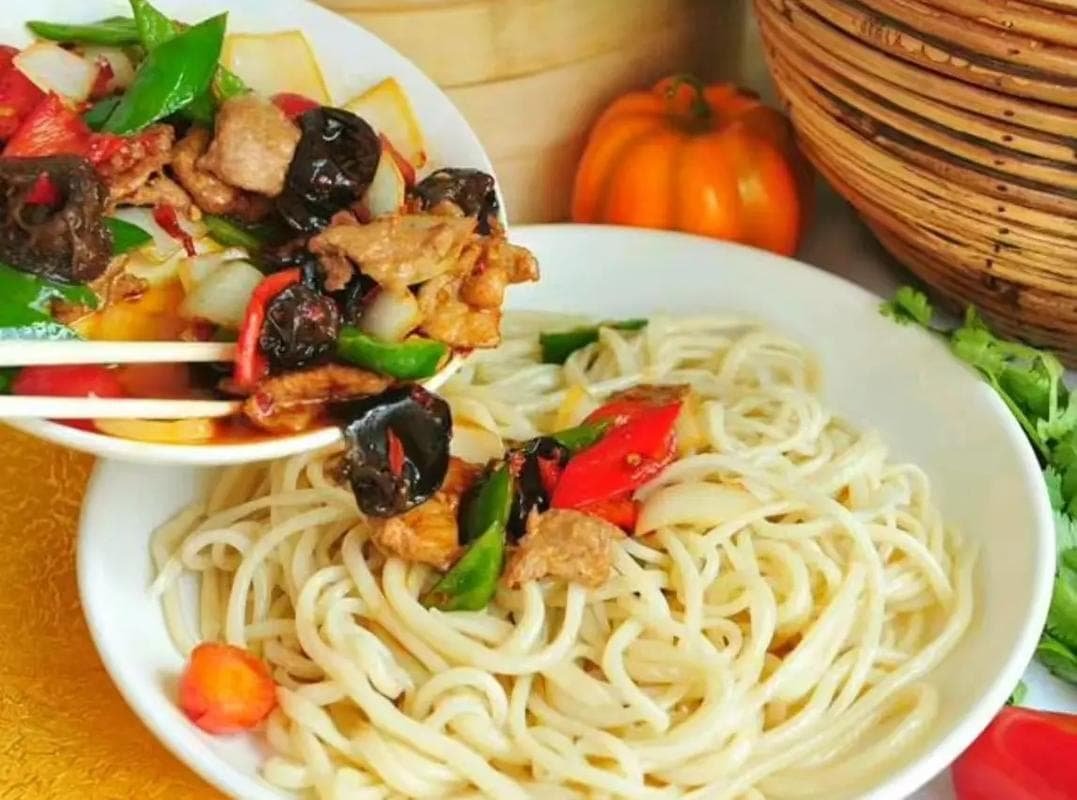
The Uyghur version, nowruz köchä, is looser and sweeter. A cauldron goes up outdoors, mutton simmers, then in go soaked wheat, millet, oats, chickpeas, red beans and mung beans. After that comes the fruit: jujube, dried apricot, raisins, walnut pieces, sweetcorn, yellow carrot, and chamgur — the local turnip that tastes faintly of chestnut. It ends up the colour of wet sand with orange flecks. Sweet and savoury at once, and genuinely strange the first time.
Kyrgyz households in Akqi and Wuqia make köchö, closer to the Kazakh style, and pair it with a fire ritual. Juniper branches get lit, someone respected in the village waves the smoking branch three times over each head, and the men jump the fire. The chant translates roughly as “away, away, all demons and disasters”. Livestock get walked through the smoke too.
If you are handed a bowl, take it with your right hand. Finish it if you can. Refusing a second helping by putting your hand flat over the bowl is understood and not rude.
Yining and the Ili Valley: The Easiest Place to See It
For a first-time visitor this is where I would go. Yining has a dense old quarter, Kazanchi, where the houses are painted in blues and greens that look almost Caribbean, and the courtyards are big enough for a cauldron. Families cook outdoors and doors stay open. In 2021 I counted eleven pots on one 400-metre stretch of lane between 09:00 and noon.
Practical notes from three visits. Get there on the 19th, not the 20th — the shopping, the house-cleaning and the bread-baking on the eve are half the point, and hotel prices in Yining jump about 40 percent once the holiday starts. Book at least three weeks out. Our Yining and Ili Valley guide covers the layout of the city and how the bus network works, which you will want because taxis vanish on the 21st.
The Ili Valley is also where Nowruz overlaps with something visual. Apricot blossom in the lower valleys starts late March in warm years. If you are already planning around flowers, the timing table in our spring blossom trail guide lines up almost exactly with the festival window in Xinyuan and Gongliu.
Tashkurgan: Chogh Bahor on the Pamirs
This is the version I would travel furthest for. Tashkurgan Tajik Autonomous County sits at 3,100 metres, four hours south of Kashgar on the Karakoram Highway, and the Tajik festival there looks nothing like the lowland one.
Houses get swept out completely — furniture into the yard, walls whitewashed, the lot. Then flour. Someone dips a hand in flour and presses white prints onto shoulders, onto doorframes, onto the flanks of the yaks. I have a photograph from Datong township of a yak with a red flower tied to its head and two flour handprints on its shoulder, standing in an apricot orchard, looking deeply unimpressed.
A man is chosen as the Shogun and leads a procession from house to house. Each household feeds the group: arzuq, small fried dough pieces, and large flat naan baked for the occasion. There is eagle dance, performed to the bone flute and the frame drum, and it is danced by ordinary villagers rather than a troupe. The festival stretches into related days — a water-leading ceremony where the irrigation channels are cleared collectively, and a sowing day.
Getting there for the festival takes planning. Foreign passport holders need the border permit for Tashkurgan and it is easier to arrange in Kashgar than anywhere else. Guesthouses in the county town sell out entirely during the blossom-plus-festival overlap; the ones in villages like Kukexiluke fill on word of mouth. I stayed in a converted family compound in 2023 whose owner had trained at the Beijing Dance Academy and come home after an injury. He played rawap for four of us after dinner and made coffee, which was not what I expected at 3,100 metres.
Kashgar and the Southern Oases
Kashgar’s Nowruz is more urban and more compressed. The cooking happens in courtyards and community spaces rather than on the street, and the public face of it is music and sport. Expect meshrep gatherings, Twelve Muqam sung by people who are not professionals, wrestling matches, and in the surrounding counties, kokpar — the goat-carcass horse game.
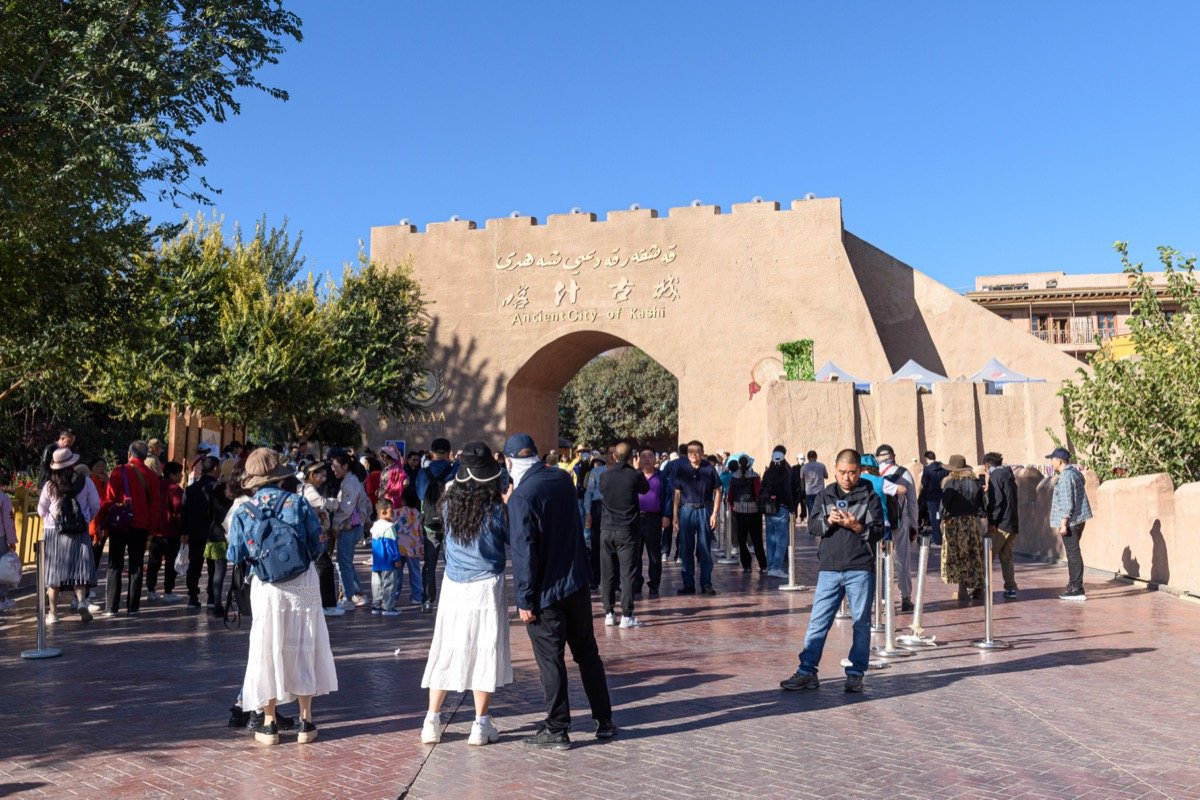
Wandering the lanes of Kashgar Old Town on the morning of the 21st is worth the airfare on its own. Bakeries run flat out. Everyone is in new clothes. Children go door to door and get sweets, which feels closer to Halloween than to a new year.
One warning about photography. Cooking a cauldron of nowruz köchä in your own yard is a domestic act, not a performance. Ask. I use two words of Uyghur and a raised camera, and I have been waved off maybe one time in ten, which is fair.
Timing, Weather and What It Costs
Late March in Xinjiang is not spring everywhere. Rough numbers from my own trips:
- Yining — daytime 8 to 15°C, nights near freezing. Mud everywhere from the thaw. Bring boots you do not care about.
- Kashgar — 12 to 20°C by day. Dust is the issue, not cold. A buff for your face earns its place.
- Tashkurgan — daytime highs around 5°C, nights down to minus 10°C. Winter kit, no compromise. Our seasonal packing list has the layering setup I use for exactly this kind of altitude-plus-shoulder-season problem.
- Turpan — already warm, 18 to 24°C, and the vines are being untied from their winter trenches.
Costs are low. My four-day Yining trip in 2021 came to about ¥1,450 excluding the flight: ¥260 a night for a decent guesthouse room, maybe ¥60 a day on food because half of it was given to me, and the rest on buses and a shared car to Qapqal. Flights into Yining from Urumqi run ¥400 to ¥900 depending on how late you book.
Eating Your Way Through the Holiday
Beyond the porridge, Nowruz is a bread festival. Bakeries produce oversized naan stamped with patterns you will not see in August. In Tajik villages the festival naan can be 50 centimetres across and gets broken by hand at the table rather than cut.
Breakfast during the holiday runs long. Milk tea, naan, dried fruit, sometimes samsa left over from the day before, and a lot of sitting. If you want to understand the rhythm before you arrive, our guide to Uyghur breakfast culture covers what turns up on the cloth and in what order.
How to Behave
Short version, learned partly by getting it wrong.
Accept food. Turning down a bowl reads as a judgement on the household. If you genuinely cannot eat more, take it, touch it, thank them, leave it.
Bring something. Fruit, sweets, tea, a bag of walnuts. ¥30 of anything is enough. Arriving empty-handed at a house you have been invited into is the one mistake people remember.
Do not photograph the fire ritual from inside the circle. Stand where the villagers stand.
Learn “yaxshimusiz” for hello and “rehmet” for thank you in Uyghur, “rakhmet” in Kazakh. That is the entire required vocabulary and it changes how the day goes.
A Realistic Plan
If I had six days and wanted the strongest version of this festival, I would do it like this. Fly into Urumqi on 18 March, connect to Yining the same day. Spend the 19th and 20th in Kazanchi watching preparations and eating. Fly Yining to Kashgar on the morning of the 21st — there is usually a direct flight around 09:00 — and land in time for the afternoon in the old town. Drive to Tashkurgan on the 22nd and catch the tail of Chogh Bahor plus early apricot blossom, then back to Kashgar on the 24th.
It is a lot of moving. The alternative is to pick one place and stay put, which is honestly the better trip. Nowruz rewards sitting still in a courtyard for six hours far more than it rewards covering ground.
Eight years after that lukewarm bowl in Yining, I still cannot make the porridge properly at home. The wheat never softens the right way and I always overdo the apricot. Which is probably the point — some food only makes sense in the yard it was cooked in, on the one morning of the year when the day and the night are the same length.