
Parking and Vehicle Safety on a Xinjiang Road Trip: County Towns, Scenic Areas, and No-Man’s-Land
The night in Tashkurgan when I almost left my car at the border police station door
In September 2025 I drove into Tashkurgan Tajik Autonomous County, arriving at dusk. The county is small; painted spaces line the main road but every one was full. Peak season, not a single empty spot. I circled three times and finally parked at an alley mouth, thinking “just one night, fine.” At 2 a.m., knock knock, two police officers at the window: “Comrade, your car blocks the fire lane, move it.” I half-asleep moved it across to the big open lot by the station and slept. The next day I learned that lot was the county’s designated free tourist overnight lot, monitored and patrolled. My three circles were wasted. One question to the hotel front desk or one look at a sign, and no trouble at all.
Since then my Xinjiang parking rule set is this: in a county, find the “three places” first, the police station or post, a paid lot, or the hotel yard. These three are safest, especially the first two, with cameras and patrols, theft odds an order of magnitude below the roadside. This article lays out every pothole and tip I have collected on parking and night vehicle security.
Overnight county parking: do not pinch those few yuan
Xinjiang county daytime parking is mostly free or ¥2-3, but overnight splits wide. I handle three cases:
Hotel or guesthouse — first choice. When booking, ask “is there a yard or dedicated spot?” Many northern and eastern Xinjiang guesthouses have walled yards; lock the gate, the owner sleeps by the door, the car rests easy. I stayed in a Burqin guesthouse where the iron gate locked, the owner slept in the front room, zero worry all night. No yard? Park where the front desk can see you, not a back-alley dead end.
No booking, pure drive-through night — find a county paid lot, especially one with a bar and an attendant. Xinjiang small-county overnight lots run ¥10-20. Cheap? Compared with a lost mirror or a key scratch, pay it. I search “parking” in the nav, pick high-rated, “24-hour” ones.
Nowhere at all — find the nearest police post or station, ask if you may park in their front lot. Xinjiang grassroots posts are generally friendly to touring drivers, especially in tourist counties. Tashkurgan is the live example. But never assume; always ask, and never block their lane or they will knock.
On overall long-distance prep, we have a roadside assistance and breakdown article. Parking and theft prevention are the “upstream” of rescue; park well and many troubles never start.
Scenic parking: fees, distance, and the lure of the “wild spot”
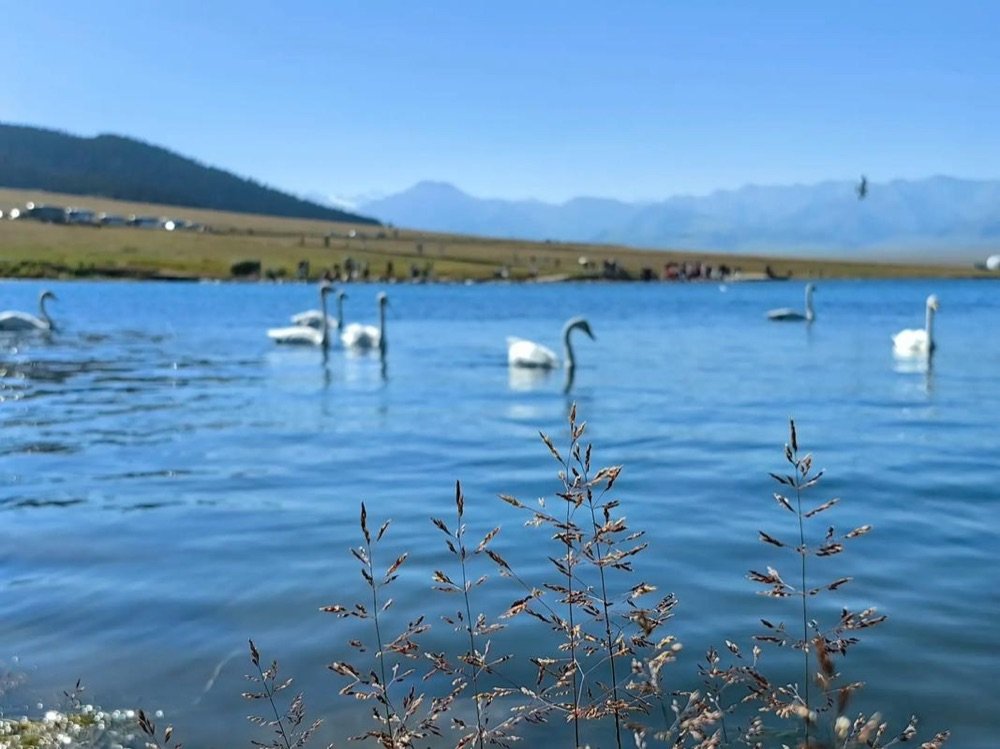
Popular scenic lots follow different rules than counties. The Kanas Jadenyu lot, the Sayram east-gate lot, the Nalati lot all charge, ¥20-50 a day, but they are manned and camera-covered. I say do not save at scenic lots, especially overnight. Your car is packed with gear; parked in an unmanaged wild spot it advertises “rob me.”
But scenic lots have a trap: peak-season overflow. July-August, Sayram and Kanas lots fill by noon; late arrivals park kilometers away at overflow and shuttle in. My answer is arrive early or leave late, before 9 a.m. or after 7 p.m., spots wide open. Once I entered Sayram at dusk on purpose, found a spot and caught sunset light worth the trip.
The “wild spot” lure is free and close. Along the Duku some pull-offs tempt drivers to slant the car onto the meadow, skipping the lot fee. I advise against it. First, meadow parking damages grass and a patrol comes. Second, those spots have no cameras; you climb back and the car may or may not be there. On the Duku, use the white-lined pull-offs, the legal ones. Do not cross the line.
No-man’s-land and roadside stops: wind, rock, and unseen risk
Much of Xinjiang’s beauty sits beside no-man’s-land, gobi, desert edge, mountain passes. Parking there is a different risk class.
Wind is the first killer. A friend parked in Hami’s Dahai Road area to shoot; a side gust flung the door to full open, the hinge bent, ¥800 to fix. Xinjiang wind, especially passes and gobi, arrives without warning. My habit: read wind direction before stopping, hold the door by hand getting out, never let it swing free; on windy days exit the far side, not the driver’s door.
Falling rock and slides are real on mountain roads. On the Duku, Yizhao, Pamir switchbacks, I never stop on the outside of a curve or below a cliff face, however pretty. To shoot, use a marked pull-off or a viewing platform; those are engineered safe.
Wildlife occasionally meddles. I parked on an Altay township road once, woke at midnight to something scratching the door; a flashlight showed a marmot chewing grass by my tire. No harm, but if your car smells of food, a bear or dog will come. Do not leave food inside, especially meat odor.
Theft prevention decides whether your trip sings or breaks
Xinjiang is safe overall, but “nothing valuable left in the car” is universal. My iron law: away from the car, all valuables come with you, camera, laptop, cash, even the good cigarettes. The trunk is not safe either; I have seen trunks pried. Carry them on your back.
The car itself, modern anti-theft is enough, but an old rental or your old friend I would add a steering-wheel lock, a ¥10-ish psychological deterrent, especially for roadside county nights. My dashcam stays on parking-monitor; a night draws little power but keeps evidence of a scrape. On fuel and resupply, our fuel price and refueling guide notes that fuel stations are relatively safe temporary stops; at night when you cannot go on, a station yard beats the wild a hundred times.
One more detail: do not leave a bag or a pile of clothes visible in the car. Thieves pick cars by what is inside; an empty-looking car they skip. Before parking I clear the back seat so the car looks unlived-in, safer.

Sleeping in the car: safety beats comfort
Many self-drivers save trouble by sleeping in the car. Xinjiang is vast, service areas sparse; an occasional car night is understandable. But two red lines: never run the engine for heat in a sealed cabin. Carbon monoxide is colorless, odorless, you sleep and do not wake; the news has one every year. To vent, leave a crack and park where air moves. Second, park where there are people, not deep in the wild for quiet; if someone or a beast comes at midnight, you are alone.
I slept in the car twice, both at service areas or town edges. An SUV rear seat flattened with an air pad beats a tent, warmer, wind-proof. But even summer leave a window crack; Xinjiang nights are dry-cold, sealed in and you wake with a headache. On routes and checkpoints, our speed limits and checkpoints guide says obey commands around checkpoints; do not park on your own there, you only delay yourself.
Winter parking: Xinjiang’s other lesson
If you come in winter, parking trouble doubles. A minus 20°C morning ambushes three things: frozen doors, wiper blades stuck to glass, dead battery.
Do not yank a frozen door; you tear the seal. The trick I learned is warm water on the seam (not boiling, glass and rubber hate sudden heat), or smear a little Vaseline on the seam the night before, an old-driver move. I lift the wipers at night or slip paper between blade and glass; next morning peel and go, no cracked rubber.
The battery is winter’s top killer. Xinjiang cold drops capacity by 30%; park a night and fail to start is common. My habit: kill all electronics before parking, and if the car sits long, start it every couple of days to charge; if it will not turn, do not crank to empty, call insurance for a jump. Our roadside guide has the numbers and steps. And in snow, do not lock the handbrake hard; the pad freezes to the disc. I use gear (manual) or P (auto) plus a brick under the wheel, easy start next day.
Service areas and fuel stations: safe islands on night drives
Xinjiang service areas are not as dense as inland, especially on national roads and desert highways, one every few dozen km. When night driving breaks you, the service area is the best overnight spot, lit, manned, camera-covered. On the G30 I once at 2 a.m. could not keep my eyes open, pulled into the area lot, reclined the seat for two hours, safer than pushing.
Fuel stations too. CNPC and Sinopec yards are large, lit; at midnight refueling, park aside and rest, a hundred times better than the wild. On fuel prices and station spread, our refueling guide lists them. One add: no open flame or phone use inside the station; when fueling do not wander far from the car, peak season a ten-minute queue, do not leave things behind.
Checkpoints and border parking: obedience beats cleverness
Xinjiang has many security checkpoints, especially southern Xinjiang and border counties. Parking at a checkpoint has rules: obey the officer, stay in your lane, no cutting, no crowding. Once in a hurry I tried to cut at a checkpoint, got pulled aside for five minutes of talk, not worth it. Have documents ready (ID, license, registration; border areas need the border permit), window down, cooperate, fast.
Do not park at a checkpoint to photograph. Some stations are sensitive or security-related; a phone up may earn you “a cup of tea.” I shoot only at a legal viewing platform past the station. On how to get the border permit and which counties need it, our checkpoints and speed limits detailed version is required reading before Tashkurgan, White Sand Lake, or Kanas.
Dashcam and insurance: the last line of parking safety
My dashcam stays on parking-monitor. Low draw, but if scraped or scratched in a lot, it is evidence. Once outside Kashgar old town a roadside spot, I returned to a cracked right mirror shell; the cam showed the next stall’s door did it. No culprit, but the video smoothed the insurance claim. So: parking-monitor on, especially overnight and at scenic lots.
Insurance: before leaving confirm your policy covers “no-deductible” and scratch. Xinjiang stone roads mean small damage; scratch cover buys peace. On choosing insurance, our rescue and insurance piece helps. My experience: do not report every tiny scratch, batch them before return to avoid premium hikes, but panel or light damage, report on the spot.
Parking etiquette in ethnic areas: do not offend by accident
Xinjiang is multi-ethnic; parking has unseen rules. Do not park on the axis line facing a mosque gate; that is the prayer direction, even unmarked locals resent it. During prayer times (especially Friday noon) do not long-honk near a mosque or blast music. In Kashgar and Hotan I am careful; park a bit away and walk, no one minds, it shows respect.
Herder pastures and villages: do not drive over crops or pens, do not block a yard gate. Once in an Yili village I nearly parked in front of a household’s fresh wheat stack; the owner smiled and waved me off, I moved, and he later pointed me to open ground. Xinjiang people are warm, but respect their land first.
Long-term parking: if you fly away for a few days
Some drivers fly back inland mid-trip; the car sits. I suggest a proper lot or hotel yard, not the roadside. Urumqi Diwopu airport has long-term spaces, ¥20-30 a day, camera-covered, better than anywhere. Before leaving, empty the car, disconnect the battery negative (avoid drain), bump tire pressure slightly up (avoid flat spots), reconnect and go on return. A friend left a car in Yining five days, came back to a dead battery, needed a jump, the cost of not disconnecting the negative.
My seven iron laws of parking
Pressed at the end for you to copy: one, in counties prefer hotel yard, paid lot, police post; two, do not save at scenic lots, use the legal one; three, wild parking avoid wind, cliff, riverbed; four, away from car take all valuables; five, winter do not lock the handbrake, Vaseline the door seam; six, at checkpoints obey, documents in hand; seven, dashcam on, insurance confirmed. These are not doctrine; they are bought with real money and a few scares among me and driver friends. Xinjiang is huge; parking looks small, but done wrong it ruins a day. Spend ten minutes parking right, buy the whole trip’s calm. May your car, parked anywhere, be there waiting when you return.
A scare that still stays with me
Once on a Pamir township road I parked askew under a cliff for a photo, ten minutes. Came back to fine gravel on the hood, looked up to fresh rockfall marks above. Had I left two minutes later, or parked half a meter further, that rock might have hit the hood. Since then, mountain parking never near a cliff or the outside of a curve; however pretty, wait for the viewing platform.
Another time in the gobi, wind nearly tore the door off; I learned a life move: hand on the door getting out, exit downwind, no driver-door open in high wind. No one teaches these; you earn them.
May your car always wait for you
Writing this I flipped the album; parking photos are many: the Tashkurgan post lot, Sayram lot at sunset, the Yili pasture borrow, the gobi night the wind rattled. Not as pretty as sight photos, but they string together every calm departure and return.
The car is the leg across this land. Settle it well and it brings you home steady. Xinjiang is so big, roads so long; may your car, parked anywhere, be there intact, with its dust and stories, waiting for the key to turn and carry you on.