

Getting Around Xinjiang’s Cities: A Foreign Traveler’s Didi Ride-Hailing Guide
After a long desert drive, the last thing I want is to argue over a taxi meter in a language I don’t speak. That is where DiDi, China’s ride-hailing app, becomes the quiet hero of any Xinjiang city stop. I use it constantly in Urumqi, Kashgar and Yining, and once you set it up, it removes most of the friction of urban transport and lets you save your energy for the road, not the city blocks.
Setting up DiDi as a visitor
You need a Chinese SIM for the app to work smoothly; the SIM and internet guide explains getting connected, and without it the app simply will not load a map. The app itself accepts foreign cards in many cases now, but I link it to Alipay as a fallback because payment glitches happen at the worst moments, usually when you are late for a train. Type your destination in Chinese characters if you can (copy from a hotel business card), because voice recognition of English place names is unreliable and a wrong pin drops you blocks from where you meant to go, which is funny only in retrospect.
Urumqi has the densest coverage and shortest waits, often under five minutes even at busy hours. Kashgar and Yining are solid in the city core but thin at the fringes, and in smaller counties you may default to street taxis or your rental. In Hotan and Aksu the app works but the car supply thins after 10 p.m., so plan late moves accordingly.
When DiDi beats driving yourself
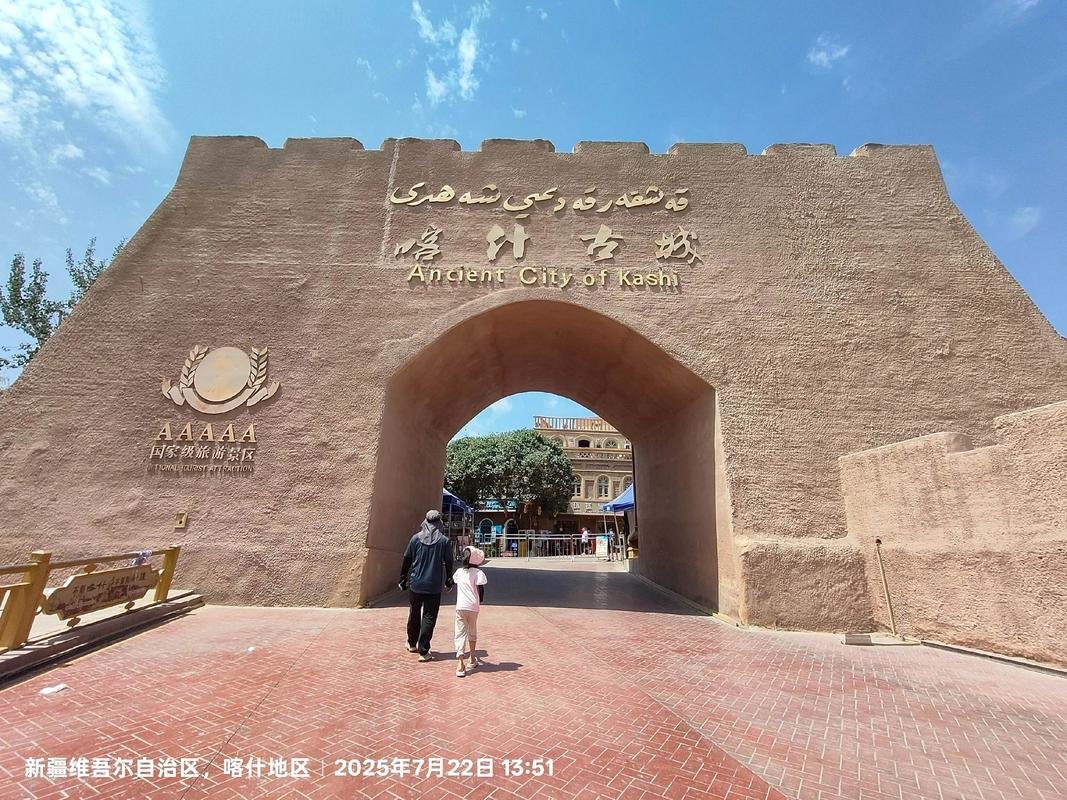
In old-town Kashgar the streets are a maze and parking is scarce, so I park the rental at the hotel and DiDi the rest. Same in central Urumqi during rush hour, when a 2 km trip by car takes longer to park than to ride. For day trips out of the city, though, the Urumqi weekend loops are better done in your own car where you control the stops and the playlist. The app is a city tool, not a road tool, and knowing which is which saves arguments with yourself.
If you are not renting at all, the drive-plus-transit combo explains how to mix trains, buses and ride-hailing to cover ground without a car, which is a real option for city-heavy trips where the car would just sit and accumulate parking fees you could spend on food.
Costs and etiquette
Short city hops run 8-20 yuan; cross-town rides maybe 30-45 yuan. The app shows the price before you confirm, so there is no haggling and no “special price for foreigners” nonsense I have hit with street taxis who size up the luggage and the lost expression. Stand at the pinned pickup point, not in the middle of a road, and confirm the plate matches the app before getting in. Drivers here are generally patient with tourists who clearly don’t know the drill, and a smile and a mangled ni hao goes further than a frustrated wave.
One quirk: in some tight old-town lanes the car cannot reach you, and the driver may ask you to walk to the nearest main street. Patience here saves a cancelled ride and a one-star review you don’t deserve. I learned to screenshot the meeting point and message the driver the cross-street in broken Chinese characters I copied earlier, which turned a confusing five minutes into a smooth handoff and a five-star rating for both of us.
Where DiDi falls short
At dawn, in the far suburbs, or during a rain burst, cars get scarce and surge pricing kicks in. That is when I fall back to the parking and security habits of leaving the car somewhere safe and walking, because a 60 yuan surge for a ten-minute ride is a tax on poor planning. Also, ride-hailing will not take you between cities; for that you need the train network or a rental, and the two solve different problems that should not be confused at 6 a.m. with a flight to catch.

My habit now: rental for the region, DiDi for the city. The two together cover almost everything Xinjiang throws at a self-driver, and the app removes the one thing I hate after a long drive, which is negotiating a fare by hand gesture in the dark while a taxi driver argues with a guy selling lamb skewers. Let the app handle the city; you handle the open road, where the only negotiation is with yourself about whether to stop for one more photograph.
DiDi versus street taxis
Street taxis still gather at stations and hotels, and a few drivers know corners the app routes around. But the app wins on price transparency and safety record, and on not having to mime “old town, near the mosque” at a confused driver. The parking guide is why I leave the car at the hotel in the old town; DiDi the rest and the only negotiation is with the app, which does not argue back.
Airports and train stations
DiDi to Urumqi airport is reliable and cheaper than the fixed-rate cabs that lurk at arrivals; set the pin at the departures level to avoid the touts. The train guide pairs with this: ride-hail to the station, train to the next city, ride-hail again, and you skip a multi-day drive you did not want. I plan intercity hops this way and save the self-drive for the scenic legs where the car is the point.
Tipping and rating
No tipping; rate honestly. A five-star for a clean ride and a safe driver helps the next traveler, and a low rating for a real problem is fair. I rate every ride now because the system only works if riders do; a silent thumbs-up takes five seconds and improves the next visitor’s odds of a good car in a small town where the pool is thin.
Language hacks that help
Screenshot the hotel name in Chinese and show it to the driver; type the destination in characters even if you cannot say it. The Uyghur phrasebook is a nice gesture but Chinese characters move the car. I keep a notes file of pinned destinations from each city, so the next visit starts with the right pin instead of a confused circle on the map and a driver asking where, exactly, I mean.
When to just walk
The best old-town experiences are on foot, and DiDi cannot follow a pedestrian lane anyway. I ride to the edge, then walk the core, which is how Kashgar’s old town revealed itself to me over days rather than minutes. The transit combo frames the whole approach: car for the region, app for the city, shoes for the soul of the place, and you end up with better stories than the dashboard ever gave you.
Airport and station runs done right
For Urumqi airport, set the pin at departures and skip the arrivals touts who quote double. The train guide pairs with this: ride-hail to the station, train out, ride-hail again, and you avoid a multi-day drive you did not want. I plan every intercity hop this way and save the self-drive for the scenic legs where the car is the whole point, not the chore of getting between cities.
Splitting rides and meeting locals
DiDi is single-party, but the same app occasionally shows carpool options on busy routes; a shared ride is cheaper and a small window into local life. I took a pooled ride once with a woman who ran a noodle shop and got a dinner recommendation better than any blog. The transit combo is the bigger framework; ride-hail is just the city layer of it, and the human layer is the bonus you did not plan for.
Accessibility and heavy luggage
DiDi’s larger car classes handle big suitcases and tired knees better than a sedan; pick “comfort” or “six-seat” for the airport run and spare yourself the trunk Tetris. The parking guide is why I do not wrestle the rental at the terminal; the app drops me at the door and the car waits at the hotel. Small comforts like this are why the city leg stops feeling like a penalty for the road leg.
Mistakes I made so you don’t have to
Early on I typed the destination in English and the app sent a car to a namesake street across town; thirty wasted minutes and a sheepish cancel. I also stood in the road instead of the pin and wondered why no car came, when the driver was circling the actual point a block away. The parking guide is unrelated but the lesson is the same: precision saves you. Now I screenshot the Chinese name, stand exactly on the pin, and confirm the plate before moving, and the app has gone from a source of small humiliations to the smoothest part of any city day, which is what it is supposed to be.
DiDi or a rental for a city week?
If you are based in one city for several days, DiDi almost always beats a rental you barely drive, once you add parking, the daily rate, and the mental load of a strange car in strange traffic. The parking guide is why I leave the car at the hotel; the app covers the errands, the dinners, the station run, and the late-night return from a bazaar I overstayed. For day trips out of town, the weekend loops guide shows where the car earns its keep, and I switch modes without guilt: rental for the region, app for the city, and the right tool for each leg instead of dragging a vehicle through streets that were never built for it. The money saved on a city-week rental pays for a lot of noodles and the occasional splurge dinner you will actually remember.
DiDi as a safety tool at night
After dark in an unfamiliar city, ride-hailing beats a street taxi for one reason: the app records the plate, the route, and your drop pin, so there is a trail if something goes wrong, and a driver who knows he is tracked behaves accordingly. I use it for the late bazaar run back to the hotel and for the 11 p.m. station pickup I would never flag down on a corner. Share the live trip with a friend when you can; the parking and security guide is about the car, but the same calm-from-tracking logic applies to you. In smaller counties the pool thins after midnight, so I call the ride before closing time rather than after, when the only option is a sleepy driver twenty minutes out.
DiDi in the smaller counties
In Hotan, Aksu and the county seats the app works but the car supply is thinner and the wait longer, especially off the main drags. I treat it as a backup to the rental there, not the primary tool, and I set the pin in the town centre rather than a quiet side street where no car will accept the fare. The train guide gets me between the small counties; DiDi covers the last few kilometres from the platform to the guesthouse. Knowing which tool fits which leg is the whole game in a region where the cities are far apart and the roads between them belong to the car, not the app, and the passengers who plan it well barely notice the distance.