
Xinjiang Dairy Products & Traditional Drinks: Milk Tea, Yogurt, Kumiss & Where to Try Them
Last updated: June 2026
When most travelers think of Xinjiang food, they picture sizzling lamb skewers, golden polo (pilaf), and freshly pulled Laghman noodles. But there’s a whole universe of flavor most visitors only glimpse in passing — the dairy and tea traditions that sustain nomads, villagers, and city dwellers across the Silk Road’s widest stretch.
This guide covers the milk tea, yogurt, dried curds, and fermented drinks you’ll encounter from Yining’s Kazakh yurt camps to Kashgar’s Uyghur tea houses, plus where to try them and how to order without embarrassment.
Milk Tea (Nai Cha / Süt Chai) — The Daily Ritual
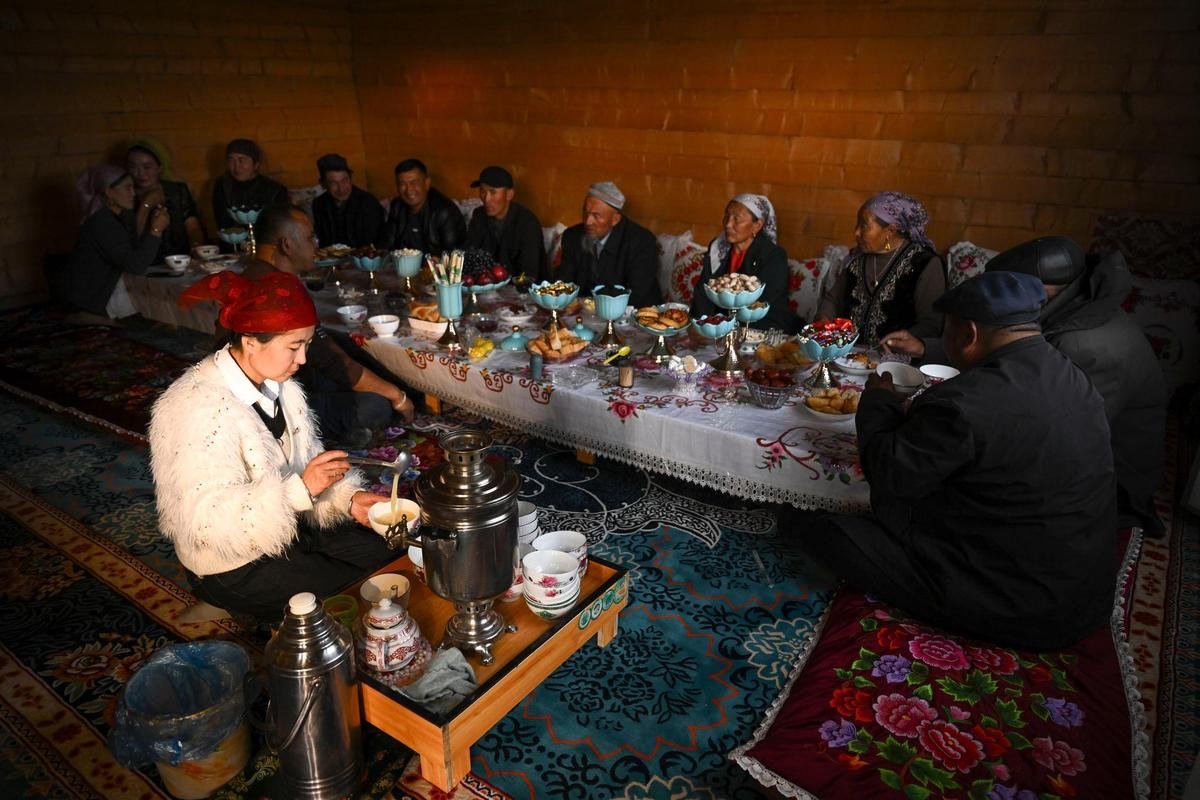 Xinjiang milk tea traditional teapot and bowl” style=”width:100%;max-width:700px;height:auto;display:block;margin:20px auto;border-radius:8px;”>
If you sit in any Uyghur restaurant for more than five minutes, someone will appear with a teapot. Xinjiang milk tea is not the sweet bubble-tea style you find in Shanghai or Taipei. It’s savory, warming, and deeply functional — a calorie-dense drink built for cold mornings and high altitudes.
What’s in It?
The base is loose-leaf black tea (often brick tea, historically transported along the Silk Road), simmered with whole milk or sheep’s milk, a pinch of salt, and sometimes a crushed cardamom pod or a slice of fresh ginger. In Uyghur households it’s brewed in a special teapot called a chaydan and served in handleless bowls.
Regional Variations
- Uyghur style (Kashgar, Hotan, Kuqa): Salted, milky, robust. Usually served alongside naan for breakfast or an afternoon break.
- Kazakh / Kyrgyz style (Ili, Yining, Tekes): Often richer, sometimes with added butter or cream, and traditionally served in a wooden bowl. The milk is frequently from horses or yaks at higher elevations.
- Han Chinese style (Urumqi, Shihezi): Sweeter, sometimes with goji berries or red dates — a fusion product of Xinjiang’s mixed demographics.
Yogurt (Süzme / Nai Lao) — Thick, Tart, and Unsweetened

Xinjiang yogurt is nothing like the fruit-flavored cups in Western supermarkets. It’s pure, live-culture dairy — thick enough to stand a spoon in, with a tartness that makes your jaw tingle the first time you try it.
Where to Find the Best Yogurt
The most memorable yogurt I’ve had came from a Kazakh family’s yurt near Sayram Lake. It was served in a wooden bowl with a drizzle of wild honey and a sprinkle of walnuts. In cities, look for:
- Urumqi: The night market near Hongshan Park has several stalls selling house-made yogurt with honey or jam.
- Yining (Ili): Kazan Street has small family-run shops where the yogurt is set in ceramic bowls and sold the same day.
- Kashgar Old City: Early morning vendors near Id Kah Mosque sell freshly made yogurt from metal carts — bring your own spoon or eat it Uyghur-style with a piece of naan.
A Note on Safety
Stick to yogurt that’s been kept cool or is actively fermenting in a visible bucket/carton. Unpasteurized dairy carries risks, especially if you have a sensitive stomach. When in doubt, the yogurt sold at established restaurants is a safer bet than roadside stalls where the ice has melted.
Kurut (Airag / Dried Milk Curds) — The Nomad’s Energy Bar
If you’ve hiked in the Tian Shan or visited a yurt camp in Bayanbulak, you’ve probably been offered a small, pale nugget that looks like a white pebble. That’s kurut — dried, salted yogurt balls that Kazakh and Kyrgyz herders have relied on for centuries.
What Does It Taste Like?
Intensely salty and sour at first, then slowly creamy as it dissolves on your tongue. It’s an acquired taste. Most travelers politely chew one and quietly reach for water; after a few days on the steppe, you’ll find yourself craving the salt hit.
Where to Buy Kurt
- Yining bazaars: Look for cloth sacks of kurut sold by weight. ¥15–25 per 500g.
- Kashgar Sunday Market: Dairy vendors sell fresh and dried varieties. The white, round ones are the standard; some families add herbs or chili.
- Online: Several Taobao shops ship vacuum-packed kurut, though the texture degrades compared to fresh.
Kumiss (Airag / Marenai) — Fermented Mare’s Milk

Kumiss is the one drink on this list that divides travelers instantly. It’s fermented mare’s milk, mildly alcoholic (0.5–2.5% ABV), with a sharp, fizzy tang that’s closer to a dry cider than any dairy product you know.
The Cultural Context
For Kazakh and Kyrgyz communities, kumiss isn’t just a drink — it’s a springtime tradition tied to the pastoral calendar. Mares foal in early spring, and the milking season kicks off a round of celebrations, horse races, and communal meals on the grassland.
Where to Try It
Kumiss is seasonal — typically late May through August, when mares are actively milked. You’ll find it:
- Nalati and Kalajun grasslands: Yurt-stay families often offer kumiss to guests. Ask: “Airag bar ma?” (Do you have kumiss?)
- Yining and Tekes county: Some specialty shops sell bottled kumiss, though the live-culture version is far better fresh.
- Bayanbulak: Nomad families near the scenic area sometimes sell kumiss by the bowl in summer.
A Warning on Alcohol Content
While kumiss is only lightly fermented, the alcohol content can creep up if it’s been sitting in a warm yurt for a day. If you’re driving or have a low tolerance, one small bowl is plenty.
Other Dairy Delights You Shouldn’t Miss
Clotted Cream (Kaymak / Nai You)
Rich, spoonable cream that’s slow-simmered and cooled into a spreadable layer. In Kashgar it’s sometimes served with polo as a luxurious garnish; in Yining it appears at breakfast with fresh bread and honey.
Camel Milk (Nai Tuo / Tuo Nai)
Less common but worth seeking out in desert-edge towns like Turpan and Hotan. Camel milk is more saline than cow’s milk, with a slightly gamey aftertaste. It’s prized in traditional medicine circles and increasingly sold in Urumqi health shops.
Butter Tea (Süzme Chai / 酥油茶)
Not strictly a Xinjiang original — it’s more associated with Tibet — but in the high Pamirs around Tashkurgan, Tajik families sometimes serve a version with yak butter, brick tea, and salt. It’s an acquired taste and an unforgettable one.
Etiquette: How to Drink Tea and Accept Dairy Without Awkwardness
- Don’t sniff the tea before drinking. It reads as suspicion. Just accept the bowl with both hands or your right hand.
- Finish the bowl if it’s offered in a home. Leaving liquid in the bowl can signal rejection. If you’re full, leave a small amount and say “thank you” (rezmet in Uyghur, rahmet in Kazakh).
- Kurut is salty, not sweet. Don’t bite into it expecting a candy. Let it dissolve gradually.
- Kumiss etiquette: If you’re offered kumiss in a yurt, it’s polite to take at least a sip. Declining outright can be read as rejecting hospitality.
Where to Buy Xinjiang dairy products to Take Home
Most fermented dairy won’t survive the trip, but these travel well:
- Kurut (dried curds): Vacuum-packed, available at Yining bazaar and some Urumqi specialty shops.
- Dried yogurt bars: Sold in tourist shops in Kashgar and Urumqi — hit-or-miss quality, but fun to try.
- Camel milk powder: Urumqi health product shops sell this; check the expiration date carefully.
The Bottom Line
Xinjiang’s dairy and tea traditions are where the region’s Silk Road heritage is most alive. The next time you’re in a Uyghur teahouse or a Kazakh yurt, slow down. Order the milk tea. Try the kurut. Say yes to the kumiss. These flavors don’t travel — you have to come to them.
Want more food guidance? Read our Xinjiang cuisine overview and our guide to Xinjiang kebabs for the full picture.
Practical Information for Visiting Xinjiang dairy products
Before you set off, a few practical notes that make a real difference on the ground in Xinjiang. Distances are vast and timing matters more than almost anywhere else in China, so build buffer days into your itinerary and confirm opening times and road conditions close to your travel date.
Best Time to Go
Most of Xinjiang’s headline destinations are best from May to October. High-altitude lakes and northern grasslands peak in June–September, while desert and southern routes are most comfortable in spring and autumn to avoid summer heat. Winter is spectacular for snow scenery but brings closed mountain passes.
Getting Around
Self-drive remains the most flexible way to cover Xinjiang’s spread-out sights, but inter-city buses, trains to major hubs (Ürümqi, Kashgar, Yining, Turpan), and domestic flights fill the gaps. Check the latest Xinjiang travel tips before booking, as schedules shift seasonally.
What to Pack
Strong sun, dry air, and big day-to-night temperature swings are the norm. Bring high-SPF sunscreen, lip balm, a refillable water bottle, layered clothing, and a power bank. Carry some cash for remote stops where mobile payment is spotty.
Respect & Readiness
Signal can be weak outside towns—download offline maps, share your route with someone, and keep your passport handy for the occasional ID check. A little preparation turns a long drive into the trip of a lifetime.