
Xinjiang Food Culture – A Complete Guide to Silk Road Culinary Traditions
Last updated: July 3, 2026 | By Roam Xinjiang Editorial Team
When you plan your first Xinjiang travel experience, one thing becomes immediately clear: food is not merely sustenance here — it is culture, history, hospitality, and identity all served on a single platter. Xinjiang’s cuisine sits at the crossroads of the ancient Silk Road, where Central Asian, Persian, Mongolian, and Han Chinese influences have melded over two millennia into something utterly unique.
This guide explores the deeper layers of Xinjiang’s food culture beyond individual dishes — the ingredients that define the flavor profile, the cooking techniques passed down through generations, the social rituals around the dining table, and practical advice for travelers who want to eat like a local.
The Six Pillars of Xinjiang cuisine
Before diving into specific dishes, it helps to understand the foundational principles that shape how and what people eat in Xinjiang:
1. Meat-Centric Philosophy
Lamb is king. Beef follows. Poultry and horse meat appear in regional specialties. The nomadic heritage of the region’s ethnic groups — Uyghurs, Kazakhs, Kyrgyz, Tajiks, and Mongolians — means animal protein has always been the centerpiece of the diet. A typical Uyghur household meal features meat in some form at least once daily, often twice.
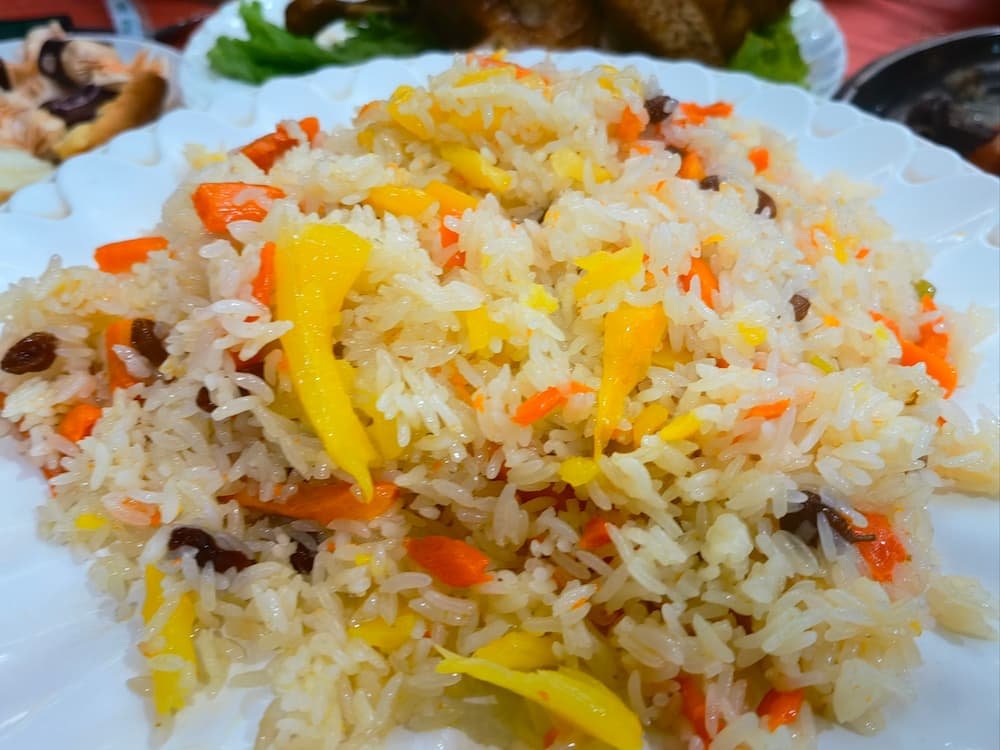 Xinjiang Polo pilaf with carrots and lamb – traditional festive rice dish” />
2. Bread as the Soul Staple
Naan (nan) is more than flatbread in Xinjiang — it is a cultural institution. There is a famous local saying: “One can go three days without meat, but not one day without naan.” Over 300 varieties of naan exist across the region, from the paper-thin sheets of Kashgar to the thick, seed-studded loaves of Urumqi. Baked in a tonur (a cylindrical clay oven sunk into the ground), naan keeps for weeks and has sustained travelers on the Silk Road for centuries.
3. Spice Architecture
Xinjiang seasoning follows a distinct pattern different from both mainstream Chinese and Central Asian cuisines. The holy trinity consists of:
- Cumin (ziran) — earthy, slightly citrusy, the signature spice of Xinjiang kebabs
- Dried red chili (la jiao mian) — adds heat without the numbing sensation of Sichuan peppercorn
- Black pepper + garlic + onion — forms the aromatic base for stews and braises
4. Wheat Mastery
Beyond naan, wheat flour appears in countless forms: laghman (hand-pulled noodles), samsa (baked meat-filled dumplings), fried rice noodles (chao fen), and the delicate wrapper skins of polo pilaf-adjacent dishes. The noodle-making technique alone is a performing art — watch a master puller swing a strand of dough between his hands until it separates into dozens of uniform threads.
5. Dairy Tradition
The pastoral cultures of northern Xinjiang have developed an extraordinary repertoire of fermented dairy products: milk tea, yogurt drinks, kumiss (fermented mare’s milk), kurut (dried cheese balls), and handmade ice cream. These are not desserts — they are beverages and staples consumed with meals, offering probiotic richness in a cuisine that otherwise skews heavily toward meat and carbohydrates.
6. Fruit Integration
Xinjiang’s intense sunshine and diurnal temperature swings produce some of the world’s sweetest fruits — grapes, melons, apricots, figs, and pomegranates. These find their way into savory dishes surprisingly often: raisins in polo, dried apricots in lamb stews, pomegranate seeds as garnish, and fruit-based sauces to cut through richness.
Regional Culinary Variations Across Xinjiang
Xinjiang is enormous — larger than France, Iran, or Turkey. Unsurprisingly, food culture varies dramatically by region:
Southern Xinjiang (Nanjiang)
Cities: Kashgar, Hotan, Kuqa, Aksu
Signature style: Heavier on meat, sweeter flavors, stronger Central Asian/Persian influence.
Must-try dishes: Polo pilaf with extra ghee, roasted whole lamb (kaoyang quan), Kashgar street food including baked fish in clay pot, thick soup with lamb offal.
Northern Xinjiang (Beijiang)
Cities: Urumqi, Yili (Ili), Altay, Karamay, Bole
Signature style: Dairy-forward, influenced by Kazakh and Mongolian pastoral cuisines, more vegetables.
Must-try dishes: Horse meat sausages, boiled mutton with salt (shou zhu yangrou), Yining-style ice cream with honey and nuts, pan-fried beshbarmak (dumplings in broth).
Eastern Xinjiang (Dongjiang)
Cities: Turpan, Hami
Signature style: Blend of Uyghur and Han Chinese cooking, grape-based dishes unique to the oasis environment.
Must-try dishes: Grape-leaf wrapped lamb, sweet melon soup, dapanji (the legendary big-plate chicken born in nearby Shawan).
The Social Rituals of Xinjiang Dining
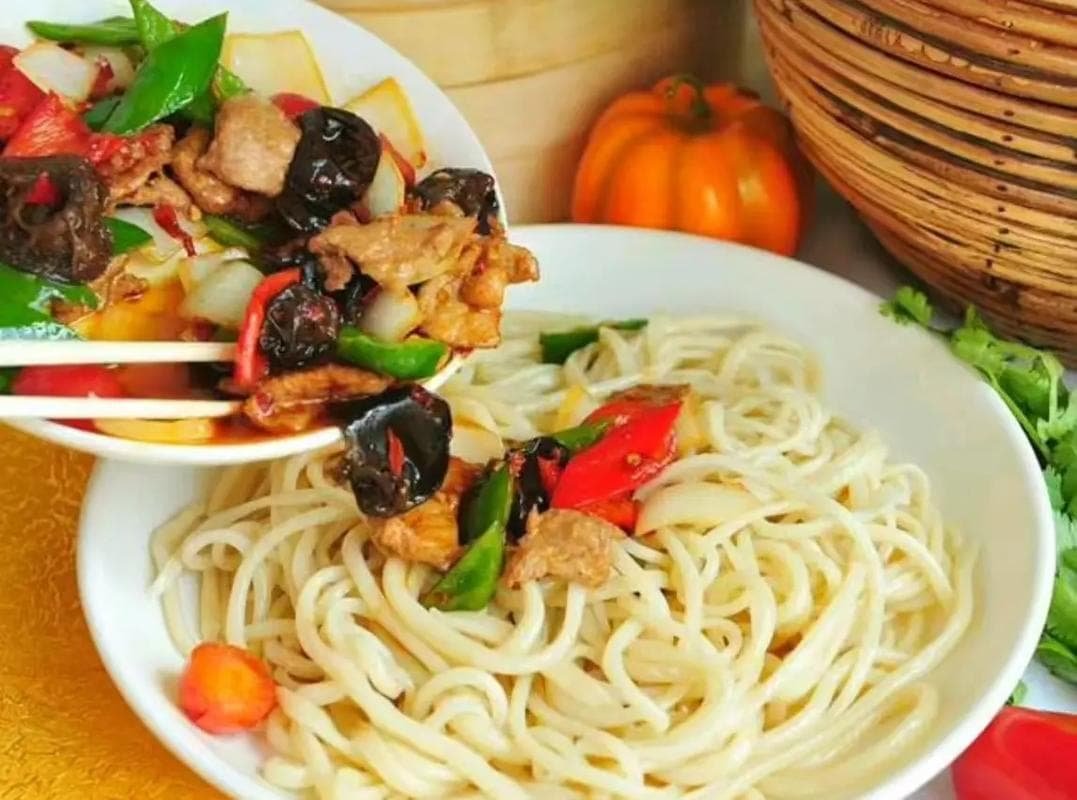 Laghman noodles with stir-fried vegetables and meat – classic hand-pulled dish” />
In Xinjiang, eating is a communal activity governed by unwritten rules that travelers should understand:
Seating Hierarchy
The seat of honor faces the door. Elders and guests are seated first. Do not sit until invited or until others have taken their places. At round tables (common in restaurants), the host or eldest person sits facing the entrance.
The Tea Protocol
Before any food arrives, tea is poured. Refusing tea is impolite — even if you don’t drink it, hold the cup and take a symbolic sip. The host refills your cup continuously; leaving it empty signals you want more. To indicate you’ve had enough, leave the cup partially full. For detailed guidance on Xinjiang tea culture and dining etiquette, see our dedicated guide.
Eating With Hands
Many traditional dishes — polo, naan with stews, whole roasted lamb — are eaten by hand. Use only your right hand. Tear pieces of naan to scoop up rice and meat. Never reach across another person’s space. Wash your hands before and after (many restaurants provide a teapot with water for rinsing).
Paying the Bill
If you invite someone, you pay the entire bill. Splitting the bill is considered awkward or even offensive in traditional settings. Among friends who dine regularly, there is an implicit rotation system — today you treat, next time I treat.
Where to Experience Authentic Xinjiang food culture
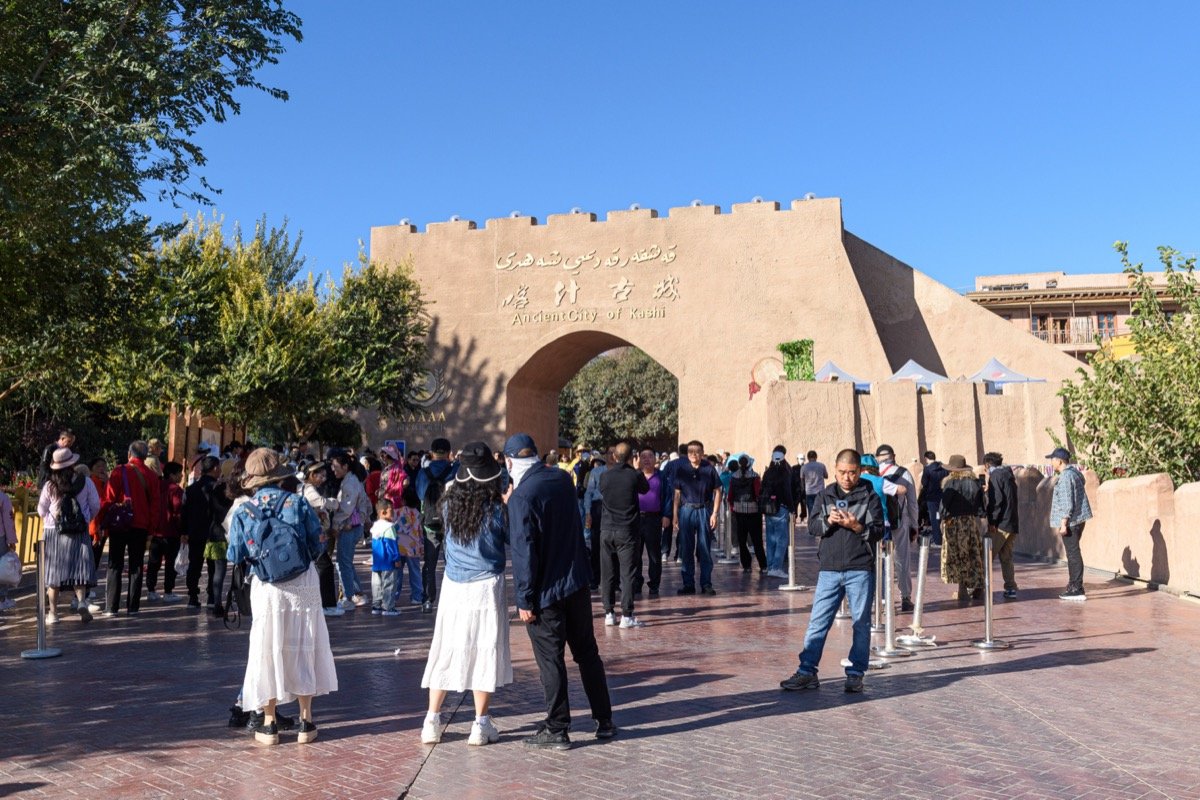
Kashgar Night Markets (East Gate & Han Bazaar)
The sensory overload begins around 8 PM when charcoal fires ignite along both sides of the lane. Hundreds of vendors grill chuan’r (lamb skewers), bake fresh naan in portable tonur ovens, squeeze pomegranate juice to order, and stack pyramids of samsa behind glass counters. This is not a performance for tourists — this is where Kashgar families eat dinner every night in summer. Budget 30-60 RMB per person for an unforgettable feast.
Urumqi Restaurant Scene
As the regional capital, Urumqi offers the widest variety — from upscale Uyghur banquet halls serving whole roasted camels to tiny hole-in-the-wall noodle shops where the owner has been pulling laghman for forty years. The International Grand Bazaar food court is tourist-friendly but authentic enough for a first exposure. For serious eaters, explore the side streets near Erdaoqiao for unmarked gems.
Yining (Ghulja) — The Hidden Food Capital
Many seasoned Xinjiang travelers consider Yining‘s food scene superior to Kashgar’s — less commercialized, more inventive, and deeply influenced by Russian, Tatar, and Sibe minority cuisines alongside Uyghur classics. Liuxing Street is the main food artery, lined with family bakeries, ice cream shops, and restaurants specializing in Ili river fish dishes.
Roadside Yurt Restaurants (Seasonal)
During summer months along highways like the Duku Highway and near scenic areas such as Sayram Lake and Nalati Grassland, Kazakh families set up seasonal yurt restaurants serving ultra-fresh dairy products, boiled mutton, and handmade noodles. These are ephemeral — open only from June to September — and offer the most intimate dining experience possible in Xinjiang.
Practical Tips for Food-Focused Travelers
| Topic | Guidance |
|---|---|
| Allergies / Dietary Restrictions | Most traditional Uyghur food contains gluten, dairy, and/or nuts. Vegetarian options are extremely limited — learn to say “Wo bu chi rou” (I don’t eat meat). Halal is the default everywhere except explicitly Han-Chinese restaurants. |
| Food Safety | Stick to busy places with high turnover. Avoid raw vegetables unless washed with purified water. Bottled water only. Pepto-Bismol or activated charcoal tablets are wise additions to your first-aid kit. |
| Budget | A hearty street-food meal costs 15-35 RMB. A proper restaurant dinner runs 50-120 RMB per person. Whole roasted lamb starts around 400-800 RMB depending on size. |
| Best Time for Food Travel | May through October when outdoor markets operate and fresh produce is abundant. Winter limits options to indoor restaurants, but hot pot season has its own charm. |
| Tipping | Not expected or practiced in Xinjiang. Paying the bill is sufficient gratitude. |
Why Understanding Xinjiang food culture Matters
For foreign travelers, engaging with local food is the most immediate and authentic way to connect with Xinjiang’s diverse communities. When you sit down at a shared table in a Kashgar courtyard, accept a cup of tea from a Kazakh herder’s yurt, or attempt to eat polo with your right hand following local custom, you are participating in a tradition that predates most nations on Earth.
This is the promise of Xinjiang solo travel: the food is not just fuel for your body — it is a lens through which you understand the land, the history, and the people who call this extraordinary place home.
This article draws on firsthand research conducted across Xinjiang between 2018 and 2026. Information is updated regularly. Always confirm current prices and operating hours locally.