
Traditional Archery in Xinjiang: Where to Watch Kazakh, Kyrgyz and Tajik Bowmen
Traditional Archery in Xinjiang: Where to Watch Kazakh, Kyrgyz and Tajik Bowmen
I first heard the whipcrack of a released string on a February morning outside Kuqa, where the wind off the Taklimakan carried grit into my teeth. A line of horsemen sat motionless on a frozen ridge, bows resting across their saddles. When the signal came, they did not charge. They turned, drew, and loosed in a single breath, and a bundle of reeds tethered to a pole fifty metres away jumped and scattered. Nobody cheered. The older men simply nodded, as if the shot had confirmed something they already knew about the shooter.
That quiet competence is what pulled me into Xinjiang’s archery culture over three separate trips between 2023 and 2025. I drove more than 6,200 kilometres across the northwest to find it, from the Altai in the north to Tashkurgan on the Afghan border in the far southwest. This is a guide to where you can actually watch traditional bowmen at work, and what to expect when you get there.
Why Xinjiang Keeps the Old Bow Alive
Steppe archery never died here the way it faded in most of Eurasia. The Kazakh, Kyrgyz and Tajik communities of Xinjiang still treat the bow as a living tool rather than a museum piece. Among Kazakh herdsmen I met near Altay, boys learn to shoot before they learn to read. The bow is part of the household, hung on the wall beside the bridle.
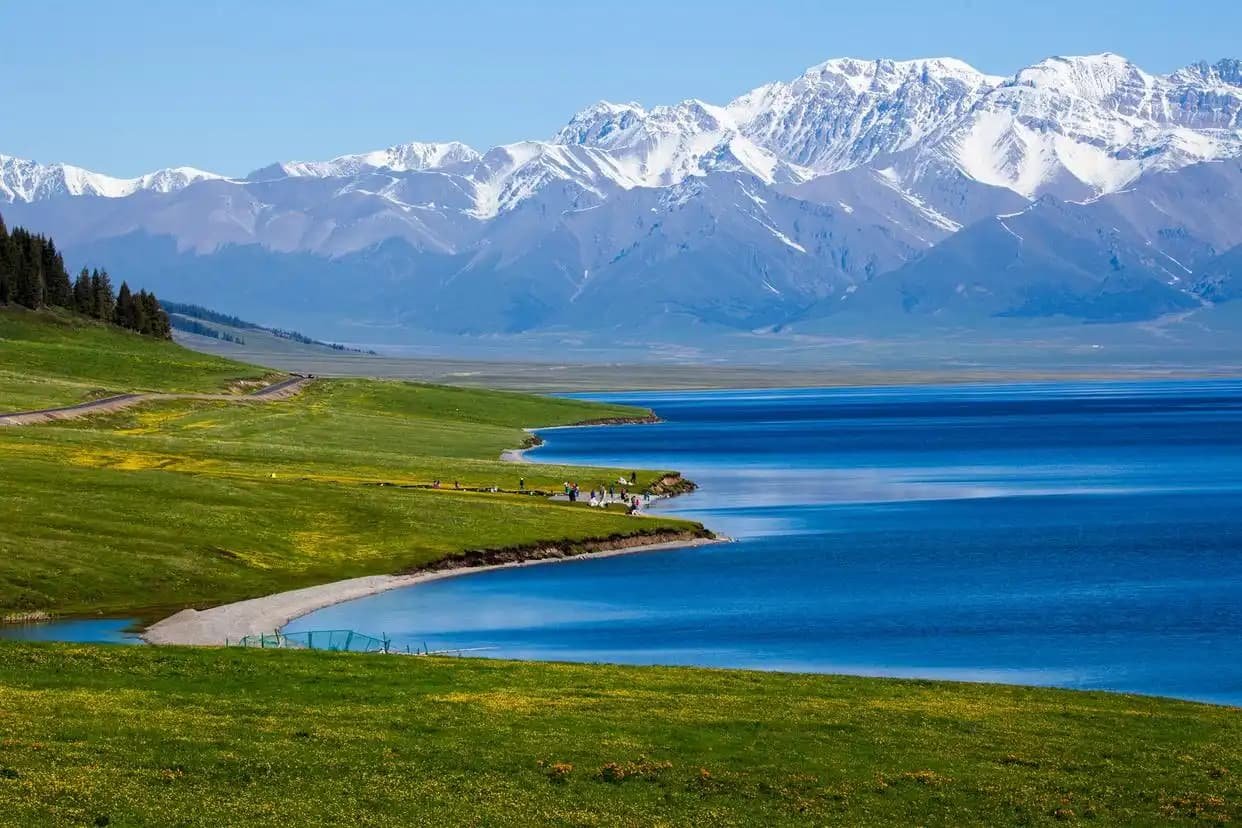
The geography explains some of it. This is open country. From the grasslands above Sayram Lake to the wide gravel plains south of Dushanzi, there is room to ride and shoot at speed. Nomadic pastoral life rewards accuracy with meat on the table and status in the community. A man who can drop a fox at 40 metres on a galloping horse is not showing off. He is feeding his family.
I paid 80 yuan to enter a spring competition ground near the Ili valley, and what I got was a full day of shooting, bread, and boiled mutton. No ticket touts, no stage. Just a rope line, a handful of judges in wool hats, and a crowd that knew every competitor by name.

Kazakh Bowmen of the North
The Kazakh communities of the Altai and Ili regions hold the deepest archery tradition I witnessed. Their bows are composite, built from horn, sinew and wood, and they store a violent amount of energy in a short frame. At a festival outside a village near the Kazakh border, I watched a fourteen-year-old girl place three arrows inside a circle the size of a dinner plate at 30 metres. Her bow was older than she was.
If you want to understand the world these archers come from, read up on Kazakh horse country before you go. The bow and the horse are one system. You cannot separate them. Mounted archery events, where riders loft arrows at ground targets while covering 80 to 100 metres at a canter, are the heart of every summer gathering I attended.
I spent two nights staying in a Kazakh yurt above a river valley in late June. The family I stayed with practiced in the evening, after the sheep were in. The father shot by lamplight, his sons retrieving arrows in the long dusk. He told me, through a translator, that the bow teaches patience before it teaches accuracy. I believed him after watching him miss on purpose three times to show the boys how the wind tilted his shaft.
Practical note: most Kazakh festivals run from May through September. The big summer horse games near Altay draw crowds of a few hundred to a few thousand. Bring cash. The nearest fuel station might be 120 kilometres away, and card readers fail on the steppe.
I learned the cash lesson the hard way. On my second trip a fuel pump outside a small town rejected every card I owned, and the lone ATM inside the shop had run out of notes by midday. A herder waiting in a battered pickup lent me 200 yuan and refused repayment beyond a share of my trail mix. That kind of exchange is common out here. Strangers look after each other because the land does not.
The bows themselves are worth a close look if a maker will let you handle one. A good composite bow takes a full year to build, glued in thin layers and left to cure through four seasons so the horn and sinew settle without cracking. The draw weight on a working horseman’s bow ran past 50 pounds in every example I hefted, yet the archers drew them smoothly, with the whole back and shoulder rather than the arm alone.
Kyrgyz Archery on the Western Frontier
Drive west past the last paved town and the road turns to hardpan. The Kyrgyz frontier county of Akqi sits in a high, cold basin where the archery tradition leans toward the disciplined and the communal. I reached it in early October, when the first snow dusted the passes and the light went flat and silver by four in the afternoon.
Kyrgyz bowmen favour a longer draw and a steadier stance than the Kazakhs. At a village ground I visited, shooters stood still and fired at targets 60 metres out, scoring by how close the arrow landed to a central peg. The records carved into a wooden board by the fence went back eleven years. The reigning champion, a lean man in his fifties, held a group of five arrows inside a ten-centimetre spread.
What struck me was the silence. No music, no commentary. The only sound was the string and the distant thud of arrows into packed earth. A local elder offered me salt tea and explained, in slow gestures, that the Kyrgyz bow was a tool of defense passed down from the mountains. He showed me his own, a slender thing with a leather grip worn smooth by decades of palms.
If you are self-driving, fuel up and fill water in the last real town before Akqi. The basin is beautiful and empty, and the nights in October dropped to minus nine. I slept in the car with the engine running twice, glad for the diesel heater I had bolted in back in Urumqi.
Tajik Marksmen of the High Pamirs
South and higher still, the Tajik people of Tashkurgan keep a different archery. Theirs is tied to the eagle and the high wind. I arrived in August, the one month the Pamir passes are reliably clear, and found a small competition held on a flat above the town at 3,200 metres. The air was thin enough that I felt my own pulse in my temples after walking fifty steps.
The Tajik bow is lighter, built for the altitude and the cold. The targets were small, set at 25 and 40 metres, and the shooters moved between them quickly, breathing hard. What connects this to the older hunting life is the Tajik eagle-hunting customs that still survive in the valleys below. The eagle and the bow were partners. One flushed the prey, the other finished it.
I watched a man in his sixties shoot a perfect round, then walk to the target and pull his arrows without looking at the score. When I asked why, the translator laughed and said he already knew. That confidence, earned over a lifetime at altitude, is the part no photograph captures.
Plan for the altitude. I took two days in Tashkurgan to adjust before walking the grounds, and I drank four litres of water a day. The drive in from the north runs about 280 kilometres of switchbacks and checkpoint stops, so start early and carry your passport. Foreign visitors are logged at the border zone.
The targets at that altitude behave strangely. Arrows drift in the thin air and the crosswind off the glaciers pushes them sideways in a way I could see but not correct for. A Tajik boy of about ten watched me flinch at a miss, then handed me his lightweight bow and showed me to aim into the wind, not against it. His shot struck dead centre. Mine, with his bow, still flew wide. Some skills are simply inherited along with the mountain air.
Reading the Culture Through Its Music and Movement
Archery in Xinjiang never stands alone. It sits inside a wider world of sound and gesture that you feel most clearly at night, after the shooting ends. The same communities that produce the bowmen also keep folk music and dance alive in ways that surprised me. At a Kazakh gathering I counted seven distinct tunes played on a single two-stringed instrument across one evening, each one tied to a different season of the herding year.
The connection is rhythm. The draw, the hold, the release, the step of the dance, the beat of the drum. They share a grammar. I am not a musician and I am a poor shot, but after a week of watching both I began to see the line between them. The best archers I met also moved with the same loose control on the dance ground. Skill, in this country, travels.
One evening in a Kyrgyz village a group sang while two old men shot by ear in the dark, judging distance only by the sound of the arrow striking. They missed once in twenty shots. I have never forgotten the soft knock of those hits in the cold air.
Planning Your Own Archery Road Trip
If you want to build a route around this, give yourself at least twelve days and a vehicle with real ground clearance. My own loop ran Kuqa to Ili to Altay, then a flight south to Kashgar and a drive up to Tashkurgan, totalling roughly 2,400 kilometres of driving plus the flight leg. Budget about 350 yuan a day for fuel, food and basic stays, more if you hire a translator or stay in yurts.
Timing is everything. The northern Kazakh and Kyrgyz events cluster in the warm months, May to September. The Tajik high country is only sensible in July and August. I would not attempt the Pamir route outside that window. Snow closes the passes and leaves you stranded at an altitude where that is genuinely dangerous.
Respect the etiquette. Ask before you photograph a shooter, especially elders. Do not walk the line. Sit at the edge, stay quiet during a round, and buy the bread when it is passed. These are not performances staged for tourists. They are community events you have been kindly allowed to watch, and the difference matters.
The bowmen I met asked little of me. A few wanted to know where I had driven from. One wanted to see the map on my phone, tracing my route with a callused finger across the screen. Then he went back to his shooting. That is the whole exchange, and it is enough. Xinjiang’s archery is not a show you consume. It is a skill you witness, and if you are patient and quiet, a tradition that lets you stand close to it for an afternoon.
I left the last ground near Tashkurgan with my ears still ringing from the wind and a borrowed arrow in my bag, a gift I did not earn. Three trips, thousands of kilometres, and the thing I carry is not a photo. It is the memory of a fourteen-year-old’s perfect group, shot in silence, on a steppe that has been teaching this lesson far longer than any of us have been alive.