
Kalajun Grassland: Rolling Hills Without Crowds Guide
I have stood on the Kalajun ridgeline at 2,400 meters three times now. The first was a rainy July when the grass stuck to my boots in green clumps and the fog swallowed the valley by noon. The second was a cold September morning with frost stiff on the yurt felt and my breath showing at 7 a.m. The third, last June, I finally got the calm evening the place is famous for: the hills rolled west toward the Tianshan like a frozen green ocean, a hawk rode the thermals below me, and not a single tour bus was in earshot. That last part is the whole point. Most foreigners planning an Ili grassland trip default to Nalati. Nalati is good. Kalajun is the one I keep coming back to, and the one I tell friends to pick first.
Kalajun (喀拉峻) sits in Tekes County, in the Ili Valley, about 30 km southwest of Tekes town. The name is Kazakh for “black ridge,” which tells you what the locals noticed first — the dark spine of mountain running behind the pasture, black against the green. What a visitor notices is the shape of the land. These aren’t flat meadows you picnic on. They are curved, muscular hills, the kind photographers call the “human body grassland” because from the right angle a slope looks like a person lying on their back, hips and shoulders in the grass.

Kalajun vs Nalati: An Honest Comparison
People ask me which to pick. They’re 80 km apart and feel like different planets. Nalati is the established star: paved boardwalks, shuttle buses every 15 minutes, hotels actually inside the park, and over 1.5 million visitors counted in 2023. Kalajun is rougher, cheaper, and quieter. I’ve done both in the same week and the difference in noise alone is worth the detour. On Nalati’s main loop I queued behind a tour group at a photo spot; on Kalajun I ate lunch on a crest with the wind and nothing else.
| Factor | Kalajun | Nalati |
|---|---|---|
| Entry + shuttle I paid | ¥175 (2023) | ¥155 (¥95 ticket + ¥60 shuttle) |
| Annual visitors | roughly a few hundred thousand | over 1.5 million |
| Boardwalk vs wild trail | mix, lots of open hillside | heavy boardwalk network |
| Best for | photography, horse trekking, silence | families, first-timers, facilities |
| Getting there | Tekes town, 30 km | Xinyuan county, well signed |
| Sunset crowd | a dozen people at Flower Terrace | hundreds at the main overlook |
If you want a toilet every 200 meters and a hot meal at noon, Nalati wins without argument. If you want to hear your own footsteps and shoot a hill with no strangers in frame, Kalajun wins by a mile. My advice after three trips: do Kalajun as your primary grassland, and treat Nalati as the backup if a storm shuts the Kalajun road.
The “Human Body” Hill Formation
The curve that gives Kalajun its reputation sits in the Koksu Grand Canyon branch (阔克苏大峡谷), reached by a separate shuttle and a cable car from the main grassland. I paid ¥95 on top of the base ticket for that add-on in 2023, and I’d pay it again tomorrow. From the 人体草原 viewpoint the hillside bends into a smooth reclining shape, skin-colored earth under green grass, and the Koksu River cuts a bright line far below where it disappears into a gorge. Get there before 11 a.m. Once the midday sun drops straight down, the shadows flatten and the illusion weakens to just a pretty hill.
One warning born of embarrassment: the canyon branch is a longer commitment than it looks. Budget a full half-day if you add it, because the shuttle runs on a fixed schedule and you do not want to miss the last ride back up. I once lost track of time photographing a rock formation and nearly got stranded at 5 p.m.; I had to talk my way onto a ranger’s pickup truck for the climb out. Don’t be me. Check the return times at the lower station when you go down.
The Flower Sea and What Grows Here
In June and July the upper pasture turns into what the Chinese travel posters call a 花海 (flower sea), though “sea” oversells it — it’s more a dense scattering of wild iris, alpine bellflowers, and a yellow composite I never learned the name, mixed into the grass. The grass itself is a tougher, shorter blade than lowland meadow, built for the thin air at 2,000-2,800 meters. Walking off the trail, the ground gives a little underfoot, springy, like a worn mattress. I spent an hour just lying back on it once, watching clouds pile against the Tianshan. Nobody charged me for the nap.
Horse Trekking Routes
The horses here are Kazakh ponies, short and stubborn and sure-footed, with thick manes and a tendency to stop and eat mid-ride. You can ride from the Flower Terrace (鲜花台) trailhead, where handlers wait with strings of them. Options I’ve actually priced across two visits:
- Short loop, about 2 hours out to a ridge and back: ¥120, negotiated right at the yurt camps, no booking needed.
- Half-day, 3-4 hours crossing two valleys to a lookout: ¥260 with a handler walking alongside on foot.
- Full-day guided trek to the far pasture and back: ¥480, includes a stop at a herder’s tent for milk tea and flatbread.
The full-day one changed how I saw the place. We left at 8 a.m., climbed through a belt of spruce where the light came down in green shafts, and came out above the tree line onto a crest where you can see the whole Ili basin folding away to the north, the farmland a patchwork far below. My horse, a mare whose name I couldn’t pronounce, picked her own line the entire way. You don’t steer much on these rides. You just hold the pommel and trust the animal, which after the first nervous hour feels oddly relaxing.
Yurt Stays: Tourist Camp vs Family Homestay
There are two ways to sleep on the grass, and they’re not the same experience. The tourist camp yurts near the east gate are owned by the scenic company: clean felt, real beds with sheets, a shared hot-water block with actual tiles, and a buffet dinner for ¥380 a night in peak season. Comfortable, a little sterile, and loud with other tourists’ generators. The family homestays are run by Kazakh herders a few kilometers deeper in: ¥160 gets you a thin mattress on the floor, a propane lamp, the smell of smoked wool, and the loudest silence you’ve heard in years. I prefer the homestay, but pack a warm layer — at 2,300 meters the night drops to single digits even in July, and the felt does little against it.
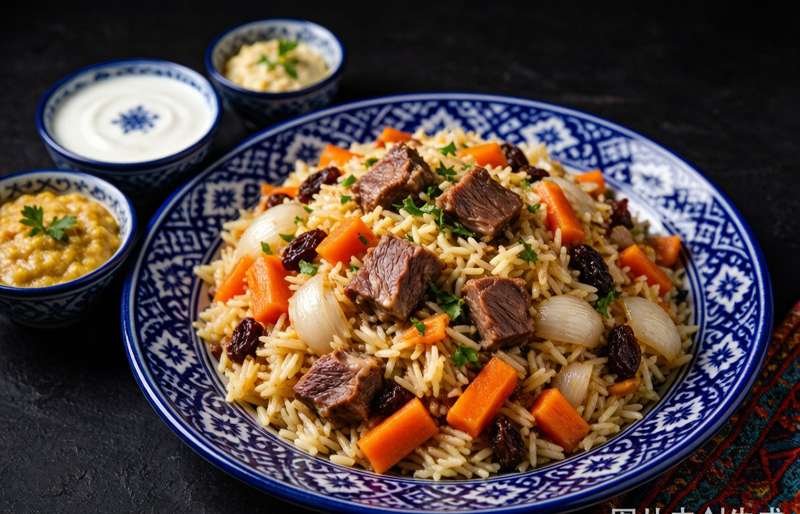
Either way dinner is mutton boiled with onion and salt, flatbread torn into the broth, and milk tea so salty it tastes like soup the first time. By the third bowl you stop noticing and start wanting more. Breakfast is the same bread, cold, with more tea. Don’t expect coffee. I brought instant coffee and a small stove my second trip and felt like a genius.
The Sunset Viewpoint (The Real Reason People Come)
The Flower Terrace at the west end of the main pasture is where the light does its trick. I arrived at 7:30 p.m. in June; the sun didn’t touch the ridgeline until 9:10, and full dark was near 10. For ninety minutes the hills went from green to gold to a deep blue-shadowed violet, and the few other visitors just stood and said nothing, cameras down, watching. Bring a jacket and a tripod. The wind picks up the moment the sun dips, and the temperature falls fast — I’ve watched a calm 18°C evening become a 4°C wind in twenty minutes.
Getting There via Tekes (and Zhaosu)
Most people route through Tekes and Zhaosu because the bagua (eight-trigram) city layout of Tekes alone is worth a stop — it’s one of the only cities in China built on a circular, octagonal street plan, visible from the hill lookout above town. From Yining it’s about 120 km to Tekes, roughly 1.5 to 2 hours on good road. From Tekes the Kalajun east gate is 30 km, a half-hour drive that climbs steadily through farmland then switches to switchbacks. If you’re coming from the south via Zhaosu, it’s longer — count on 2.5 hours from Zhaosu town — but the road over the mountains is spectacular and you pass the heavenly-horse pasture and a string of lesser grasslands on the way.
I drove myself each time, in a rented compact. The park requires you to leave the car at the gate and take their shuttle, which is fine and included in the ticket, but it means timing your return. Last shuttle down is usually around 7 p.m. in summer; confirm at the booth because they shift it with daylight, and a missed shuttle means a cold wait or a pricey private ride. The gate staff speak limited English, so have your hotel write the return time in Chinese on a note.
A Note on Weather and Altitude
At 2,000-2,800 meters you won’t get altitude sickness, but you’ll feel the sun and the thin air. I got a mild headache my first afternoon and drank two liters of water to fix it. Afternoon thunderstorms are common in July; I watched one roll in at 3 p.m. and dump rain for an hour, then clear to the best light of the trip. Build a weather buffer into your day and you’ll often be rewarded.

When to Go, and a Budget Breakdown
| Month | Grass | Crowds | Note |
|---|---|---|---|
| May | sparse, wet | low | roads may still be muddy up high |
| June-July | full green, wildflowers | medium | best light, my pick |
| August | green, hot days | high | school holidays, book yurts early |
| September | turning gold | low | cold nights, few people |
A realistic day’s spend for one person, mid-range: ¥175 ticket, ¥120 short horse ride, ¥160 homestay, ¥60 for food and tea, ¥40 fuel split if driving. Call it ¥550. A Nalati day with similar add-ons runs closer to ¥700 once you factor the pricier in-park food. Kalajun is cheaper and, to my eye, better looking.
What to Link Up
Base yourself in Tekes or Yining. Tekes has cheap guesthouses from ¥120 a night and a night market that runs late with grilled mutton and cold beer. If you want a second grassland without the drive, Tianger grassland is 90 minutes north and far emptier still, a place I’d send anyone who found Kalajun too busy. For a crowded-but-classic contrast, Nalati is the obvious day trip. And if you’re here to shoot, the Xinjiang photography route guide lays out the wider Ili loop with exact light windows.
For overnight logistics across the region, the Xinjiang accommodation guide covers yurt etiquette and the booking windows I wish I’d read before my first trip, when I showed up in August with no reservation and paid double.
Summary
Kalajun is the Ili grassland for people who’d rather trade a buffet for a horizon. Pay the ¥175 base, add the canyon if the light’s good, ride a horse at least once, and stay for the 9 p.m. sunset at Flower Terrace. I’ve been three times and the only thing that’s changed is that I now bring an extra battery, a thicker jacket, and a note with the shuttle time in Chinese. Everything else — the hills, the silence, the salt-milk tea — stays exactly as good.