
Wildflower Meadows of Xinjiang: Alpine Blooms and Where to Find Them
Spring Comes First to the Barluk Mountains
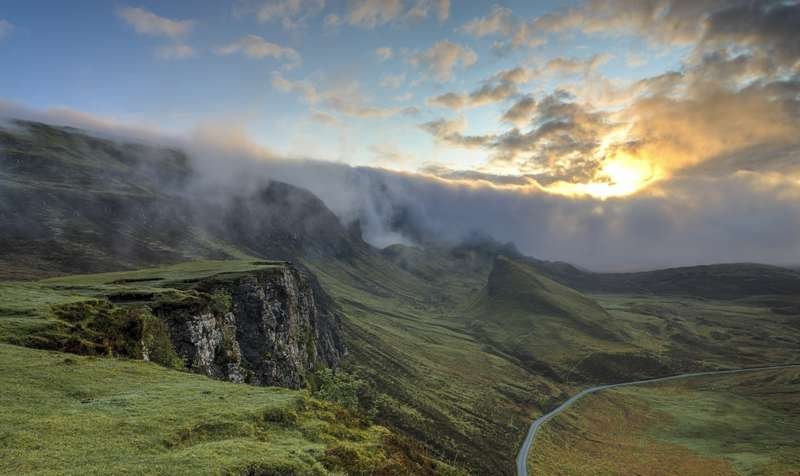
My first encounter with Xinjiang’s wildflowers happened not in the famous green valleys but on a wind-scoured slope near the Kazakh border. I timed my drive for late April because a friend who herds sheep in Yumin County had texted me a single line: the red ones are opening. She was right. By the last week of April the low hills of the Barluk Mountains were stippled with wild tulips, their petals a deep wine red that looked almost painted against the grey-brown earth.
The bloom here is short and jealous of attention. The window runs from roughly the third week of April into mid-May, and a warm spell can compress it to ten days. I learned to watch the forecast rather than the calendar. A cold spring in 2023 pushed everything back to May 5; a warm one in 2024 had the petals shedding by April 28. Spring arrives on the Barluk slopes a good month before it reaches the high pastures of the Tian Shan, and that head start is exactly why I begin every flower trip out here in the west.
Timing the Tulip Bloom
If you want the wild tulips of the Barluk Mountains, aim for the last days of April as your primary target and treat the first two weeks of May as your safety margin. The species you’ll find most often is a small wild tulip that grows in loose colonies across the southern faces, rarely taller than my boot. Photograph them at dawn when the wind dies and the light rakes sideways across the slope.
Get low. I spent my first morning standing and shooting down, and the pictures looked like weeds. The second morning I lay on my stomach with a 100mm lens and the tulips became portraits. A small reflector is useless out here; the wind owns the grass. Instead use a beanbag on a rock and shoot at 1/500 to freeze the sway, and drop your ISO so the red reads true rather than blown out.
The Drive from Yumin
Yumin sits about 60 km from the best slopes, and the county road north twists through pastureland where herders still move flocks by horse. I filled the tank in town because the next fuel is uncertain, and I carried cash for the roadside noodle stand that appears only when the tulips do. The final 8 km is a graded track, firm in dry weather and a mud trap after rain. A normal sedan made it in late April, but I would not attempt it after a wet night.
What surprised me was the quiet. No gates, no ticket office, no crowd. Just a hillside and a bloom that would be gone in a fortnight. I sat there longer than I meant to, and when I finally drove back the light had gone copper and the tulips had closed for the night.

The Ili Valley in Late Spring
By the time the Barluk tulips have wilted, the warmth has climbed west into the river country. The Ili Valley is the fertile heart of Xinjiang’s northwest, a region of broad valleys, snow-fed rivers, and a growing season long enough to turn the whole floor green. I drove in during the second week of May and found the first wild peonies already open along the orchard edges, with the grassland above still waking. The valley’s fruit trees bloom in a soft pink wave just before the meadows do, and catching both in one visit is the quiet prize of a late-spring trip.
This is the season I now recommend to anyone who asks for a single trip. The valley offers both the early wildflowers of the lower slopes and the first flush of the high meadows, so you never face a blank hillside. You can read more about the region’s rhythm in the Ili Valley overview, which lays out the fruit-blossom calendar alongside the flower one.
Turgen Gorge
The place that rewired my sense of scale was a side canyon east of Yining. The Turgen Gorge cuts into the foothills where a rare stand of wild apricot trees grows on the north-facing walls. In early May their blossoms turn the grey rock pink, and below them the meadow pushes up forget-me-nots and early iris. The contrast of hard stone and soft bloom is the kind of scene that makes you stop the car without deciding to.
I reached the gorge on a narrow county road that climbs steadily for about 30 km from the main highway. The last stretch is one lane in places, with pullouts where local families had set up weekend picnics under the bloom. Go on a weekday if you can; the weekends fill with city families from Yining and the quiet that makes the place special thins out. A short walk up the dry creek bed, away from the picnickers, gave me the gorge to myself.
The light inside the gorge is different. The walls throw shadow early, so the best photography is from mid-morning to early afternoon, the opposite of the open slopes. I used a wide lens to keep the apricot branches framing the top of the frame and let the meadow fall away below, then switched to a telephoto to isolate a single blossom against the dark rock.
Sayram Lake Shores
North of the valley, past a pass that still held snow in May, Sayram Lake sits in a cold bowl. The shore meadows open later than the valley floor, usually late May into June, with a turf of low growing flowers that hug the ground against the wind coming off the water. I camped one night on the eastern shore and woke to a rim of pale bloom along the waterline, the snow peaks behind it pink with first light.
Bring a warm layer even in June. The lake generates its own weather, and the wind that keeps the wildflowers short will also flatten a tent not well pegged. I learned this the hard way at 3 a.m. when a gust peeled the fly off its pole and I spent an hour re-securing it by headlamp while the grass lashed my legs.
Summer Meadows of the Tian Shan
June is when Xinjiang stops holding back. The high country of the Tian Shan, the great mountain wall that borders the region’s north, throws open its meadows in a flood of color that lasts through July. This is the season most travelers picture when they think of Xinjiang’s flowers, and they are not wrong. The scale is absurd. Whole mountainsides turn gold with ragwort, violet with larkspur, white with anemone.
I spent a week in late June moving between meadows, and no two looked alike. The northern faces held snowmelt flowers that were just opening while the southern slopes had already moved into deep summer. The lesson was simple: altitude matters more than date. Drop 300 meters and you drop two weeks of season, so the same afternoon can show you a closed bud at the pass and a spent blossom in the valley below.
Gongnais Grassland
My favorite of the high pastures was the rolling country south of Xinyuan. The Gongnais grassland spreads across a broad plateau where the grass grows knee-high and the wildflowers rise out of it in loose, drifting bands. In early July the dominant note is yellow, a sea of flowering legumes that hums with bees, broken by islands of purple betony.
The best viewpoint I found was a nameless rise about 12 km past the main grassland gate, where the road bends and the whole plateau opens to the south. I pulled over, walked fifty meters off the track, and stood there until the light went. The meadow above the gorge was a carpet of mixed bloom, and for once I did not even raise the camera. Some views are better kept in the head.
For photographers, the Gongnais plateau rewards patience with weather. A clear day is fine, but the day after rain, when the clouds break and light shafts fall across the grass, is the day to be there. I waited out a three-hour storm in the car and was repaid with the most dramatic light of the trip, a single shaft landing on a yellow field while the rest of the plateau stayed in shadow.
Photography on the High Meadows
Wide shots get the scale but miss the detail. I carried two bodies on the high meadows, one with a 24mm for the sweep and one with a 90mm for the individual flower heads. The trick that improved my work most was shooting the meadow as a texture rather than a subject. Get down to grass level and let the blooms blur into bands of color; the result reads as abstract and true at once.
Golden hour lasts long this far north in summer. At a latitude near 43 degrees the sun sets after 9 p.m., and the low angle paints the plateau in honey for a full hour before dark. Plan your drive so you are already positioned at your chosen viewpoint by 8, not arriving and scrambling. The best frame I made all week was taken at 9:20, when the last light pulled the color out of a field that had looked flat at noon.
Roads That Take You There
Xinjiang’s wildflowers are democratic in one sense: they grow beside the roads, and the drives between them are half the experience. The main thread I followed was the G218, the highway that runs from the Ili Valley east toward the Tian Shan foothills and beyond. It is a long, straight, sometimes monotonous road, but it connects the bloom regions with a logic that saves you backtracking and lets you follow the season instead of fighting it.
The G218 Corridor
From Yining the G218 runs roughly 150 km to the Gongnais area, passing orchard country, river flats, and finally the climb onto the plateau. I treated it as a flower scouting road, stopping whenever I saw a promising slope and walking in a hundred meters to check what was blooming. The county roads that branch north off the G218 toward the smaller gorges are where the real discoveries hide, but they demand a confident driver and a full day with no schedule.
Fuel and water are the two things I never let run low. Stations sit about 40 to 60 km apart on the main road but can be 100 km apart on the branches. I carried 10 liters of water per person and a second full fuel canister when I left the corridor for the side valleys. The wildflowers are worth the effort, but the distances are real, and a dry tank on a branch road is a problem no photograph fixes.
One road note for the self-driver: many of the best meadows sit inside protected meadows, and the access rules change by season. Some gates close during the wettest weeks to protect the turf, then reopen. A quick check before you set out saves a long, wasted drive to a locked barrier, and it also tells you which ranger station to ask for the current bloom report.
Ethics and Practical Tips
The single most important rule of flower chasing in Xinjiang is also the easiest to forget in the moment. Do not pick. The meadows look endless, but each flower is part of a short, fragile season, and a handful taken by a hundred visitors adds up to a bare hillside. I photograph, I sit, I leave. The bloom stays for the next person and for the pollinators that depend on it.
Don’t Pick, Don’t Stray
Stay on the tracks and the established pullouts. The plateau turf is thin and slow to heal; a single off-track wheel rut can still be visible two seasons later, as I saw on a slope near Gongnais where someone had driven to a viewpoint and left a scar the rain kept widening. Walk in, walk back the same line, and the meadow barely notices you were there. If you want a different angle, walk to it and return the way you came rather than cutting a new path through the bloom.
Respect the herders. The meadows are working pasture, not parks, and the families who graze them are your hosts. I always asked before crossing a fenced section, and twice I was waved toward a better bloom I would never have found alone. A small gift of fruit or tea went further than any phrasebook, and the conversations that followed taught me more about the land than any guidebook.
What to Pack
The gear that earned its place in my bag was humble. Sturdy shoes for the uneven, sometimes wet turf. A windproof layer even in July, because the high meadows keep a chill that the valleys lose by noon. Sunscreen and a brimmed hat, since the ultraviolet up here is ferocious and the shade is thin. A beanbag for the camera instead of a tripod in the wind. And a paper map, because signal fades the moment you leave the corridor.
Timing, in the end, is the whole craft. The Barluk tulips in late April, the Ili Valley orchards and gorges in May, the Tian Shan meadows from June into July. Chase the season westward and upward, and Xinjiang will show you a flower show that no garden can match. I am already planning my return drive, and this time I will leave a day earlier for the pass.