
Yarkand (Shache): The Undersung Gem of the Southern Silk Road
Most foreign travelers to Xinjiang never make it south of Kashgar. The Karakoram Highway pulls them west toward Pakistan; the Kashgar Old Town keeps them occupied for days. But 190 kilometers (120 miles) due south, across the Yarkand River and deep into the Tarim Basin’s western edge, lies a city that once rivaled Samarkand and Bukhara for sheer cultural swagger: Yarkand (莎车, also romanized as Shache).
Why Yarkand Matters
For our complete Xinjiang solo travel Guide, see our dedicated Xinjiang Solo Travel Guide with practical details on safety, costs, and planning.
Yarkand (Yarkent in older texts) was the seat of the Yarkent Khanate (1514–1705), a successor state to the Chagatai Khanate that controlled the southern Silk Road for nearly two centuries. The khanate’s court became the patron of the Twelve Muqam (十二木卡姆) — the sprawling suite of poetry, music, and dance that UNESCO later recognized as an intangible cultural heritage of humanity.
Walking through Yarkand today, you feel layers that Kashgar’s Old Town, for all its charm, can’t quite deliver. The timber-carved balconies here have Persianate proportions. The mosque courtyards are planted with roses fed by karez-style canal irrigation that predates the khanate. The old palace complex, though partially reconstructed, sits on foundations that have seen Central Asian Islamic architecture evolve for five hundred years.
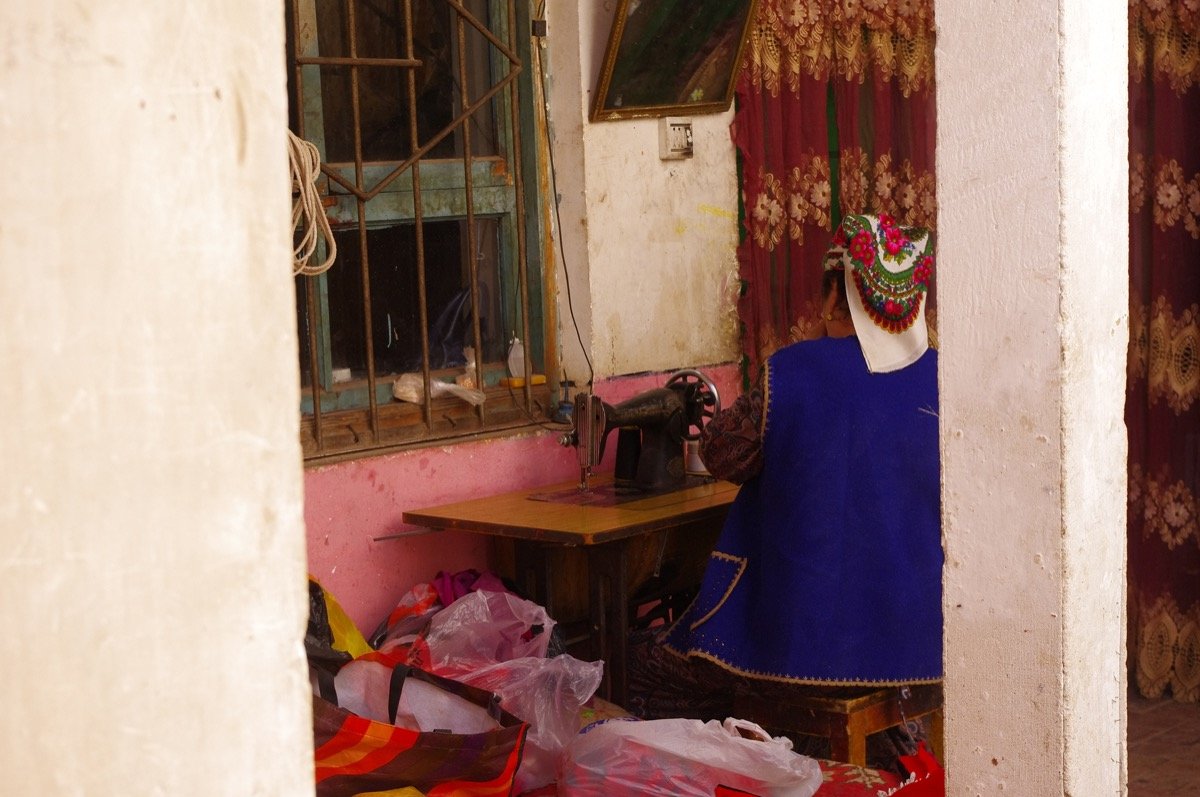
A Brief History: From Oasis Kingdom to Khanate Capital
Yarkand’s strategic value was obvious to every empire that brushed the Tarim Basin. Sitting at the point where the southern Silk Road splits toward Kashmir (via the Karakoram) and toward Kokand (via the Ferghana Valley), Yarkand was never just a “stop.” It was a decision point.
In the Han dynasty (206 BCE–220 CE), Yarkand (then called 莎车) was a vassal kingdom documented in the Book of Han. By the Tang, it was absorbing Buddhist influence from Gandhara. After the 10th-century conversion of the Karakhanids, it became a center of Turkic-Islamic culture. The real golden age, though, began in 1514, when Sultan Said Khan established the Yarkent Khanate and made Yarkand his capital.
The khanate’s cultural achievements were outsized for its political lifespan. The court sponsored the codification of the Twelve Muqam under the poet and musician Amannisa Khan (1526–1560), whose life story — daughter of a forester, wife of a khan, compiler of a cultural canon — reads like a Central Asian epic. Her tomb is in Yarkand; it’s one of the most moving heritage sites most foreign visitors never see.
Key Sights You Shouldn’t Miss
1. Yarkand Khana (Old Palace Complex / 莎车王府)
The Yarkand Khana is less a “palace” in the European sense than a walled compound of courtyards, reception halls, and residential wings that tell the story of the Yarkent Khanate’s ruling family. The current buildings are a careful reconstruction based on historical records and oral history, but they occupy the original footprint, and the atmosphere is unmistakable.
Inside, you’ll find:
- The Muqam Exhibition Hall — musical instruments (rawap, dutar, dap drum), manuscript pages, and recordings of the Twelve Muqam cycles. Even if you don’t understand the Uyghur lyrics, the modal structures (each muqam is a multi-hour suite) convey the emotional range of a culture that sat at the crossroads of Persia, India, and the Turkic steppe.
- The Khan’s Reception Hall — a timber-ceiling room with carved columns that show Safavid influence (flower motifs, geometric repetition). Photography is allowed in the courtyard; ask before shooting indoors.
- The Ancestral Shrine Wing — portraits and genealogical charts of the Yarkent khans. This is where the political history of the southern Silk Road in the 16th–17th centuries comes into focus.
Tickets: Approximately ¥30–45 / person (rates adjusted periodically; check on arrival). Open roughly 09:00–19:00 in summer; shorter hours in winter.
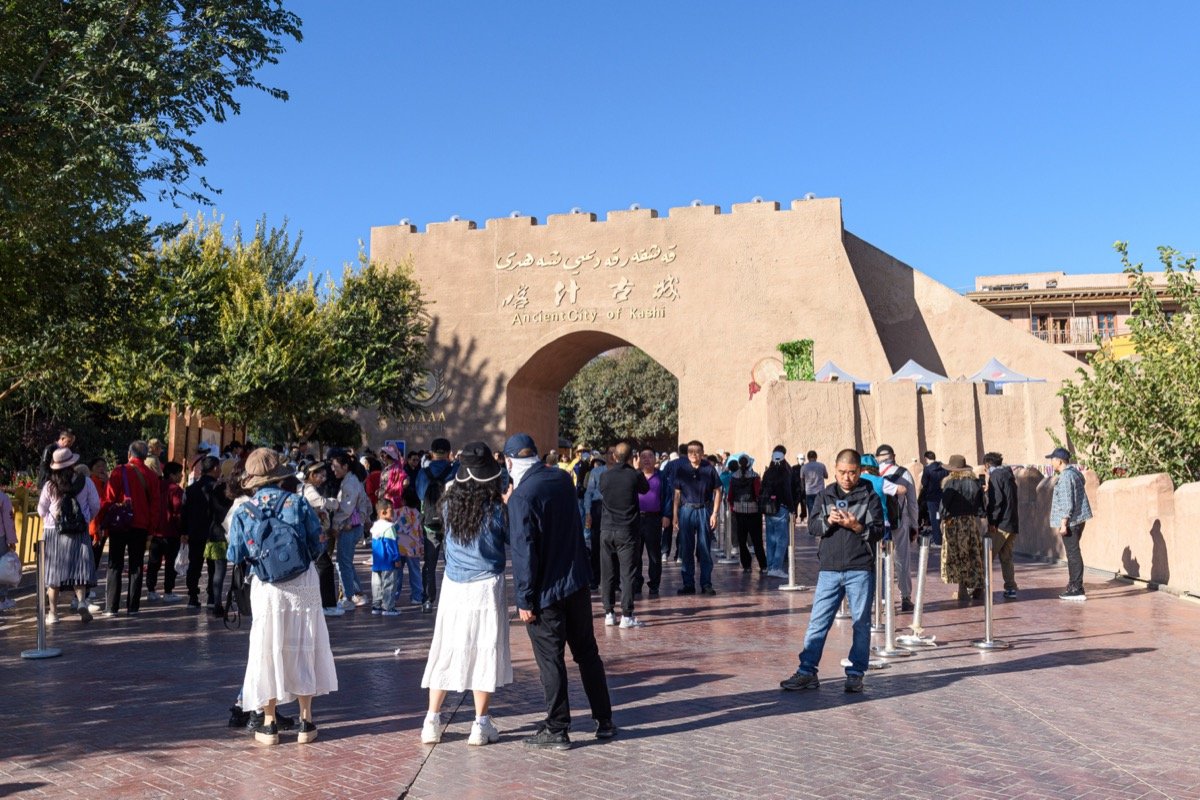
2. The Old Friday Mosque (老清真寺) and Cemetery
Yarkand’s Old Friday Mosque is older and less restored than the famous Id Kah in Kashgar, and for many visitors that’s precisely the appeal. The mosque compound includes a walled courtyard, a prayer hall with painted timber columns, and — most atmospherically — an adjoining cemetery where generations of Yarkand’s religious scholars and khanate-era figures are buried.
The cemetery is a place of quiet. Tall poplar trees screen the noise of the modern town. The gravestones, many inscribed in Arabic and Chagatai Turkic, record names and dates that stretch back to the 16th century. It’s not a “tourist site” in the theme-park sense — it’s a living place of memory.
Etiquette: Modest dress (shoulders covered, knees covered) is required. Women should carry a headscarf; it may not be strictly enforced for foreign visitors, but it’s a gesture of respect that opens doors — literally and figuratively. Remove shoes before entering the prayer hall if invited; otherwise, admire from the courtyard.
3. The Muqam Teahouse Search
Unlike Kashgar’s Old Town, where the “authentic” teahouse experience has been heavily curated for tour groups, Yarkand’s Muqam teahouses are still places where local musicians gather informally. There’s no single “official” teahouse with a neon sign. Ask at your guesthouse or in the Old Town lanes: “Qayerde muqam choyxonasi bar?” (Where is there a Muqam teahouse?). You may be directed to a courtyard where, on a Friday afternoon or a summer evening, musicians bring out their instruments and play without a setlist or a ticket price.
This is the Yarkand experience that no guidebook can schedule for you. It requires time, curiosity, and the willingness to sit on a carpet and drink three bowls of tea while you figure out what’s happening.
4. The Rose Gardens and Irrigation Canals
Yarkand is famous in Xinjiang for its roses — not the ornamental kind, but damask roses grown for perfume, jam, and rose-water syrup. The old irrigation system that feeds these gardens is a minor engineering marvel: earthen channels that distribute snowmelt from the Tianshan through a lattice of shaded canals. In late May and early June, the rose harvest fills the old town air with scent. You can buy rose jam (玫瑰花酱) in the local market for ¥15–30 a jar; it’s one of the most distinctive souvenirs in Xinjiang.
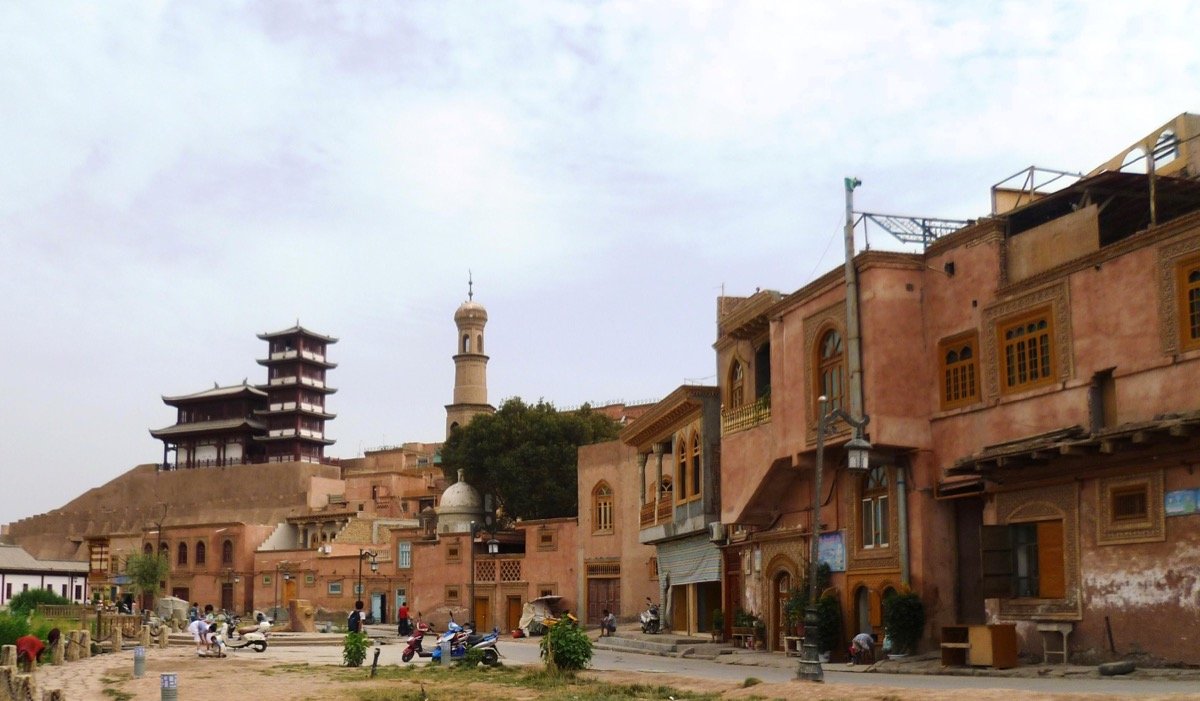
How to Get to Yarkand
Yarkand (Shache County) is administratively part of the Kashgar Prefecture. The most straightforward route is from Kashgar:
- By car / private charter: ~190 km south of Kashgar via the G315 national highway. The drive takes 2.5–3.5 hours depending on road conditions. A private charter from Kashgar costs approximately ¥600–900 round-trip including waiting time. This is the recommended option for foreign travelers — it gives you flexibility and your driver handles the routine traffic-police checkpoints that are common on roads south of Kashgar.
- By bus: Kashgar long-distance bus station runs daily buses to Shache (¥40–60, ~3.5 hours). Buses are safe and reliable but leave you at the Shache county seat, not at the heritage sites. A local taxi from the bus station to the Old Town is ¥10–20.
- No border permit required: Unlike Tashkurgan and Baihaba, Yarkand is not in a restricted border zone. Your standard travel documents (passport + Chinese visa) are sufficient.
When to Go
Yarkand’s climate is typical of the Tarim Basin’s western edge: hot summers, cold winters, and a brief, glorious spring.
| Season | What You Get | Temperature Range |
|---|---|---|
| April–May | Rose harvest, mild weather, fewer domestic tourists | 12–26°C (54–79°F) |
| June–August | Warm evenings ideal for teahouse visits; hot days (35°C+) | 20–38°C (68–100°F) |
| September–October | Crisp air, grape and pomegranate harvest, best photography light | 8–24°C (46–75°F) |
| November–March | Very quiet; many guesthouses close; not recommended for short visits | −8–10°C (18–50°F) |
The sweet spot: mid-September to mid-October. The weather is comfortable, the light is clean, and the pomegranate stalls in the market are overflowing.
Where to Stay and Eat
Accommodation
Yarkand is not a luxury-destination. What it offers is simple, clean, and affordable:
- Budget–Midrange: Shache has several functional hotels (¥120–280/night) near the county center. Don’t expect international-chain standards — think clean sheets, a working shower, and Wi-Fi that works in the lobby.
- Guesthouses: A handful of family-run guesthouses have opened in the Old Town area in recent years (¥80–180/night). These are the best option for atmosphere, though language barriers can be real. Have your guesthouse in Kashgar call ahead and make a reservation for you.
Food
Yarkand’s cuisine is classic southern Xinjiang with local twists:
- Laghman noodles (拉面): Hand-pulled noodles with bell pepper, tomato, and mutton. A filling lunch for ¥15–25.
- Yarkand rose jam bread: A local invention — naan spread with rose petal jam, baked on the tandoor wall. Look for it in the morning bread stalls near the Old Friday Mosque.
- Pomegranate juice: Shache County is one of Xinjiang’s main pomegranate producers. A fresh-squeezed glass at the market costs ¥8–15 and is worth every yuan.
- Chuanr (kebabs): Mutton cubes, charcoal-grilled with cumin and chili. The night market near the Khana gate is the place for this.
Cultural Etiquette: Moving Respectfully Through Yarkand
Yarkand is a conservative, traditionally religious community. The following guidelines aren’t just “polite” — they’re the difference between being welcome and being tolerated:
- Photography: Always ask before photographing people. A smile and a gesture toward your camera is universally understood. If someone waves you off, smile and move on. Never photograph inside a mosque or cemetery without explicit permission.
- Dress: Shoulders and knees covered. A light long-sleeve shirt is better than a tank top even in summer — it protects you from the sun and shows respect.
- Ramadan: If you visit during Ramadan, avoid eating or drinking in public during daylight hours out of respect for those fasting.
- The teahouse invitation: If a local invites you to share tea, accept. The correct response to an offer of food or drink in this culture is to accept first and figure out the logistics later. A small tip (¥10–20) is appropriate if you’ve been entertained with music.
How to Combine Yarkand with Your Xinjiang Itinerary
Yarkand works best as a southward extension from Kashgar. Here are three ways to do it:
Option 1: Day Trip from Kashgar (Long Day)
Depart Kashgar at 07:30 → arrive Yarkand ~10:30 → Yarkand Khana (2 hours) → Old Friday Mosque and cemetery (1 hour) → lunch at local noodle shop → teahouse search (afternoon) → depart ~16:00 → return to Kashgar ~19:00. This is a full day and doesn’t allow for sunset photography, but it’s the most time-efficient option.
Option 2: One Night in Yarkand (Recommended)
Day 1: Kashgar → Yarkand, afternoon exploring the Old Town lanes and the Khana. Evening at the night market.
Day 2: Morning visit to the Old Friday Mosque and cemetery, rose garden walk (if in season), depart after lunch. This gives you time for the unscheduled magic — a chance encounter in a teahouse, a conversation with a shopkeeper, the light hitting the timber balconies at an angle that makes you understand why this place mattered.
Option 3: Yarkand → Hotan Overland
If you’re doing a southern Xinjiang loop, Yarkand is the natural jumping-off point for the drive to Hotan (和田) along the southern edge of the Tarim Basin. The road passes through small oasis towns where the pace of life hasn’t changed in generations. This is a full-day drive (∼280 km, 5–6 hours); arrange it as a private charter.
Why Yarkand Doesn’t (Yet) Appear in Every Xinjiang Itinerary
The honest answer: Yarkand doesn’t have a “must-see” checklist item on the scale of Heavenly Lake or the Kasgar Old Town’s East Gate. What it has is subtler. It’s a place where the architecture still carries the proportions of Samarkand, where the music still follows the modal rules codified in the 16th century, where the roses in the old irrigaton canals are the same varietals that were harvested for the khan’s court.
For the foreign traveler who’s already seen the postcard destinations — who wants to understand Xinjiang rather than just photograph it — Yarkand is the obvious next step. It’s the Silk Road not as a museum, but as a place where people still live, pray, play music, and harvest roses in the shade of timber balconies that have seen five centuries of wind.
Practical Summary
| Item | Detail |
|---|---|
| Distance from Kashgar | ~190 km south, 2.5–3.5 hrs by car |
| Best months | April–May (roses), September–October (light + fruit) |
| Tickets (Yarkand Khana) | ~¥30–45 / person |
| Border permit needed? | No — standard travel documents suffice |
| Accommodation range | ¥80–280 / night |
| Food budget | ¥30–60 / day for local meals |
| Time needed | 1–2 days (overnight recommended) |
Yarkand is a place that rewards slowness. Build it into your itinerary not as a “check the box” stop, but as a place to pause, listen, and let the layers of the southern Silk Road unfold at their own pace.