
Xinjiang Autumn Colors Itinerary: The Ultimate 10-Day Fall Foliage Route (2026)
Updated: July 2026 | By Roam Xinjiang Team
There is a narrow window each year—roughly September 20 to October 10—when Xinjiang transforms into something that feels almost mythical. The birch forests of Hemu turn electric gold. The larch around Kanas Lake ignites in shades of amber and rust. The temperature drops, the summer crowds vanish, and the light turns crystalline. If you time it right, you will see what many consider the finest autumn foliage display on the planet—and you will have the trails mostly to yourself.
This 10-day itinerary is designed for that exact window. It focuses on the Xinjiang solo travel experience—independent travelers who want to move at their own pace, chase the best light, and actually understand the landscapes they are moving through. The route covers the Kanas biosphere (the undisputed crown jewel of Xinjiang autumn), the birch valleys of Hemu, and the surreal Yadan formations of the World Devil City, with a logical loop that starts and ends in Urumqi.
Why September 20–October 10 Is the Window
Xinjiang’s autumn color peak is brief and unforgiving. Unlike New England or Japan, where fall color stretches over several weeks, the Kanas region’s deciduous canopy—dominated by Siberian larch (Larix sibirica), birch (Betula platyphylla), and various poplars—turns within a 15- to 20-day window. Miss it by a week and the leaves are down. Hit it a week early and the gold hasn’t peaked yet.
The sweet spot: September 25–October 8. By this time the summer heat has broken across the Altai, nighttime temperatures dip below freezing (creating those legendary morning mists), and the larch canopy is at 80–90% color transition. Weekdays during this window are noticeably quieter than the National Day holiday period (October 1–7), when domestic Chinese tourism spikes.
10-Day Xinjiang Autumn Colors Itinerary
Day 1: Arrive in Urumqi, Prepare for the Altai
Fly into Urumqi Diwopu International Airport. If you have arrived on an international flight, this is also where you will handle any border permit logistics. Spend the afternoon at the Xinjiang Regional Museum—it frames everything you are about to see. Pick up any last-minute gear (layers, sunscreen, sturdy walking shoes) and have a proper Uyghur cuisine dinner in the city. Stay overnight in Urumqi.
Day 2: Urumqi → Burqin (via Kelamayi or direct charter)
The journey north toward the Altai region is long—plan for 8–10 hours of travel. Most independent travelers arrange a private charter (the most flexible option) or take an early flight from Urumqi to Kanas Airport (summer-autumn seasonal) or to Altay City followed by a 2-hour transfer. If you drive, the route along the G216 and G217 corridor delivers sweeping steppe views and occasional herds of horses crossing the asphalt. Overnight in Burqin, a timber-facade town that serves as the gateway to Kanas.
Day 3: Burqin → Kanas Lake (the first glimpse)
Enter the Kanas National Geopark in the morning. The drive from Burqin up to the Kanas valley is a gradual ascent through birch-sprice transitional forest. Once inside the scenic zone, take the shuttle to Kanas Lake proper. Hike a portion of the lakeside plank trail. In autumn the water shifts between jade, teal, and a kind of opalescent steel-blue depending on cloud cover. In the late afternoon, walk a section of Moon Bay. The crescent river curve framed by gold birch is the single most-photographed composition in all of Xinjiang.
Day 4: The Three Bays + Guanyu Terrace
Start before sunrise. Drive or shuttle to Shenxian Bay (Fairy Bay)—the lowest elevation of the three bays, where morning mist ribbons form over the braided river channels. Then move up-valley to Moon Bay, then Guanyu Bay (Fish-Watching Terrace). The climb up Guanyu Tai is around 1,066 steps, but the reward is the aerial perspective over the S-curve of the Kanas River. On a clear October day the water, the gold canopy, and the dark spruce backdrop produce a color contrast that is almost shocking in its intensity.
Spend the night either inside the Kanas scenic zone (Kanas Village wooden lodges) or back down-valley at Jiadenyu (more accommodation options, 30-minute shuttle ride to the trailheads each morning).
Day 5: Kanas → Hemu Village
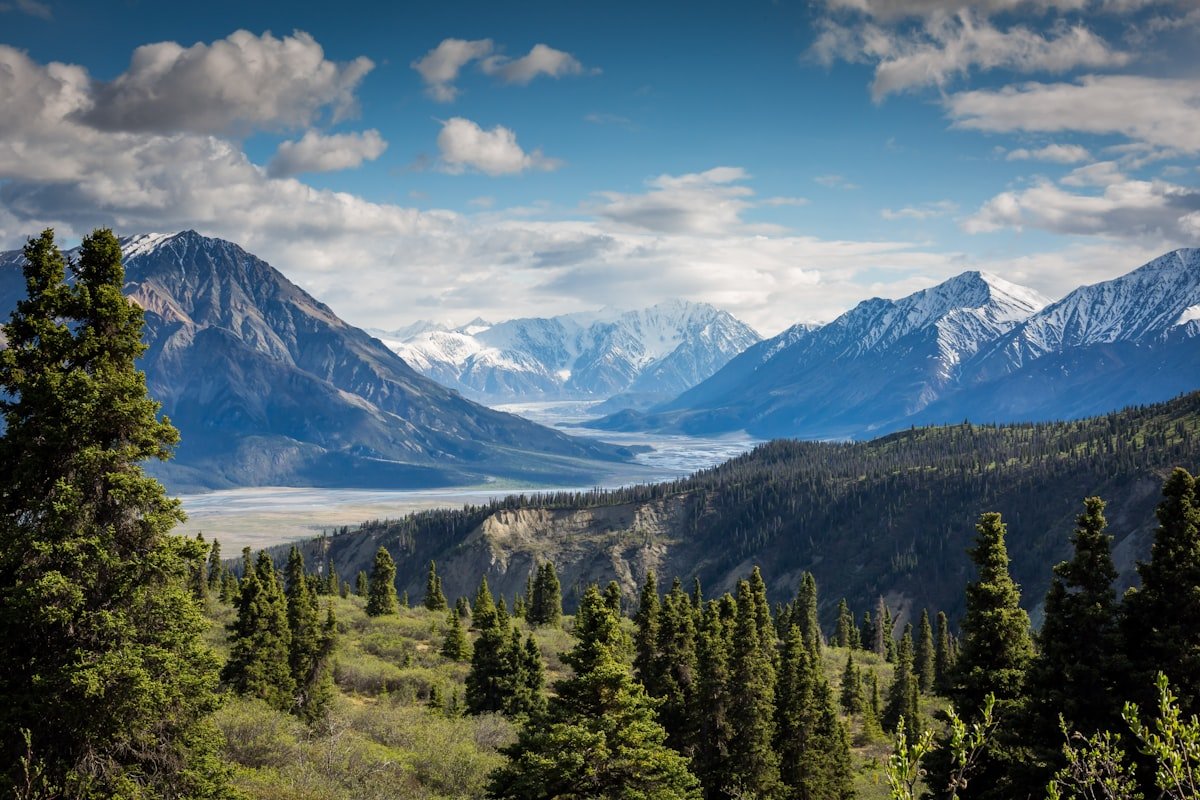
Travel southeast from Kanas to Hemu Village. The road is winding mountain pavement; allow 1.5–2 hours. Hemu is smaller and more enclosed than Kanas, defined by half-timber log cabins, grazing horses, and a river that cuts through a glacial trough. In autumn the birch groves that flank the Hemu River turn a color so bright it almost hurts to look at.
Check into a wooden guesthouse. In the afternoon, walk the Birch River Trail or ride a horse up toward the Hemu Viewing Deck (the sunrise platform). The deck faces east, which means you are scouting tomorrow’s composition today.
 Hemu Village birch forest autumn Xinjiang”>
Day 6: Hemu Sunrise + Free Exploration
Wake up at 05:30. The famous Hemu sunrise—where morning light hits the birch gold, smoke rises from timber chimneys, and the river runs blue-silver in the foreground—is entirely weather-dependent. If it is clear, you will understand the hype. If it is misted over, the soft diffused light is its own kind of reward.
After breakfast, spend the day exploring Hemu on foot or horseback. A popular moderate ride is out toward the “Beautiful Peak” (Meilifeng) area, where the birch-spruce mosaic is uninterrupted. Independent travelers appreciate Hemu because, unlike the more commercialized domestic tour stops, the village retains a genuine pastoral rhythm—herders moving livestock, smoke from family kitchens, the sound of the river over stones.
Day 7: Hemu → Burqin → Wuerhe (Devil City area)
Depart Hemu in the morning and retrace the mountain road back down to Burqin. From Burqin, drive southeast toward Wuerhe District (Karamay). This is a long driving day—roughly 6–7 hours—but the landscape transition is fascinaing: from Altai spruce-forest Mountains to the barren, wind-scoured Dzungarian Basin. If time allows, catch the sunset at World Devil City (Wuerhe Yadan). The copper-red sandstone towers glow ferociously in low-angle light, and the wind produces that eery “devil” howling the site is named for.
Day 8: Devil City → Karamay → Urumqi
Spend the morning at Devil City if you missed sunset the previous day. The Yadan formations are best photographed in the golden hour before sunset, but even at midday the Martian scale of the place is memorable. Then drive back south toward Urumqi (roughly 4–5 hours on the G3014 and G30). Alternatively, if you have a flight connection, you can depart from Karamay airport (which has limited service to Urumqi and other cities).
Reaching Urumqi in the evening gives you a chance to reflect on the trip over a final Xinjiang dinner. Try polo (pilaf) or a hotpot with local lamb—the kind of meal that tastes better because you have earned it with miles walked.
Day 9: Urumqi Rest / Optional Tianchi Day Trip
If your flight out is on Day 10, use Day 9 as a buffer. Visit Heavenly Lake (Tianchi) as a day trip from Urumqi (2 hours each way). In early October the Bogda Peak reflection is often visible in the lake’s surface, and the spruce forest along the west shore is turning amber. It is a softer, more accessible alpine experience than Kanas—a good way to transition back to city pace.
Day 10: Depart Urumqi
Fly out from Urumqi. If you have extra days and want to extend the autumn theme, consider adding a 2–3 day detour south toward the Bayanbulak Grassland (if the road is still open—it closes with the first heavy snow, typically mid-October) or west toward the Sayram Lake ring road (the steppe grasses turn copper-gold in October, and the lake’s color is at its most saturated blue).
Practical Advice for the Autumn Colors Trip
1. Book accommodation 3–4 weeks in advance. The September 25–October 8 window is the single most competitive period for Kanas and Hemu lodging. Wooden guesthouses that cost ¥300/night in June can hit ¥1,200/night in peak October. If you are flexible, the October 10–20 period (just after the National Day holiday) offers nearly identical colors with 40–50% lower prices and far fewer people.
2. Pack for two seasons in one day. At Kanas and Hemu in early October, daytime temperatures might reach 12–18°C in the sun, but nighttime temps drop to -3°C to -8°C. The “onion layering” approach is mandatory: base layer, mid-layer flece, outer puffy down, and a wind shell. Gloves and a beanie are not optional.
3. Respect the altitude and the environment. Kanas sits at ~1,374 m and Hemu at ~1,200 m—not extreme, but the dry air and increased activity level can still produce mild altitude effects. More importantly, the Kanas biosphere is an ecologically sensitive zone. Stay on boardwalks. Do not pick the birch leaves “for Instagram.” Pack out all trash. The reason the autumn colors are so spectacular is precisely because the forest is still largely intact—don’t be the reason that changes.
4. Transport logistics. The most independent-traveler-friendly approach is a private charter (7-seat SUV, roughly ¥800–1,200/day including driver). This gives you flexibility with photo stops and protects against the very real risk of a blown tire or an early-season snow closure on the mountain roads. If you self-drive, make sure your rental includes winter tires and that you have experience with mountain driving in variable conditions.
5. Photography notes. The classic shots (Hemu sunrise, Kanas Three Bays) are classic for a reason—they are genuinely extraordinary. But don’t stop there. Some of the best frames are the unplanned ones: a birch leaf on a cedar plank; a horse drinking from the Hemu River at dusk; the way morning light hits a timber cabin’s shingles. Xinjiang in autumn is not just a “destination”—it is a sustained visual experience. Give it the time it deserves.
Why This Itinerary Works for Independent Travelers
Most group tours rush through Kanas in 2 days and skip Hemu entirely. This 10-day version gives you 5 full days in the Kanas-Hemu biosphere—enough time to experience both the iconic viewpoints and the quieter moments in between. It also includes the Wuerhe Yadan, which most autumn-color-focused itineraries ignore but which provides a spectacular desert-plateau contrast to the alpine forest scenes.
The route is also designed to be logistically realistic. By entering via Burqin, spending your peak-color days in the biosphere, and exiting back to Urumqi via Karamay, you avoid the risky late-season road closures that can trap unwary travelers on the north side of the mountains.
Final word: Xinjiang’s autumn does not wait for you. The leaves turn whether or not your schedule is convenient. But if you can make the September 25–October 8 window work—do it. It is, quite simply, one of the most beautiful things you can see on this planet.