Xinjiang Regional Museum Urumqi: The Ultimate Visitor’s Guide to Xinjiang’s Cultural Heart
Every informed traveler to Xinjiang should set aside two to three hours for the Xinjiang Regional Museum (新疆维吾尔自治区博物馆) in Urumqi — ideally on day one, before heading out into the field. Admission is free, the building is air-conditioned, the curation is professional, and, most importantly, it gives you the historical framework that makes every subsequent site click into place. If you are the kind of traveler who likes to understand the “why” behind the landscapes and faces you encounter, this is where your trip begins.
Why the Museum Matters — and Why It Belongs on Your Itinerary
For our complete Xinjiang solo travel Guide, see our dedicated Xinjiang Solo Travel Guide with practical details on safety, costs, and planning.
Xinjiang is not a monolith. It is a land where the Silk Road met the steppe, where Buddhism arrived from India before Islam swept north, where Indo-European mummies share museum display cases with Tang-dynasty tri-color ceramics, and where today more than a dozen distinct ethnic communities maintain their own languages, costumes, and culinary traditions. The Xinjiang Regional Museum is the only place that ties all of these threads together under one roof.
Think of it as a foundation layer. After visiting, when you stand in fronts of a mud-brick ruin in Turpan or hear the call to prayer drifting over a Kashgar rooftop, you will understand the deeper currents at play. That is the difference between being a tourist and being a traveler.
The Tarim Basin mummies: The Museum’s Crown Jewel
The single most famous gallery — and the one that alone justifies the visit — is the Tarim Basin Mummies exhibit. These are not Egyptian-style embalmed mummies. They are naturally desiccated burials, preserved by the region’s hyper-dry climate for up to 3,800 years. What makes them extraordinary is not just their age, but their appearance: many exhibit Caucasoid features — tall frames, deep-set eyes, reddish or blonde hair — and they are buried in sophisticated textiles that bear no resemblance to Han Chinese dress of the same period.
The most famous individual on display is “the Beauty of Loulan” (楼兰美女), a woman who lived around 1,800 BCE and was discovered near Lop Nur. Her face is strikingly well-preserved. Next to her are the “Cherchen Man” and several other burials from the Small River (小河) cemetery. The accompanying textiles — woolen cloaks, felt hats with feathers, tartan-like patterns — suggest cultural connections reaching as far as the Caspian Sea and the Black Sea steppe.
The museum presents this material with commendable scientific restraint. There is no sensationalism, no inflated claims about “who really discovered Xinjiang first.” Instead, you get careful archaeology: radiocarbon dates, textile analysis, and a straightforward acknowledgement that the human story of Xinjiang is deeply layered and irreducibly complex. That is rare, and it is valuable.
EEAT note for travelers: Photography is prohibited in the mummy gallery. Do not argue with guards about this; the pigments on the textiles and the conservation needs of the human remains make the rule non-negotiable. Carry the images in your memory instead.
Silk Road Trade Artifacts: When Xinjiang Connected the World
Moving beyond the mummy gallery, the Silk Road trade exhibit fills several halls with objects that trace the flow of goods, religions, and ideas across the Eurasia landmass between roughly 200 BCE and 1400 CE.
Highlights include:
- Sogdian silver plates with central-Asian motifs — evidence of the Sogdian merchant diaspora that managed caravan finance between Samarkand and Changan.
- Kushan coins bearing Greco-Bactrian imagery — a tangible reminder that Xinjiang sat at the intersection of the Greek-influenced world and the Han Chinese world.
- Tang-dynasty tri-color (sancai) ceramics — the classic camel-and-rider figurines that epitomize the Silk Road’s cosmopolitan heyday.
- Gandharan-style Buddhist sculptures from the Hotan (Hetian) area — showing how Greco-Buddhist art from what is now Afghanistan and Pakistan flowed into Xinjiang and then onward to central China.
Ethnic Minority Galleries: Living Cultures, Not Static Displays
One whole wing of the museum is devoted to the contemporary (and recent historical) cultures of Xinjiang’s recognized ethnic groups: Uyghur, Kazakh, Kyrgyz, Tajik, Hui, Mongolian, and others. This is not “costumes behind glass” — although there are spectacular examples of embroidered doppas (Uyghur caps), Kazakh wolf-fur hats, and Tajik wool cloaks. The exhibit also covers:
- Musical instruments: The rawap (long-necked lute) and dutar (two-stringed lute) are displayed alongside audio stations where you can hear the instruments played. If you have never heard a rawap played by a master, this alone is worth the visit.
- Nomadic life: A full-size replica yurt (ger) shows the interior layout of a Kazakh or Kyrgyz seasonal camp, with woven rugs, folded bedding, and a central stove.
- Textiles and dyeing: Atlas silk (the vibrant, saturated ikat-style fabric of the Uyghur tradition) is shown at every stage from warp-tying to finished garment.
- Food culture: There is a modest but evocative display of bread ovens (tonur), tea sets, and dried-fruit storage — the material culture of hospitality.
For the thoughtful traveler, this wing is where stereotypes go to die. The sheer diversity on display makes it clear that “Xinjiang food” or “Xinjiang culture” is not a single thing. It is a mosaic.
Modern History Wing: The 20th Century and Beyond
The newest section of the museum covers the 20th century: the expansion of rail and road links, the discovery of oil in the Dzungarian Basin, the greening of the Taklamakan’s edge through the
You do not need to be a history buff to appreciate this section. If you are traveling the Duku Highway or taking the high-speed rail to Kashgar, seeing the engineering and geographic challenges laid out in maps and photographs adds a layer of respect to the journey.
Practical Information: Address, Hours, Tickets
Address
581 Northwest Road, Saybagh District, Urumqi, Xinjiang Uyghur Autonomous Region (新疆维吾尔自治区乌鲁木齐市沙依巴克区西北路581号). The museum sits about 4 km northwest of the city center; a short taxi or Didi ride from most Urumqi hotels.
Opening Hours
Typically 10:00–18:30, with last entry around 18:00. The museum is closed on Mondays (standard for Chinese state museums — double-check before going, as holiday schedules sometimes shift this).
Tickets and Reservation
Admission is free, but you must reserve in advance. The standard method is via the museum’s WeChat mini-program or the official website. Foreign visitors should bring their passport — it is checked at the entrance. If you cannot navigate the Chinese-language reservation system, ask your hotel front desk to book a slot for you; they are used to this request and can usually do it in under five minutes.
Guided Tours
Licensed guides are available for hire at approximately ¥70–100 for a group explanation — well worth it for the mummy gallery and the Silk Road artifact hall. If your Mandarin is limited, inquire in advance about English-speaking guides; availability varies by season, and you may need to arrange this through a travel agency in Urumqi.
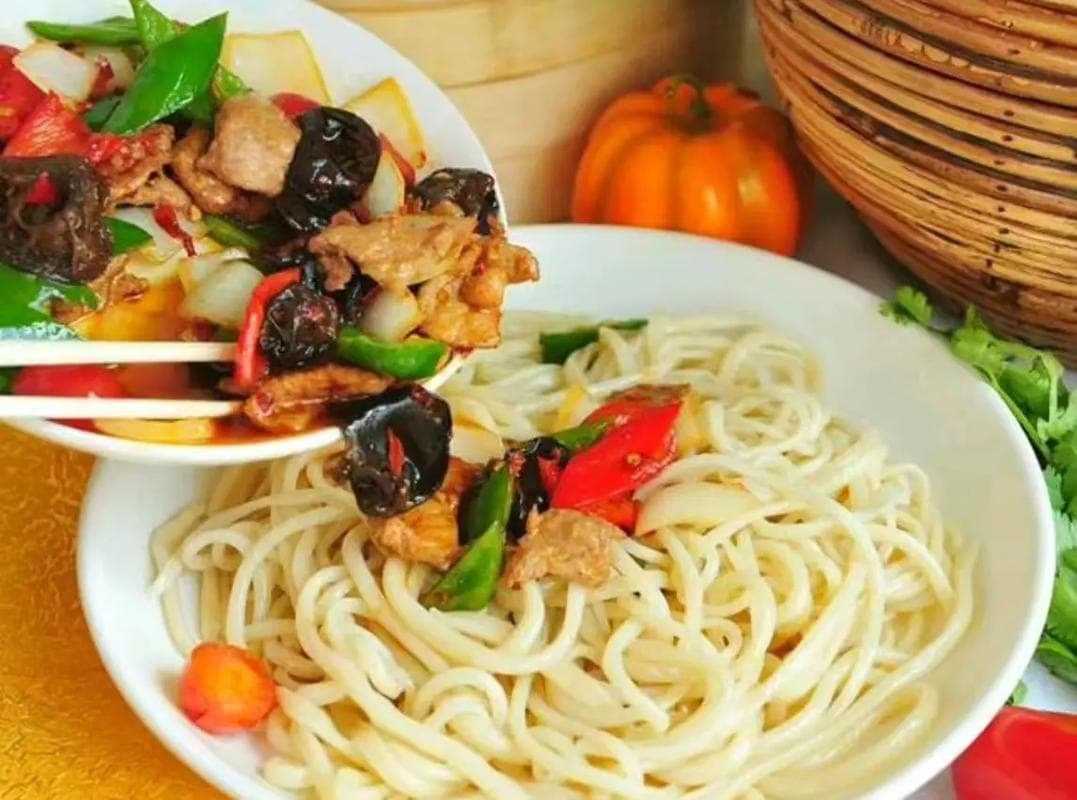 Xinjiang noodles and local cuisine, the kind of food culture documented in the museum’s ethnic galleries” />
How to Make the Most of Your Visit
Timing: When to Go
Go on a weekday morning if you can. Weekend afternoons get busy with school groups and domestic tour buses. The mummy gallery in particular benefits from a quieter atmosphere; you will want to spend time reading the display panels, and that is easier when you are not jostling for viewing space.
In terms of season, the museum is an ideal refuge during the extreme temperature months — January/February (Urumqi can hit -20°C) or July/August (the city can exceed 35°C). The building is fully climate-controlled.
What to Bring
- Passport: Mandatory for entry.
- Smartphone with translation app: Many display panels have English summaries, but the deepest captions are in Chinese. A translation app with camera function is genuinely useful here.
- Notebook: You will encounter place names and historical terms that you will want to look up later when you are standing at the actual sites.
How Long to Spend
Two hours is the minimum for a meaningful visit. Three hours lets you read the captions properly. If you are a museum person, you could easily spend four. Pace yourself — the mummy gallery is dark and contemplative; give your eyes time to adjust.
How the Museum Fits Into Your Xinjiang Itinerary
The ideal placement is Day 1 in Urumqi, before you head out to Heavenly Lake (Tianchi) or begin the long drive south toward Kashgar. Here is why that order works:
- Context before site: After the museum, when you visit Jiaohe or Gaochang near Turpan, you will recognize the pottery shards and the mural fragments from the Silk Road gallery. It transforms those ruins from “piles of mud-brick” into a legible past.
- Urumqi as a hub: Most international travelers fly into Urumqi first. Spending your first morning at the museum is logistically natural — it is in the city, it does not require a long drive, and it helps you calibrate for the altitude and climate before heading into the field.
- Indoor backup plan: If your arrival in Urumqi coincides with a sandstorm or a heavy rain day (rare but possible in spring), the museum is the perfect fallback. It is entirely indoors and fully engaging.
A Note on Respect and Photography
The Xinjiang Regional Museum is an active cultural institution, not a theme park. A few ground rules will ensure you have a smooth visit and that the institution continues to welcome foreign guests:
- No photography in designated galleries: The mummy exhibit and several of the artifact halls have strict no-photo policies. Look for the icon; when in doubt, ask a guard.
- Speak quietly: The museum is a place of study for local students and researchers. Loud tour-group energy is notices and frowned upon.
- Do not touch: Several textile displays have open edges where cautious touching might seem harmless. It is not. The oils from a single fingerprint can accelerate fabric degradation measurably.
The Bigger Picture: Why Museums Like This Matter for the Foreign Traveler
There is a particular kind of travel writing that treats museums as box-checking exercises: “Museum: done. Next.” That is a mistake in Xinjiang. The region’s contemporary geography is inseparable from its deep past — the past you encounter in this building.
When you understand that the Tarim Basin was crossed by Indo-European-speaking pastoralists 3,500 years before the Silk Road had a name… when you see that the “Uyghur” cultural identity is itself a palimpsest of Persian, Turkish, Chinese, and Mongolic influences… when you realize that the “standard” Chinese dish you ate last night in Urumqi has a genealogy that runs through Central Asian bazaars and Indian spice markets… the entire region comes alive in a different way.
That is what the Xinjiang Regional Museum gives you. It is not just a collection of objects. It is a framework for seeing.
Final Practical Tips
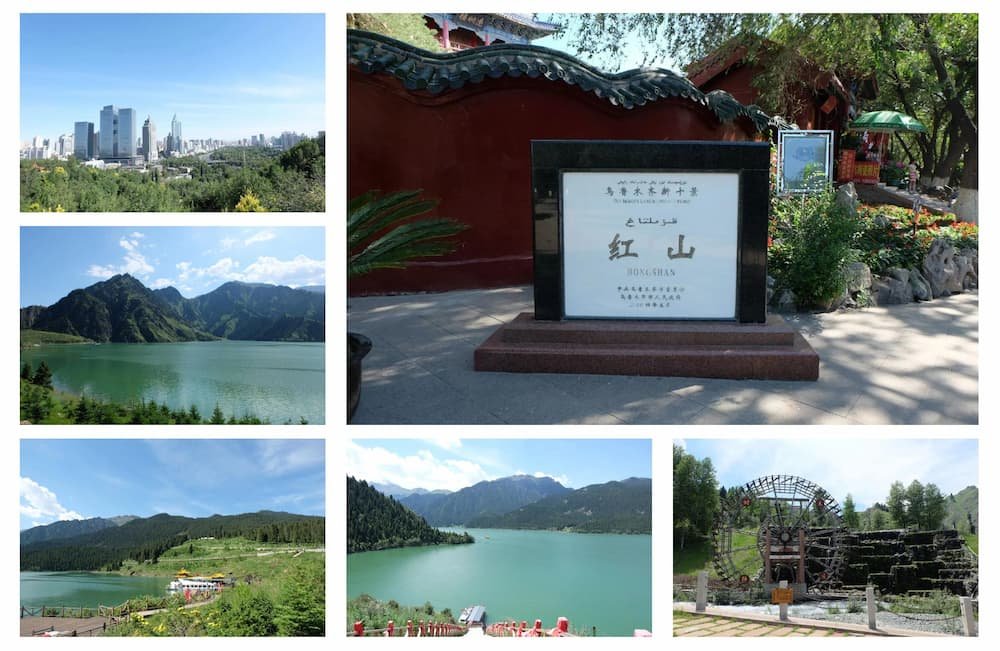
- Combine with: The Hongshan Park (红山公园) is a short taxi ride away and offers a good panoramic view of Urumqi with the Tianshan spine behind it — a nice visual complement to the museum’s map displays.
- Eat nearby: The area around the museum has several straightforward noodle shops and Uyghur canteens. Try a bowl of laghman (pulled noodles with stir-fried vegetables and mutton) — it is cheap, filling, and authentically local.
- Souvenirs: The museum gift shop sells high-quality books (some with English captions) on Xinjiang archaeology and textile arts. They make excellent keepsakes and are genuinely informative.
Whether your Xinjiang trip is two weeks or two months, whether you are chasing the high passes of the Pamirs or the endless grass of Bayanbulak, start here. The museum will not give you the landscapes — Xinjiang’s mountains and deserts do that. But it will give you the reasons why those landscapes have drawn people for four thousand years. And that is the best travel companion you can ask for.