
Xinjiang Southern Silk Road Cultural Itinerary: 10 Days of History, Deserts & Living Heritage
Updated July 2026 by Roam Xinjiang Team
If northern Xinjiang is about epic scenery—glacial lakes, golden birch forests, and endless grasslands—southern Xinjiang (southern Silk Road itinerary) is where the real cultural soul of the Silk Road lives. This is the China that most foreign travelers never reach: a 2,000-year-old trading corridor where Central Asian, Persian, Indian, and Chinese civilizations overlapped, traded, and left behind a layer cake of languages, religions, architectures, and cuisines.
This 10-day southern route—Kashgar → Tashkurgan → Kuqa → Turpan → Urumqi—is designed for independent travelers who want more than postcard landscapes. It’s a route of living heritage: Uyghur mosque courtyards in Kashgar, Tajik eagle-dance traditions on the Pamir Plateau, Tocharian Buddhist cave art near Kuqa, and the 2,000-year-old Karez irrigation system that still feeds Turpan’s grapevines today.
Why Choose the Southern Route?
Southern Xinjiang sits in the rain shadow of the Tianshan Mountains. The climate is desert-dry, the winters are shorter, and the cultural density is staggering. You’ll cover four distinct ecological and cultural zones in ten days:
- Kashgar (Kashgar Old Town): The best-preserved Islamic timber architecture in China, a living old city of ~130,000 people.
- The Pamir Plateau (Tashkurgan): Tajik (Pamiri) culture, 3,600m glacial lakes, and the “Roof of the World” landscape.
- Kuqa (Qiuci Kingdom legacy): The richest oasis on the Northern Silk Road, with 3rd–8th century Buddhist cave art older than Dunhuang’s Mogao.
- Turpan (the desert oasis): A −154m depression with UNESCO-listed hydraulic engineering and the most atmospheric mud-brick ruin on the Silk Road.
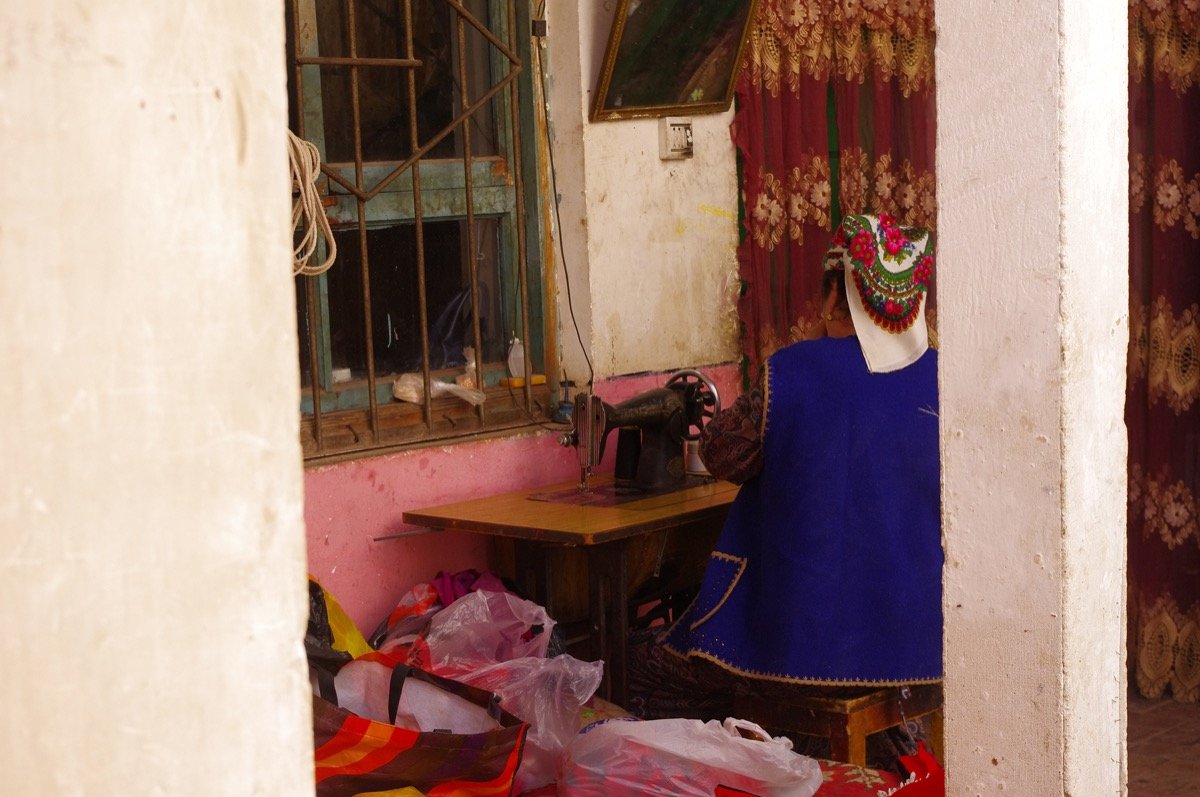
Day 1–2: Kashgar — The Heart of the Southern Silk Road
Fly into Kashgar (Kashi) from Urumqi (~90 min) or via international connection through Islamabad or Osh. Kashgar Airport (KHG) is the main gateway to southern Xinjiang.
Day 1: Old City Orientation
Start at Id Kah Mosque (ticket ~¥45)—the spiritual anchor of the old city. Non-Muslim visitors are welcome in the outer courtyard; dress modestly (long pants, shoulders covered, headscarf appreciated for women). The tree-lined sahn and colonnade arches are classic Central Asian Islamic architecture.
From Id Kah Square, walk into the Kashgar Old Town through the East Gate. The old city is a UNESCO-listed maze of sun-dried brick, poplar-beam houses, and multi-level alleys that follow a 500-year-old street logic. Deliberately get lost between Boyi Road and the mosque quarter—count how many doors have carved poplar lintels. This is not a staged “old town”—people live, cook, and raise children here.
In the afternoon, visit the Abakh Khoja Mausoleum (ticket ~¥30), the dynastic shrine with the closest thing to Samarkand tilework you’ll see inside China: turquoise domes, cobalt arabesques, and a walled garden layout that frames the shrine as a place of reflection.
Day 2: Sunday Livestock Market & Food Streets
If you’re in Kashgar on a Sunday, the Sunday Livestock Market (~5 km out on the Kashgar–Uzbek border road, starts ~07:00) is non-negotiable. The sound, the smell, the bargaining—it’s the most raw, unedited traditional market left in Central Asia. Even if it’s not Sunday, the Kashgar food streets around the old town serve legendary Uyghur cuisine: naan fresh off the tandoor wall, laghman noodles with cumin-scented lamb, and pomegranate juice pressed to order.
Practical: Arrange your PSB border permit (边防证) at your hotel or a local travel agency today—you’ll need it for the Pamir trip starting tomorrow. Bring your passport; the service is usually free or a nominal fee.
Day 3: Karakul Lake — The Pamir Plateau Day Trip
Depart Kashgar at 07:30 along the Karakoram Highway (G314). The road climbs from 1,280m to 3,600m in under four hours, with the first major stop at Baisha (White Sand) Lake (~45 min from Kashgar, entrance ~¥40).
Continue to Karakul Lake (ticket ~¥40–50). Cradled at 3,600m on the Pamir Plateau, this glacial lake mirrors the snow-white massif of Muztagh Ata (7,546m). The water shifts from jade-green to steel-blue depending on cloud cover. Nearby, Muztagh Ata Glacier Park (ticket ~¥92, includes shuttle) lets you walk a boardwalk directly toward the glacier tongue at ~4,680m.
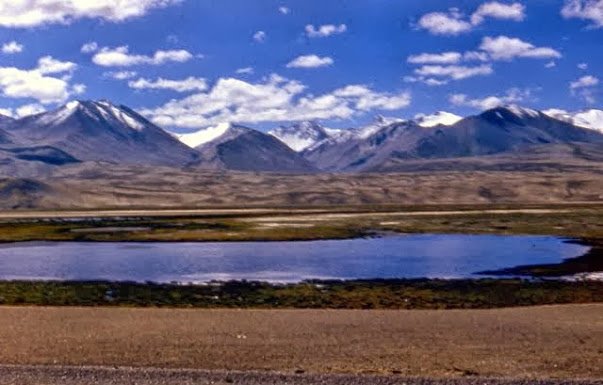
Altitude safety: Karakul sits at 3,600m. Never exert heavily on the same day you ascend from Kashgar. Symptoms: headache, nausea, dizziness—descend immediately if vomiting or confusion sets in. Bring ibuprofen, SPF 50+, and cash (no ATMs at the lake).
Stay option: Several seasonal Kyrgyz yurt camps operate May–September on the north shore (¥80–200/person for a mattress on the floor + meals). It’s rustic—no plumbing—but waking up to glacier light from a felt tent is unforgettable.
Return to Kashgar by ~19:00, or stay overnight at the lake if you want sunrise shots (recommended for photographers).
Day 4–5: Tashkurgan — Stone City & Tajik Heritage
Drive deeper into the Pamirs (~290 km, 5.5–6 hours from Kashgar) to Tashkurgan (3,090m), the last settled outpost before the Pakistan border. The name means “Stone Tower” or “Stone Fortress” in Persian/Uyghur.
Day 4: Stone City & Golden Grass Beach
Visit Stone City (石头城, combo ticket with Golden Grass Beach ~¥90). The Sui–Tang era fortification sits on a massive earthen platform with stone perimeter walls and watchtower foundations. The 360° panorama from the top takes in river valley, mud-brick Tajik houses, and the snow line of the Kongur range.
Walk the boardwalks at Golden Grass Beach (金草滩)—a fertile wetland strip fed by snowmelt. In late spring and summer it glows iridescent green-gold; in September it turns copper. Tajik families sometimes offer informal yak-milk tea tastings along the edge paths.
Day 5: Tajik Culture & Return
Tashkurgan is predominantly Tajik (Pamiri)—an Iranic-speaking, Ismaili Muslim mountain people distantly related to Tajiks of Tajikistan. Visit on a Friday if possible, when the Friday market offers dried fruit, wool rugs, and unedited local atmosphere.
Etiquette: Always ask before photographing people. Dress modestly (shoulders covered, no short shorts). This is a deeply traditional community—respect goes a long way toward genuine encounters.
Drive back to Kashgar in the afternoon, or stay another night and continue via the Khunjerab Pass area—note: the international border crossing is not open to casual tourists; you can reach the outpost area but don’t plan on crossing.
Day 6: Kashgar to Kuqa — The Long Haul
There are two ways to reach Kuqa from Kashgar:
- Fly (recommended): Kashgar → Urumqi (90 min), then Urumqi → Kuqa (60 min). Total travel: ~4–5 hours including connections.
- Overland: ~710 km via the Taklamakan Desert Highway (G217/loop). This is an epic drive (10–12 hours) through the “Sea of Death”—the world’s second-largest shifting-sand desert. Only attempt with a 4×4 SUV, full fuel, 3L water/person, and a second driver.
Recommended: Fly via Urumqi and pick up a rental car in Kuqa the next morning. The driving in the Kuqa area is spectacular and far more rewarding than a full day on a bus.
Day 7: Kuqa — The Cradle of Silk Road Buddhist Art
Kuqa (库车), ancient Qiuci (龟兹), was the wealthiest oasis on the northern Silk Road. Its cultural DNA survives in cave art, royal palace architecture, and old town lanes where artisans still hammer copper pitchers and carve poplar lintels.
Morning: Kizil Thousand-Buddha Caves
Kizil Caves (ticket ~¥70), 67 km northwest of Kuqa, are the oldest major cave-art complex in China—predating Dunhuang’s Mogao by several centuries (active 3rd–8th century CE). The paintings show Indo-Hellenistic influences: flowing robes, blue-pigmented halos, and diamond-shaped mountain motifs unlike anything in East Asian Buddhist art.
Rules: Photography inside caves is strictly prohibited. The site is an active heritage protection zone, not a theme park. Respect the guards—they’re preserving something irreplaceable.
Afternoon: Subash Ruins & Kuqa Old Town
Visit Subash Ruins (ticket ~¥25–30), the massive double-monastery complex (north and south precincts) that flourished 3rd–8th centuries CE. The stupa platform and cell-block layouts are still traceable across the wide alluvial fan.
Return to Kuqa Old Town for the evening. Walk the lanes where naan ovens (tonur) are built into courtyard walls, coppersmiths hammer water pitchers, and wood-carvers shape poplar lintels with geometric motifs tied to Kuchean heritage. Stop for laghman noodles at a busy local spot—the cumin-scented lamb will taste even better after a day of cave art and ruins.
Day 8: Kuqa → Turpan via Tianshan Grand Canyon
Today is a travel day with a spectacular en-route stop. Drive from Kuqa northeast toward Turpan (~350 km, 5–6 hours) via the Tianshan Grand Canyon (Kizil Canyon) detour.
Tianshan Grand Canyon (ticket ~¥40–60 + shuttle) is a red sandstone slot canyon ~5 km walk. The wind-sculpted walls glow copper at midday and crimson at sunset. It’s one of the most photogenic natural sites in southern Xinjiang.
Arrive in Turpan by evening. Turpan sits in a depression below sea level (−154m), ringed by flame-colored mountains, and holds the record for the hottest place in China (regular summer highs of 45°C+).
Day 9: Turpan — Desert Ingenuity & the Greatest Ruin You’ve Never Heard Of
Turpan delivers a triple punch: ancient hydraulic engineering, a living agricultural oasis, and a cultural blend that feels straight out of One Thousand and One Nights.
Morning: Jiaohe Ancient City
Jiaohe Ancient City (ticket ~¥70 + ¥25 shuttle) is the best-preserved mud-brick ancient city on Earth—a UNESCO World Heritage Site. Unlike stone ruins elsewhere, Jiaohe was carved into the solid loess plateau itself. An entire city-state of 2,100+ years ago, shaped rather than assembled, on a narrow spit of land between two rivers.
Walk the south gate avenue (the wide central spine), explore the Buddhist stupa mound on the northern cape, and trace room-by-room floor plans pressed into the earth in the residential quarters. Best in late afternoon when the western walls catch side-light.
Afternoon: Karez System & Grape Valley
Visit the Karez Well System (ticket ~¥40)—a 2,000-year-old underground gravity-fed irrigation network that carries snowmelt from the Tianshan through tunnels under the desert. Walking into the cool tunnel air (about 22°C year-round) after the blazing street heat is a visceral lesson in desert survival. It’s also UNESCO-listed as part of the broader Silk Road corridors.
End the day at Grape Valley (ticket ~¥60 + ¥25 shuttle). A narrow green canyon threaded with pergola-shaded walkways hung with 20+ grape varieties. July–August is peak ripeness—buy a bag of seedless white grapes for ¥10–20 and eat them in the shade. This is the taste of Turpan.
Day 10: Turpan → Urumqi — Museum & Departure
On your final day, travel from Turpan to Urumqi (~180 km, 2–2.5 hours via expressway). Before your departure flight, spend 2–3 hours at the Xinjiang Regional Museum (free, advance reservation required via WeChat mini-program or onsite kiosk).
The museum gives you the historical framework that makes every previous site click into place: the 3,800-year-old Tarim Basin mummies, Sogdian silver plates, and ethnic minority galleries documenting Uyghur, Kazakh, Kyrgyz, Tajik, and Mongol cultures. It’s the perfect capstone to your southern Silk Road journey.
Fly out from Urumqi Diwopu Airport in the evening.
Practical Planning Guide
Best Season
| Month | Condition | Notes |
|---|---|---|
| April–May | Pleasant (15–28°C), clean air | Ideal for Turpan and Kuqa; Pamirs still chilly at night |
| June–August | Warm but intense in Turpan (45°C+) | Sightsee in mornings/evenings; Pamirs are accessible and green |
| September–October | Crystal-clear air, fewer crowds | The single best month for the entire route |
| November–March | Cold; some sites limit access | Not recommended for first-time independent travelers |
Border Permit (PSB 边防证)
You must obtain a border-zone permit noting “Taxkorgan / Tashkurgan County” before traveling to Karakul Lake and Tashkurgan. Arrange this in Kashgar through your hotel or a travel agency. Bring your passport. The permit is free or carries a nominal service fee.
Transport Between Cities
- Kashgar ↔ Kuqa: Fly via Urumqi (recommended) or overland via the Taklamakan (epic but exhausting)
- Kuqa ↔ Turpan: Train (4–5 hours) or private car via Tianshan Grand Canyon
- Turpan ↔ Urumqi: High-speed rail (1 hour) or expressway (2–2.5 hours)
- Kashgar ↔ Pamirs: Private 4×4 charter (¥1,200–1,800/day including driver)—the recommended option
Accommodation
- Kashgar: Old city guesthouses (¥150–400/night) to mid-range business hotels (¥400–800/night)
- Tashkurgan: Functional hotels and guesthouses (¥150–400/night); no luxury resorts
- Kuqa: Business hotels near the old town (¥200–500/night)
- Turpan: Resort-style hotels near Grape Valley (¥300–700/night) or budget options in the city center
Budget Reference (10 Days, Per Person)
| Item | Budget (CNY) | Mid-Range (CNY) |
|---|---|---|
| Internal flights (Kashgar↔Kuqa via Urumqi) | 1,200–1,800 | 2,000–3,000 |
| Trains (Kuqa→Turpan→Urumqi) | 300–500 | 500–800 |
| Charter (Kashgar→Pamirs round-trip) | 2,400–3,600 | 3,000–5,000 |
| Accommodation (9 nights) | 1,350–3,600 | 3,600–7,200 |
| Food (9 days) | 450–900 | 900–1,800 |
| Entrance tickets | 800–1,000 | 800–1,000 |
| Total (excluding int’l flights) | 6,500–11,400 | 10,800–18,800 |
Final Word
Southern Xinjiang asks more of you than the northern route—more planning, more permit paperwork, more tolerance for long travel days, and more respect for the cultural boundaries you’ll cross. But it also gives back more: the kind of travel memories that stay with you for decades, the kind that made the Silk Road famous in the first place.
If you’re planning your first independent trip to Xinjiang and want to go beyond the postcard landscapes, this 10-day southern cultural itinerary is where you start. And if you’ve already done the north and want to go deeper—welcome to the real Silk Road.
More planning resources: Our Xinjiang travel tips guide covers packing lists, altitude prep, and regional etiquette. For drivers, our self-drive guide explains the rules of the road on China’s most spectacular highway routes.