
Xinjiang Border Permit Guide 2026: What Self-Drive Travelers Need to Know
If you’re planning a self-drive trip through Xinjiang and your itinerary includes Kanas, Baihaba, Tashkurgan, or the Pamir Plateau, there’s a document you need to arrange before you even set foot in the region: the border zone permit (边防证, often called PSB permit or frontier pass). Without it, you’ll be turned back at checkpoints — sometimes hundreds of kilometers from nowhere.
This guide explains exactly when you need it, where to get it, what documents to bring, and the self-drive-specific rules that most online forums get wrong.
What Is a Border Zone Permit (边防证)?
The border zone permit is an official travel authorization issued by China’s Public Security Bureau (PSB) that allows you to enter designated border areas. Xinjiang shares land borders with eight countries — Mongolia, Russia, Kazakhstan, Kyrgyzstan, Tajikistan, Afghanistan, Pakistan, and India — and roughly 30% of the prime travel destinations sit inside border-controlled zones.
For foreign travelers, the permit is a separate document from your visa. It’s a small blue booklet (or sometimes a stamped paper form) that lists the specific border counties you’re authorized to enter. Each checkpoint along your route will inspect it alongside your passport.
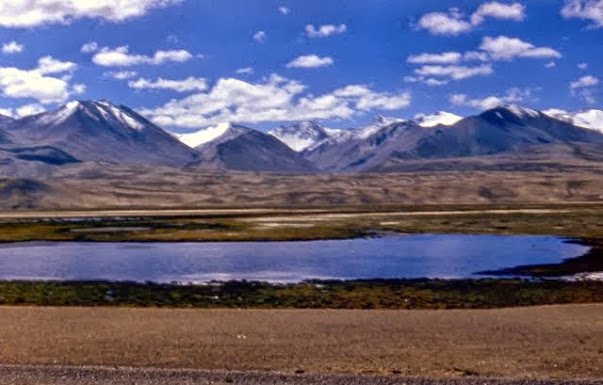 Karakul Lake on the Pamir Plateau – Xinjiang border zone” style=”width:100%;border-radius:8px;margin:18px 0;”>
Important: The permit is not required for most of Xinjiang — Urumqi, Turpan, Sayram Lake, Nalati, and Yining are all outside border zones. You only need it for destinations within designated border counties.
Which Destinations Require a Border Permit?
Here are the major travel destinations that require a valid border permit as of 2026:
1. Kanas & Baihaba Village — Habahe County (哈巴河县)
Kanas Lake and the surrounding biosphere are open to all visitors. However, Baihaba Village — the northwestern “first village of China” — sits in Habahe County and requires the permit explicitly noting “Habahe” (哈巴河) or “Baihaba” (白哈巴).
Without the permit, you can still visit Kanas Lake, Hanas Village, and Hemu — but you’ll be turned back at the Jiadenyu → Baihaba checkpoint.
Tip: Even if Baihaba isn’t on your original plan, get the permit anyway. The weather can shift your itinerary, and having the stamp costs nothing extra.
2. Tashkurgan & Karakul Lake — Taxkorgan County (塔什库尔干县)
The entire Pamir Plateau region accessed via the Karakoram Highway (G314) from Kashgar sits inside Taxkorgan Tajik Autonomous County. This includes:
- Karakul Lake (at 3,600 m on the way to Tashkurgan)
- Tashkurgan Stone City and Golden Grass Beach
- The Khunjerab Pass approach (the actual border crossing is not open to casual tourists, but the road toward it requires the permit)
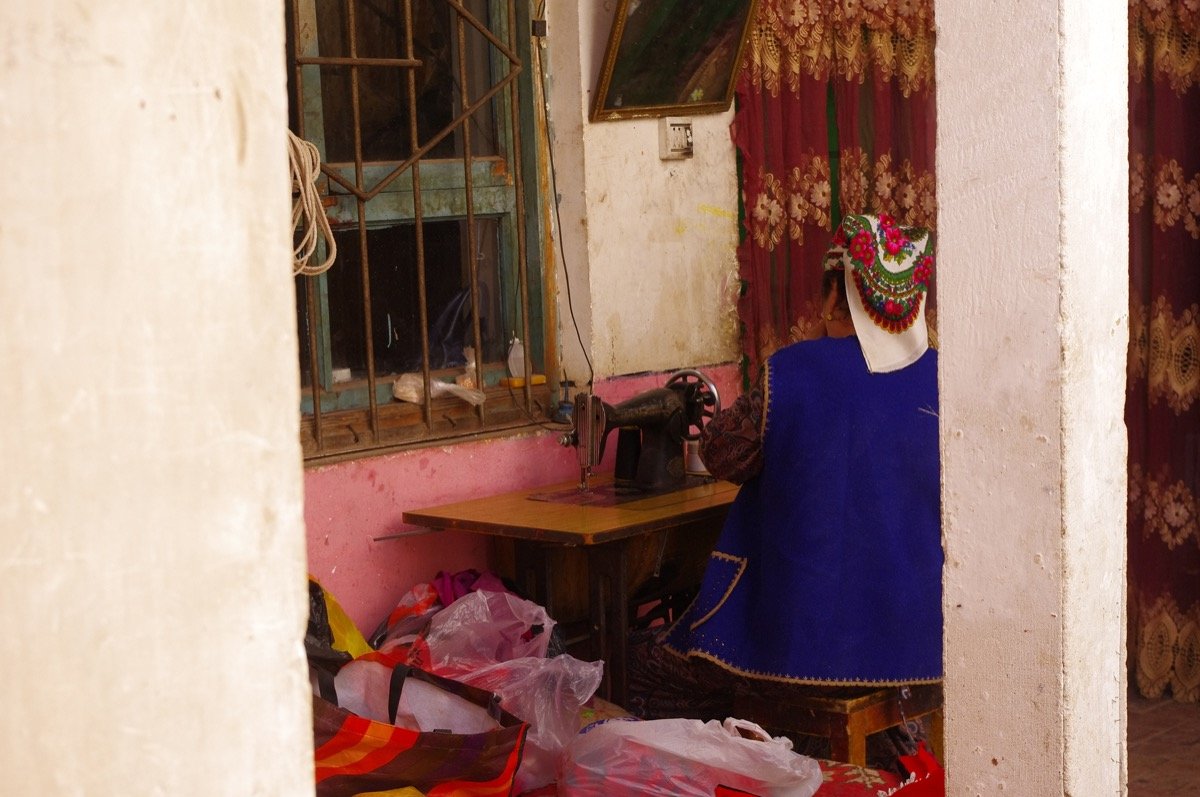
Your permit must explicitly list “Taxkorgan” (塔什库尔干) or “Tashkurgan.”
3. Other Border Zones
Depending on your itinerary, you may also need the permit for Alashankou (阿拉山口) near Bole — the China-Kazakhstan border crossing. Most standard tourist routes don’t require this, but if your trip includes it, add “Alashankou” to your permit application.
If your route stays on main highways (G30, G312) and doesn’t enter the specific counties listed above, you don’t need the permit.
Where to Get Your Border Permit
You have three options, ranked by convenience:
Option 1: In Your Home City (Recommended)
Chinese PSB offices in major cities (Beijing, Shanghai, Guangzhou, Chengdu, etc.) can issue the border permit before you travel. This is the most reliable option — you handle the paperwork at your own pace, in a language you understand, without the pressure of an approaching checkpoint.
What to bring:
- Valid passport
- Valid Chinese visa (tourist L visa or other)
- Application form (available at the PSB office)
- 2-inch color photo (bring 2 just in case)
Processing time: Same day to 3 business days.
Cost: Free at most PSB offices.
Option 2: In Urumqi (Xinjiang Regional PSB)
If you forgot to arrange the permit before arriving, Urumqi is your best fallback. The Xinjiang Regional Public Security Bureau in Urumqi handles border permit applications for all counties.
Location: North Xinhua Road area, Urumqi (search “新疆公安厅边防证办理” on Baidu Maps or ask your hotel).
What to bring:
- Passport + visa
- Temporary residence registration (临时住宿登记表) — get this from your hotel front desk in Urumqi within 24 hours of arrival
- Application form (filled on-site)
Processing time: 1–2 hours if you arrive early (before 11:00).
Warning: The Urumqi PSB office can be busy in peak season (June–September). Go on a weekday morning.
Option 3: In Kashgar or Burqin (Last Resort)
Local PSB offices in Kashgar and Burqin can issue the permit, but they have variable hours and may require a hotel booking in the border zone.
- Kashgar PSB: Can issue Taxkorgan permit. Many hotels offer a paid service (¥50–100) to handle the paperwork.
- Burqin PSB: Can issue Habahe permit. Same — some hostels offer assistance.
Self-Drive Specific Considerations
If you’re driving yourself (rather than hiring a driver), there are additional layers:
Vehicle Border Permit
For self-drive travelers in a rental or personally owned vehicle, some border zones require a vehicle border permit (车辆边防证) in addition to your personal permit.
- Rental cars: Most rental agencies in Urumqi can pre-arrange the vehicle border permit as part of the rental agreement for an extra fee (¥200–500). Ask explicitly: “Does this car have border zone authorization for Habahe and Taxkorgan?”
- Foreign-plated cars: Complicated. Some border zones restrict entry to Xinjiang-plated vehicles only. Check with your rental agency.
Checkpoint Procedures
When driving into a border zone, you’ll encounter police checkpoints (检查站) before the destination.
- First checkpoint (outer): Present your passport and border permit. Officers may scan your passport.
- Accommodation registration: Hotels in border zones must register your passport and permit with local police within 2 hours of check-in.
Tip: Always carry your original passport and border permit in the car. Don’t leave them in a hotel safe when driving into border areas.
Practical Tips — The Stuff That Saves Your Trip
1. Get Multiple Counties Stamped at Once
When applying for the permit, list all the border counties you might visit — not just the first one. The permit booklet has space for multiple destinations. Getting “Habahe” and “Taxkorgan” both stamped in one application saves a return trip to the PSB.
2. Validity Period
Border permits are typically valid for 3 months from the issue date. If your trip stretches beyond that, you’ll need to renew — which means another PSB visit.
3. Processing Delays
Chinese government offices don’t guarantee processing times. Apply at least 3–5 days before entering any border zone.
4. Weekends and Holidays
PSB offices close on weekends and public holidays (Chinese New Year, National Day Golden Week, etc.). Plan accordingly.
5. Children Need Permits Too
Every traveler, regardless of age, needs their own border permit. Infants included.
Cost Summary (2026 Rates)
| Item | Cost (RMB) |
|---|---|
| Personal border permit (PSB issuance) | Free – ¥20 |
| Vehicle border permit (rental car) | ¥200–500 (one-time) |
| Hotel assistance service (Kashgar/Burqin) | ¥50–100 |
Conclusion: Plan Ahead, Travel Smoothly
The border permit system exists for national security — it’s not bureaucracy for its own sake. Once you understand the rules and get your documents in order before leaving your home city, it becomes a non-issue that opens up some of Xinjiang’s most spectacular and remote landscapes.
Karakul Lake at sunrise, the stone fortress at Tashkurgan, and the birch forests of Baihaba are experiences that stay with you forever. Don’t let a missing stamp in a blue booklet keep you from them.
Updated: July 2026. Policies can change — always verify with the nearest Chinese consulate or the Xinjiang Regional Tourism Bureau before travel.
Practical Information for Visiting Xinjiang border permit guide
Before you set off, a few practical notes that make a real difference on the ground in Xinjiang. Distances are vast and timing matters more than almost anywhere else in China, so build buffer days into your itinerary and confirm opening times and road conditions close to your travel date.
Best Time to Go
Most of Xinjiang’s headline destinations are best from May to October. High-altitude lakes and northern grasslands peak in June–September, while desert and southern routes are most comfortable in spring and autumn to avoid summer heat. Winter is spectacular for snow scenery but brings closed mountain passes.
Getting Around
Self-drive remains the most flexible way to cover Xinjiang’s spread-out sights, but inter-city buses, trains to major hubs (Ürümqi, Kashgar, Yining, Turpan), and domestic flights fill the gaps. Check the latest Xinjiang travel tips before booking, as schedules shift seasonally.
What to Pack
Strong sun, dry air, and big day-to-night temperature swings are the norm. Bring high-SPF sunscreen, lip balm, a refillable water bottle, layered clothing, and a power bank. Carry some cash for remote stops where mobile payment is spotty.
Respect & Readiness
Signal can be weak outside towns—download offline maps, share your route with someone, and keep your passport handy for the occasional ID check. A little preparation turns a long drive into the trip of a lifetime.