
Seeing Xinjiang Clearly: Glasses, Contacts and Eye Care for Travelers
The optician on the corner will fix you inside an hour
I broke my only pair of glasses on the second day of a self-drive loop out of Urumqi. The temple snapped when I crammed my daypack into the back of the rented Tiggo, and for a stupid moment I thought my trip was over. It was not even close. I walked two blocks from my hotel near the Hongshan area and found an optician tucked between a noodle shop and a phone-repair stall. Twenty minutes later I walked out with a rethreaded screw and a free clean. Two days after that, when the same frame finally gave up for good, I came back and walked out with a brand new pair.
The thing foreign travellers do not expect about Xinjiang is how normal and fast eye care is. Every mid-size city has a cluster of optical shops, and they are not the slow, appointment-driven places you might dread from home. In Urumqi, Kashgar, Turpan, Korla, Aksu, Khotan and Yining the opticians sit on the busiest commercial streets, often three or four in a single block. You do not need an appointment. You do not need a translator app for the simple stuff. You hand over a prescription or sit for a five-minute autorefraction and they cut lenses while you wait.
I have now replaced glasses in four different Xinjiang cities and the pattern never changed. The shop takes your numbers, pulls a blank lens, grinds it on a machine humming in the back room, and mounts it in whatever frame you pick. The whole thing feels closer to a tailor than a clinic.
What it actually costs
Prices are low enough that you should not agonise over protecting one good pair. A basic single-vision lens cut and fitted the same day runs about 80 to 200 yuan depending on the index and the coating. The cheaper end is perfectly fine for driving and sightseeing. Anti-glare and blue-light coatings push you toward the top of that range, and a thinner high-index lens for a strong prescription adds another 50 to 100 yuan. Frames are a separate line item and range from a no-name 60 yuan special to imported brands that climb past 1,000 yuan. I usually grab a 120 to 300 yuan frame because it survives being stuffed in a glovebox.
Same-day really means same-day. I have never left an optical shop later than ninety minutes after walking in, and once in Turpan they handed me the finished pair in under forty minutes because the shop was quiet at midday. Progressive and bifocal lenses are a different story and can take a day or two, so if you need those, sort them in Urumqi or Kashgar where the bigger shops keep more stock on hand.
Carry your prescription like a passport
The single most useful thing you can do before you fly is photograph your prescription and email it to yourself. Bring the paper too, folded in your passport wallet. An optician in Kashgar can work from your old lenses if you hand them over, but a written prescription in diopters and axis saves everyone time and removes any guesswork. I keep a screenshot in three places: my phone gallery, a notes app, and a cloud folder I can open on any computer in a shop.
Without numbers they will run an autorefraction for free or for a few yuan, and it is accurate enough for a travel spare. Do not expect a full dilated eye exam unless you ask for one and go to a hospital instead. For a replacement pair to get you through a trip, the shop machine is plenty. If your vision has actually changed or you have pain, that is a different matter and I cover where to go later.
Contacts when the wind picks up
I wear dailies on long driving days because the dust gets everywhere and I would rather toss a lens than scrub one. The opticians above also sell boxes of lenses and solution, but for the everyday stuff I lean on pharmacies, and our guide to pharmacies and prescription medication in Xinjiang lists what you can buy over the counter without a fuss. Multipurpose solution is sold in every city pharmacy for roughly 25 to 45 yuan a bottle, and a box of thirty daily lenses costs about 60 to 120 yuan depending on the brand.
The hard part is not buying contacts. It is keeping them clean when the air itself feels gritty. Spring across the Tarim Basin and the Junggar Basin brings wind that carries fine sand on a calm-looking day. You will not always see the storm coming. One afternoon near Korla the sky looked clear and I still had to pull over because my eyes started streaming within minutes of a gust off the desert.
A sandstorm cleaning routine
When the wind lifts, switch to glasses if you can. Contacts turn into sandpaper the moment a grain works under the lens. If you must wear them, carry a small sealed vial of rewetting drops and a clean travel case, and never rub your eye with a bare finger that has touched the car door or your phone. I keep a pack of sealed single-use lens wipes in the center console for exactly this. The moment your eye feels gritty, pull over, wash your hands with bottled water, and either rinse the lens or swap to specs.
Do not sleep in them after a dusty day. I learned that the unpleasant way in Turpan, woke up with both eyes glued shut, and spent a miserable morning blinking at the oasis. A ten-minute nightly routine of wash, remove, case, solution saves you a day of misery. The dry climate also means lenses dry out faster than you expect, so rewetting drops are not a luxury here, they are part of the kit.
Lost a lens at 200 kilometres from nowhere
It happens. A lens folds, tears, or vanishes when you blink on a dirt track between Aksu and the desert highway. I carry a spare pair of glasses in the car for this exact reason, and I suggest you do the same. If you wear dailies, pack at least two extra singles per eye for the trip. If you are in monthlies and lose one lens, the cheap fix is to buy a fresh box at the next city pharmacy, but that may be a half day of driving away.
The realistic move is to slide on your backup glasses and keep going. Xinjiang distances are long, but the next town with a pharmacy is almost never more than a couple of hours. I once lost a lens outside Lop Nur country and simply drove to Korla in my spare specs, bought a new box, and was fine. The desert does not care about your vision plan, but the supply chain along the main roads is solid.
The desert sun will cook your retinas
This is the part of the trip people underestimate. The light in Xinjiang is not like the light at home. At midday on the Taklamakan edge or the Turpan Depression the sun comes straight down with almost no humidity to soften it, and you feel it behind your eyes by late afternoon. A decent pair of sunglasses is not optional. Look for category 3 at minimum, and category 4 if you plan to be on snow or water for hours. Polarised lenses cut the road glare off the asphalt and the flat glare off a salt lake, and they are worth the extra 50 to 100 yuan.
Cheap category 3 sunglasses are easy to find in any bazaar for 30 to 80 yuan, and the decent ones are fine for casual wear. For serious driving and hiking I bring a known brand from home because the lens quality and UV blocking are certified, but a local pair is a perfectly good backup that lives in the car. UV damage builds slowly and you will not notice the cost until the evening, when your eyes ache and struggle to adjust to dim restaurants.
Glacier glare above 3,000 metres
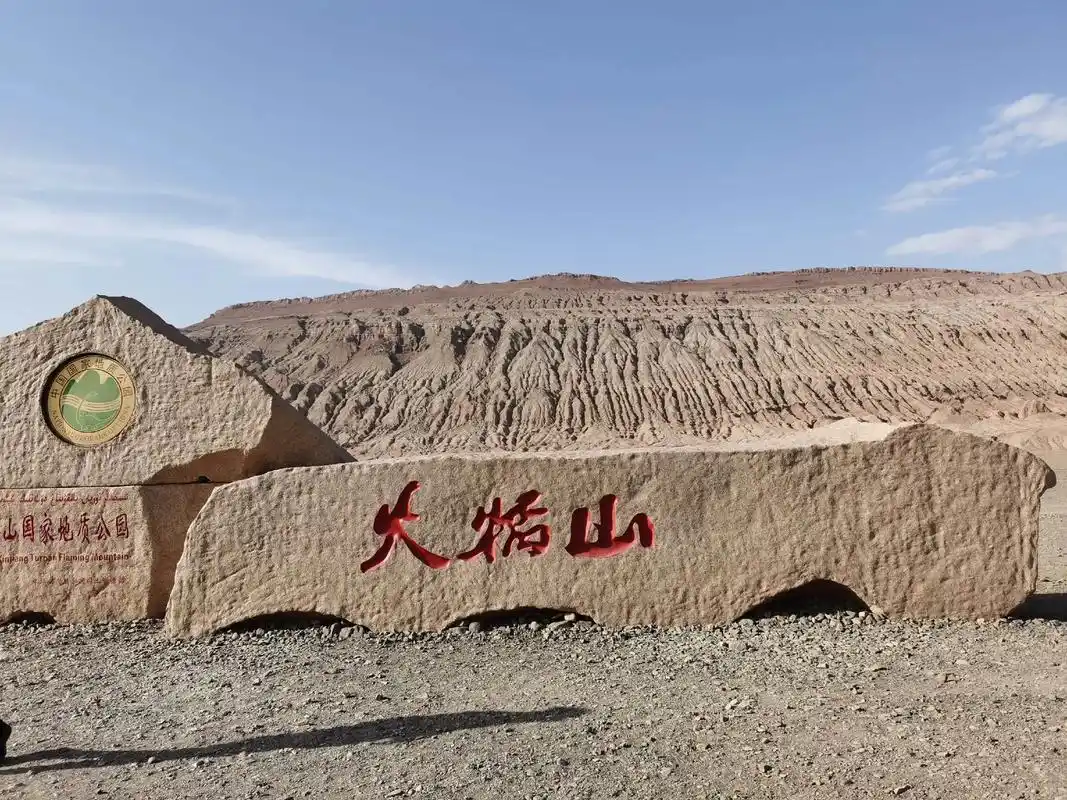
The sneakier danger is altitude. On the Karakoram and Pamir roads, around the passes above 3,000 metres, sunlight bounces off snow and ice and hits your eyes from below as well as above. That double hit is what causes photokeratitis, the so-called snow blindness that feels like sand in the eye and can wreck a day or two of driving. I wore category 4 glacier glasses on the pass above Muztagh Ata and still came down with a mild version because I lifted them to check the map. Wrap-around frames help because they block the side bounce.
Even if you are not heading to the high mountains, the plateau light around the southern Xinjiang ring road is brighter than it looks. Our full desert sun protection and UV guide goes deeper on clothing and timing, but for your eyes the rule is simple: good lenses on your face whenever you are outside between ten in the morning and five in the afternoon, and never cheaper than category 3.
When your eye actually gets hurt
Most problems on this list are annoyances. A few are not. If something scratches your cornea, if chemicals or alkali dust get in, if you take a branch or a bit of metal to the eye, or if pain, sudden blur, or light sensitivity comes on hard and will not ease, stop treating it as a travel hiccup. Flush with clean water for fifteen minutes for any foreign material, then get to a hospital. Do not keep driving with one eye closed.
Xinjiang has solid eye care when you need it. The big cities have ophthalmology departments in the main hospitals, and Urumqi in particular has well-equipped facilities. I keep the contacts for the clinics and hospitals travel-health guide saved on my phone so I am not hunting for a name while squinting in pain. For anything involving real trauma or sudden vision loss, that is where you go, not the optical shop on the corner.
If your issue is altitude related, the same logic applies. Headache with vision changes at a high pass is a red flag, and the altitude health guide explains the warning signs and the towns where you can drop down fast. Eyes are part of that picture. Blur at 4,000 metres is not something to push through.
What I pack now
After a few loops I have a kit that fits in a small zip pouch. Backup glasses in the car, always. A spare pair of daily lenses per eye, a sealed bottle of solution, rewetting drops, single-use lens wipes, and one good category 3 or 4 pair of sunglasses on my face plus a cheap pair in the glovebox. My prescription lives in three digital places and one paper copy. None of it is expensive and none of it is heavy.
The reassuring part is this: eye care in Xinjiang is easy, fast and cheap in every city you are likely to visit. You can lose a lens in the morning and be wearing a new pair of glasses by lunch. The only thing the opticians cannot fix for you is the sun, and that one you handle yourself with a good lens and a bit of discipline about when to wear it. Plan for the small stuff, know where the hospitals are for the rare bad day, and your eyes will outlast the longest drive on your route.