
Kashgar Food Streets: Where to Eat in the Old Town and Beyond
 Kashgar Old Town food street with grilled meats and local vendors under the golden hour light”>
Why Kashgar Is Xinjiang’s Food Capital
If Xinjiang is a food lover’s paradise, Kashgar (Kashi) is its beating heart. Sitting at the western edge of China where the Pamir Plateau meets the Taklamakan Desert, this 2,000-year-old Silk Road crossroads has perfected the art of Uyghur cuisine over centuries. The city’s Old Town (Kashgar Old Town) isn’t just a UNESCO-worthy labyrinth of mud-brick architecture — it’s one of the best places in all of China to eat authentically, cheaply, and adventurously.
Unlike the more tourist-polished food scenes in Beijing or Shanghai, Kashgar’s food culture is lived-in and generational. Recipes pass from father to son, sometimes unchanged for hundreds of years. The morning starts with hot naan pulled fresh from a clay oven; the day ends with skewers of lamb sizzling over open coals in the narrow alleys of the Han Bazaar. If you’re planning a solo trip to Xinjiang, clearing your calendar for at least two days in Kashgar just to eat is not a bad idea.
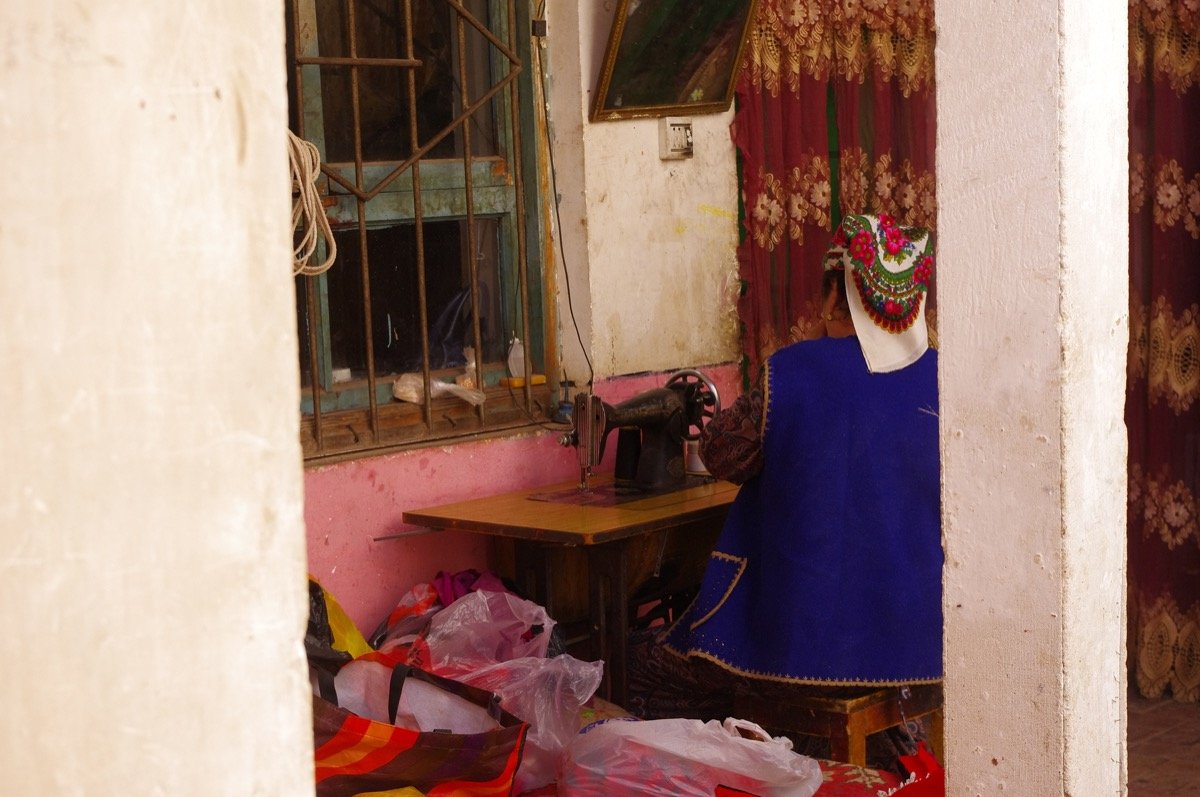
The Han Bazaar (汗巴扎): Kashgar’s Street Food HQ
The Han Bazaar (officially the Kashgar Old Town East Gate Food Street) is the single most important address in Kashgar for anyone who eats. Located just outside the eastern gate of the Old Town, this pedestrian street comes alive every evening around 7 PM and doesn’t quiet down until well past midnight. The air fills with wood smoke, sizzling oil, and the rhythmic clink of knives against cutting boards.
What makes the Han Bazaar special isn’t just the food — it’s the atmosphere. You’re shoulder-to-shoulder with Uyghur families, Chinese backpackers, and the occasional tour group, all converging on the same goal: eating well for under 50 RMB. The street is lined with open-fronted kitchens where you can watch your food being made, from dough being stretched for noodles to whole lambs turning on spits.
What to Eat at the Han Bazaar
Chuan’r (羊肉串, Yang Rou Chuan) — Xinjiang’s most famous export. At the Han Bazaar, these aren’t the tiny, soggy skewers you might have had elsewhere. Here, chunks of fatty and lean lamb alternate on a flat metal skewer, dusted with cumin, chili, and salt, then grilled over fierce charcoal. The fat renders and caramelizes; the lean meat stays juicy. 3–5 RMB per skewer. Learn more about Xinjiang kebab culture.
Samsa (烤包子, Kao Baozi) — The Uyghur answer to the samosa, but savory, meaty, and baked vertically inside a tandoor-like clay oven (the “tunur”). The dough is lean and crisp; the filling is diced lamb, onion, and sometimes pumpkin or chickpeas. Eat one the second it comes out of the oven — that’s when the juices are hottest and the crust is shattering-crisp. 2–3 RMB each. More on Uyghur cuisine staples.
Yogurt Rice (酸奶粽子, Suannai Zongzi) — A Kashgar-only street dessert. Sticky rice dumplings are flattened on a board, doused in thick, tart homemade yogurt, then drizzled with fruit syrup (usually mulberry or fig). It’s sweet, sour, cold, and weirdly addictive on a hot summer night. 5–10 RMB.
Kawap (Various Kebabs) — Beyond lamb, look for chicken wings (“tupu kawap”), naan dipped in egg and grilled (“nan kawap”), and even grilled tomatoes with cumin. The variety is part of the fun.
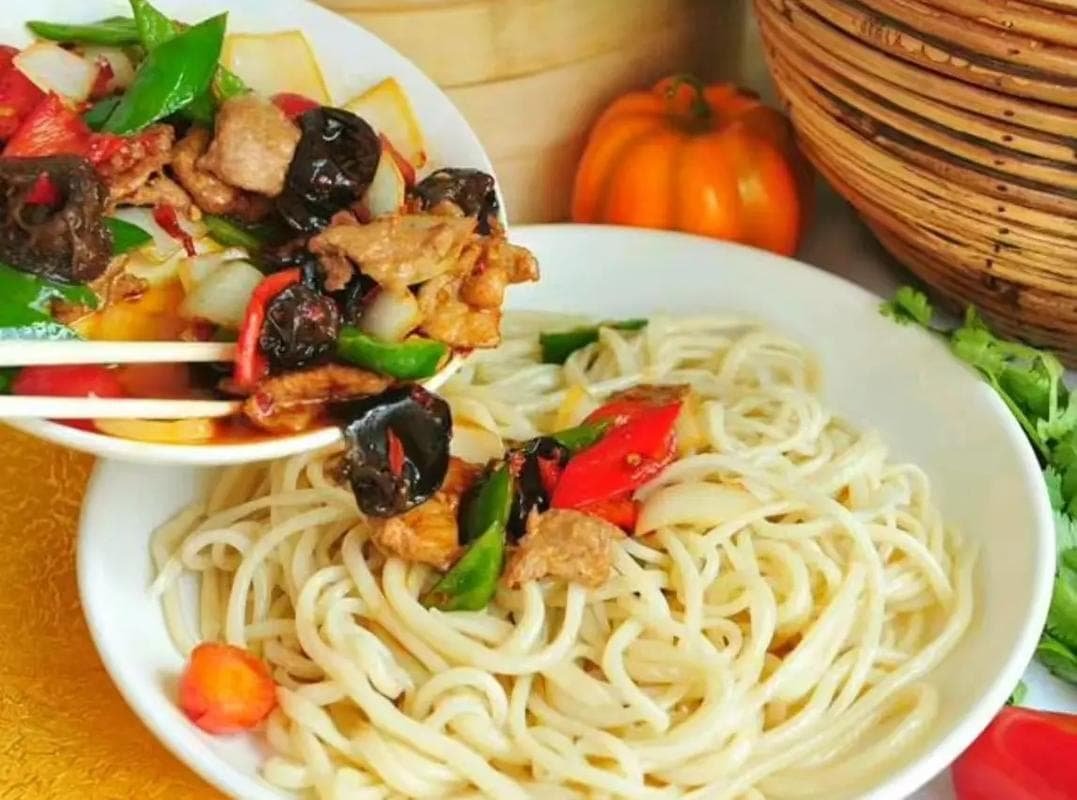 Laghman noodles with meat and vegetables in a traditional Uyghur restaurant in Kashgar”>
Beyond the Han Bazaar: Where Locals Actually Eat
The Han Bazaar is essential, but it’s also the most tourist-facing food street in Kashgar. To eat like a local, you need to venture deeper into the Old Town’s residential alleys and to specific neighborhoods where tour groups don’t usually go.
1. Nur Bek Restaurant (努尔白克抓饭馆)
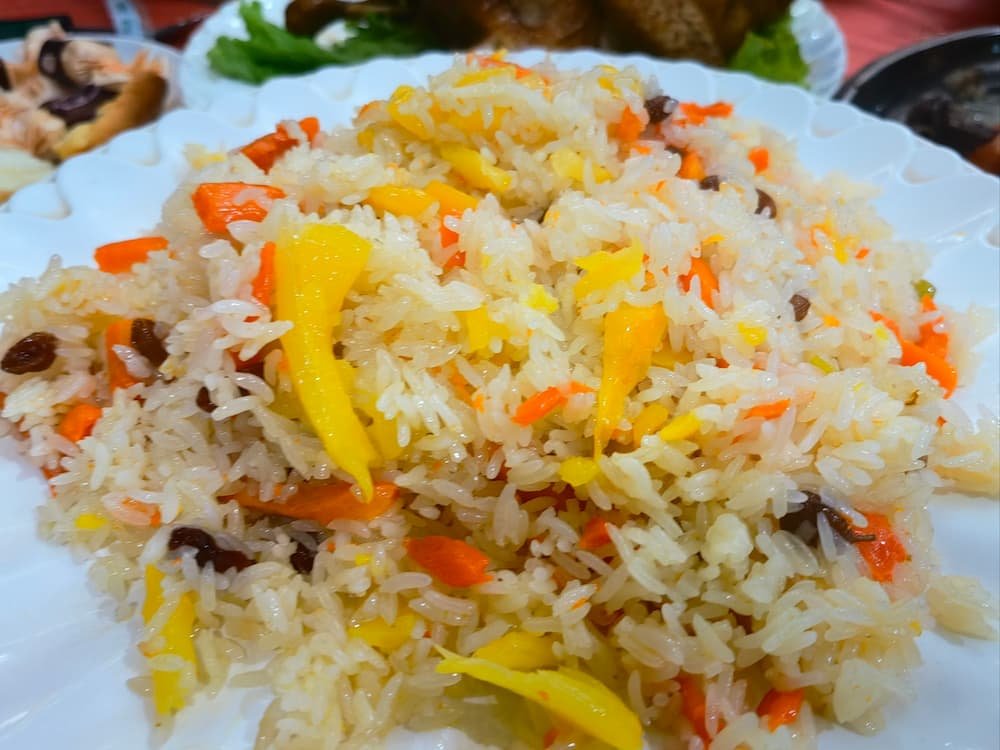
This unassuming spot, tucked into a side street off Seman Road, is widely considered to serve the best polo (pilaf) in Kashgar. The rice is cooked with lamb fat, carrot, and onion until every grain is separate, aromatic, and faintly yellow. A whole leg of lamb sits on top. 25–35 RMB gets you a plate piled high, with free refills on rice. Go before 1:30 PM — when the polo runs out, they close the doors. Read our complete guide to Xinjiang polo pilaf.
2. Alimjan’s Samsa Oven (阿力木江烤包子铺)
There’s always a line. That’s the review. Located on a corner in the Old Town’s western section, this tiny tunur oven turns out hundreds of samsa every morning. The wait is 10–15 minutes, but you’ll spend it watching the baker slap dough against the oven wall with rhythmic precision. Get there by 9 AM for the freshest batch.
3. The Old Tea House (百年老茶馆)
Not exactly a restaurant, but an essential food experience. This centuries-old teahouse, located on the edge of the Old Town, serves brick tea, milk tea, and herbal “medicine tea” (made with rose, fennel, and mint) alongside simple flatbreads and dried fruits. It’s a place to sit, drink, people-watch, and slow down. 5–15 RMB per pot. Learn about Xinjiang’s tea culture.
4. Kashgar night market (喀什夜市) — The One Locals Use
There are two night markets in Kashgar. The Han Bazaar is the famous one. The other — near the People’s Park, about 2 km from the Old Town — is where Kashgar residents go after 9 PM. It’s less polished, cheaper, and has better grilled fish (a specialty in this inland city, surprisingly). Look for “Kashgar night market” on Google Maps; it moves locations occasionally, so ask your hotel front desk for the current spot.
A Dish-by-Dish Guide to Kashgar’s Signature Foods
Polo (Pilaf / 抓饭)
Kashgar’s polo is distinct from the versions you’ll find in Urumqi or Yining. Here, the carrots are chopped finer, the lamb is fattier (for more flavor), and many shops add a handful of raisins or sultanas to the rice as it steams. The result is a sweet-savory aroma that hits you before you even sit down. Eat it with your right hand if you want to do it the traditional way — or use a spoon; no one will mind.
Laghman (Hand-Pulled Noodles / 拉条子)
Every region in Xinjiang has its own laghman style. In Kashgar, the noodles are slightly thicker, the sauce is tomato-forward, and the meat is almost always lamb. A proper plate of laghman should be oily, spicy, and impossible to finish. Most restaurants will refill your noodles for free if you ask. Our full guide to laghman noodles covers the history and regional variations.
Kawap (Grilled Meats)
The word “kawap” just means “grilled meat” in Uyghur, but in Kashgar it’s an entire category. Beyond standard lamb skewers, look for:
- Dapanji-style kawap — larger cuts, marinated overnight
- Gonggong (螺蛳) kawap — skewered snail (a niche local favorite)
- Qoruq (烤肝) — grilled liver, incredibly tender if done right
- Tunur kawap — meat roasted inside the clay oven, not over open flame
Dapanji (Big Plate Chicken / 大盘鸡)
While dapanji originated in northern Xinjiang (Shawan County), Kashgar has developed its own version — spicier, with more potato and a thinner sauce. It’s designed for sharing; a single plate easily feeds three or four people. The best versions come with hand-pulled “belt noodles” (宽面) added to the sauce at the end.
Naan (馕)
You’ll see naan everywhere in Kashgar — stacked in baskets outside bakeries, carried underarm by schoolchildren, used as plates for kebabs. The Kashgar version tends to be thinner and crisper than the soft, pillowy naan you might know from Central Asian restaurants abroad. Varieties include:
- Sangza naan — twisted, sesame-covered, crisp
- Girde naan — round, dimpled, sometimes with onion
- Tash naan — cooked directly on hot stones
- Qoruq naan — fried, puffed, sweet
A single naan costs 1–3 RMB and stays fresh for days — the perfect hiking snack if you’re heading out to Karakul Lake or Tashkurgan.
Drinks: What to Sip While You Eat
Kawas (卡瓦斯) — Often called “Xinjiang beer” (it’s not — it’s honey-fermented and nearly non-alcoholic), this slightly fizzy, amber-colored drink is the perfect counterpoint to oily grilled meats. It’s made fresh daily in big copper barrels and costs 5–10 RMB per glass. Ask for “leng de” (cold one) in summer.
Chai (Tea / 茶) — In Kashgar, tea is serious business. The default is brick tea (hei cha), dark and smoky. Ask for “sut chai” (milk tea) if you want something richer. At the Old Tea House, try the “darma chai” (medicine tea) — an herbal blend that’s been used for centuries to aid digestion after heavy meals.
Mulberry Juice (桑葚汁) — Seasonal (May–June only). Fresh mulberries are pressed into a dark purple, intensely flavored juice that stains everything it touches. Worth the stained lips.
Food Etiquette: How Not to Embarrass Yourself
Kashgar is a conservative, religious city. Most restaurants are halal (清真), which means no pork, no alcohol (officially), and a few unwritten rules worth knowing:
- Use your right hand for eating, handing over money, and passing objects. The left hand is traditionally considered impolite.
- Don’t bring outside food into a halal restaurant — especially anything containing pork products.
- Ask before photographing someone’s food stall or kitchen. Most vendors are proud of their work and will say yes, but asking is basic respect.
- Tea refills are a thing — if someone pours you tea, drink it. Leaving a full cup can be interpreted as “I don’t want more,” which is fine, but completely refusing tea from a host is impolite.
- Bargaining is normal at markets, but not in restaurants with printed menus. At street stalls, a friendly “pianyi yi dian” (a little cheaper?) is acceptable, but don’t overdo it — these are often family livelihoods.
Read our full guide to Xinjiang dining etiquette before your trip.
When to Go (and When to Eat)
Kashgar’s food scene runs on a different clock than you might expect:
- Breakfast (8–10 AM) — Naan bakeries are at peak production. This is the best time to buy naan fresh.
- Lunch (1–2:30 PM) — Polo shops serve their best batches. Miss this window and you’re eating dinner instead.
- Afternoon (3–6 PM) — Tea houses are liveliest. Old men gather to play cards, drink tea, and debate politics.
- Dinner (7:30 PM–midnight) — The real action. Night markets open, grills fire up, and the entire city seems to migrate toward food streets.
If you’re visiting in winter (November–March), the days are shorter but the food is heartier — more stews, more hot tea, more reason to linger over a plate of polo.
Practical Tips for Eating in Kashgar
- Carry cash — Many of the best stalls don’t take Alipay or WeChat Pay. Small bills (10s and 20s) are best.
- Learn three words: “Rahmet” (thank you), “Qancha pul?” (how much?), and “Yaman emes” (not bad / it’s good). Locals appreciate the effort.
- Bring your appetite — and a friend. Xinjiang portions are massive. A single dapanji can feed a small family. Going solo? Make friends at the next table.
- Spice tolerance: Kashgar food is moderately spiced. If you can’t handle heat, say “la zi shao” (less chili). If you love it, say “jia la” (add spice).
- Stay near the food: Book accommodation inside or adjacent to the Old Town. Our Xinjiang accommodation guide has specific recommendations.
The Verdict
Kashgar’s food streets aren’t just a place to eat — they’re a place to understand what makes this city, and this region, unlike anywhere else in China. The recipes are old, the techniques are hands-on, and the pride is visible in every stall. Whether you’re navigating the smoky chaos of the Han Bazaar or sipping medicine tea in a 200-year-old teahouse, you’re participating in a food culture that predates the Silk Road as we know it.
Come hungry. Leave planning your next visit.
Published: June 2026. Prices and restaurant details are based on the most recent available information. Always confirm opening hours locally, as Kashgar’s small restaurants sometimes close unexpectedly for family events.