
Burqin: The Gateway to Kanas Lake
Last updated: June 2026
If you’re planning your first trip to Xinjiang, chances are you’ve already heard of Kanas Lake — the mystical “azure paradise” tucked into the Altai Mountains. But what most travelers overlook is the charming county town that serves as the gateway to this wonder: Burqin (布尔津). Situated on the banks of the Irtysh River — China’s only river that flows into the Arctic Ocean — Burqin is far more than a transit stop. It’s a destination in its own right, offering a unique blend of border culture, fairy-tale architecture, and some of the most spectacular landscapes in all of northwestern China.
Why Burqin Deserves a Spot on Your Itinerary
Most visitors rush through Burqin on their way to Kanas, Hemu, or the Duku Highway. That’s a mistake. Burqin rewards those who linger. The county seat itself is one of the most photogenic small towns in Xinjiang — a place where Russian-style wooden buildings line colorful streets, and the riverside comes alive each evening with sizzling BBQ stalls and steaming pots of cold-water fish caught fresh from the Irtysh.
Burqin’s location is what makes it magical. To the north, the Altai Mountains rise toward the Russian and Mongolian borders. To the south, the vast Gurbantünggüt Desert begins its march. In between, the Irtysh River carves a green corridor through the landscape, supporting lush poplar forests and the famous lavender-colored riverbanks of the Wucai Beach (Colorful Beach).
The Crown Jewels: Kanas Lake and Hemu Village
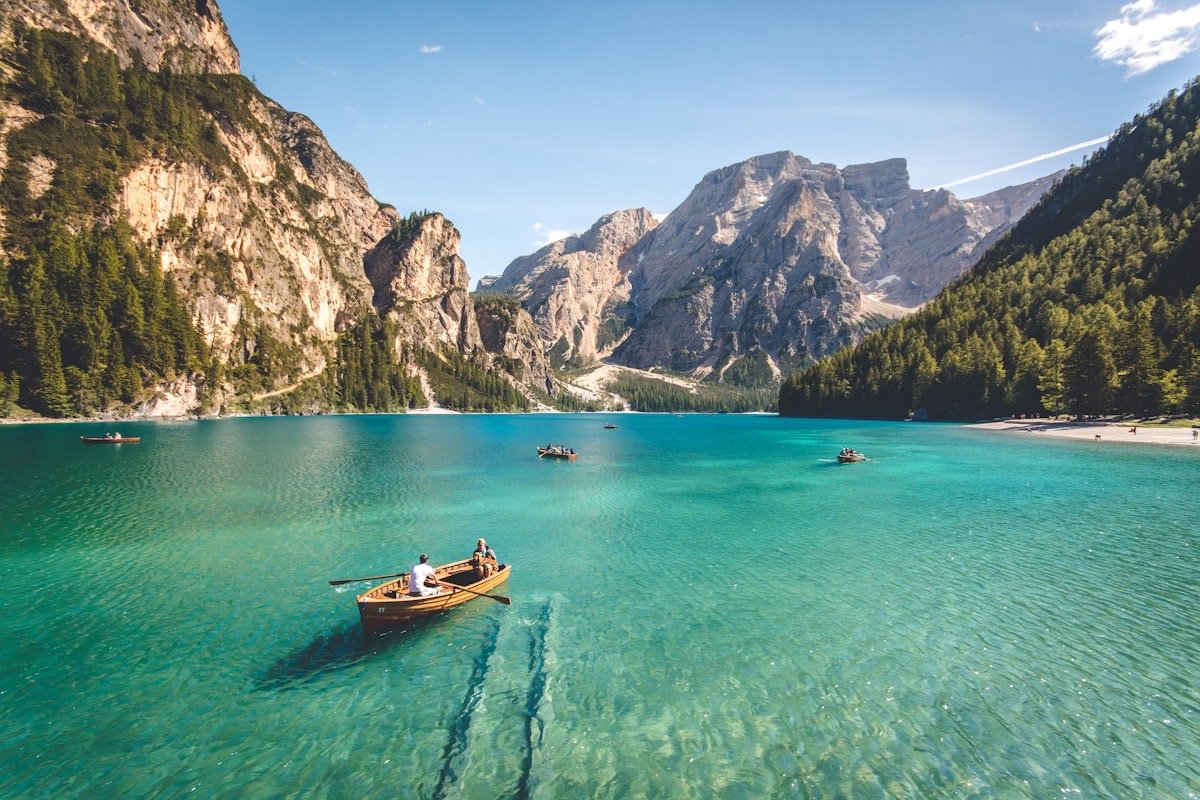
No visit to Burqin is complete without venturing into the Kanas Scenic Area, roughly 130 km north of the county seat. Kanas Lake is China’s deepest alpine lake, plunging to 188.5 meters at its deepest point. What makes it truly extraordinary is its chameleon-like quality — the water shifts from jade green in May and June to emerald blue in July and August, then to a milky turquoise in September as glacial silt levels change.
The lake is surrounded by some of the most pristine grassland and coniferous forest in China. Three Bays — Fairy Bay (Shenxian Wan), Moon Bay (Yueya Wan), and Guanyu Bay — are the most famous viewpoints, each offering a slightly different perspective on the lake’s otherworldly beauty. In autumn, when the birch forests turn a blinding gold and the spruce trees remain defiantly dark green, the contrast is almost too vivid to be real.
About 70 km further into the mountains lies Hemu Village, home to the Tuvan people — a small Mongolian ethnic group who have lived in these valleys for centuries. Hemu is often called “God’s Own Reserve” for good reason. Wooden cabins dot a valley floor ringed by snow-capped peaks and birch forests. Wake up before dawn, climb to the Haden Viewing Platform, and watch as morning mist rises from the Hemu River and the first sunlight hits the wooden roofs. It’s a scene that has graced more Xinjiang travel brochures than almost any other.
Wucai Beach: A Riverbank Like No Other
Just 24 km northwest of Burqin town lies one of Xinjiang’s most underrated wonders: Wucai Beach (五彩滩), or the Colorful Beach. This is a rare riverside Yadan landscape — wind- and water-carved rock formations in vivid shades of red, yellow, purple, white, and blue-green, all lining the north bank of the Irtysh River.
The magic hour is sunset. As the sun drops toward the horizon, the rock formations ignite in warm tones while the south bank — covered in dense poplar forest — turns a deep, glowing gold. The Irtysh River between them reflects it all, creating a scene that feels more like a painting than a photograph. Unlike many scenic spots in China, Wucai Beach is relatively compact and walkable, with well-constructed wooden boardwalks that keep you above the fragile formations.
 Nalati Grassland scenery near Burqin route, Xinjiang” style=”width:100%;max-width:800px;margin:20px auto;display:block;border-radius:8px;”>
Burqin Town Itself: A Fairy-Tale Riverside Stop
Don’t make the mistake of treating Burqin as just a place to sleep between destinations. The county seat has a character all its own. Russian-style architecture — a legacy of centuries of cross-border trade — gives the town a Central Asian and Siberian flair that’s unlike anywhere else in Xinjiang. The riverside night market (河堤夜市) is legendary among Xinjiang travelers. Every evening as the sun sets, the Irtysh riverbank transforms into a carnival of food stalls selling grilled cold-water fish (especially the famous 狗鱼, or pike), Uyghur bread, and steaming bowls of milk tea.
The Irtysh River Bridge, lit up at night, has become something of an unofficial symbol of modern Burqin. Locals gather on the bridge and along the riverside promenade to socialize, fly kites, and watch the sunset. If you’re traveling with children or simply want a relaxed evening after a long day of driving, this is one of the most pleasant small-town experiences in all of Xinjiang.
When to Visit: Timing Your Trip
The most famous time to visit Burqin is undoubtedly mid-September to early October. This is when the Kanas area explodes into color — birch trees turn brilliant gold, maple leaves glow red, and the spruce and pine provide a dark green backdrop. The weather is crisp and clear, with daytime temperatures around 10-15°C and nighttime temperatures that can drop below freezing. This is also the busiest time; accommodation in both Burqin town and inside the Kanas scenic area should be booked at least a week in advance (two weeks is safer).
Summer (June-August) is ideal if you prefer green landscapes and want to avoid the crowds. The Kanas Lake takes on its characteristic jade-green hue. Grasslands are in full bloom, wildflowers carpet the alpine meadows, and the weather is pleasantly cool — a welcome escape from the heat of China’s eastern cities. This is also the best time for hiking and outdoor activities.
Winter (November-March) transforms the entire region into a snow-globe scene. Kanas and Hemu in winter are increasingly popular for snow photography and winter cultural experiences. However, some roads may be closed due to snow, and you’ll need to be prepared for seriously cold temperatures (down to -30°C). The trade-off is solitude and some of the most dramatic winter scenery you’ll ever see.
Getting There: Your Transport Options
By Air: The closest airport is Altai Airport (AAT), about 110 km from Burqin (roughly 1.5 hours by car). There are regular flights from Urumqi (about 1.5 hours). During the summer peak season, Kanas Airport (also called Burqin Airport) opens seasonal flights from Urumqi and other cities.
By Train: The nearest railway station is Beitun Station, about 90 km away (1 hour by car). There are overnight sleeper trains from Urumqi to Beitun (about 12 hours). From Beitun, you can take a bus or hire a car to Burqin.
By Bus: Long-distance buses run regularly from Urumqi’s northern suburb bus station to Burqin. The journey takes about 10-12 hours and is the most budget-friendly option.
Self-Drive: This is by far the most rewarding way to explore the region. From Urumqi, take the G7 Beijing-Xinjiang Expressway toward Burqin — the total distance is about 620 km and takes 7-8 hours of driving. The route passes through some spectacular scenery, and you’ll have the freedom to stop at roadside viewpoints and smaller villages that buses simply pass by. If you’re planning a self-drive adventure, Burqin makes an excellent base for exploring not just Kanas but also the wild Altai border regions.
Where to Stay: Accommodation Tips
In Burqin Town: The county seat has a wide range of options, from budget hostels (around ¥150-250/night) to comfortable mid-range hotels (¥300-500/night). Staying in town is convenient for the night market and makes for an easy morning departure toward Kanas. Booking ahead is essential in September and October.
Inside Kanas Scenic Area: For the full experience, spend at least one night inside the scenic area — either at a Tuvan family guesthouse in Kanas Village or Hemu Village. These range from basic (shared bathroom, ¥200-300/night) to surprisingly comfortable eco-lodges (¥500-800/night). Waking up inside the scenic area means you can be at the viewpoint before the day-trippers arrive — and that makes all the difference for photography.
In Jiadenyu: This is the entrance area to Kanas, about 30 km from the lake. It has the largest concentration of hotels and is where the shuttle buses depart from. It’s a good compromise between convenience and cost.
What to Eat: Burqin’s Culinary Highlights
Burqin’s food scene reflects its location at the crossroads of cultures. The absolute must-try is cold-water fish from the Irtysh River — especially 狗鱼 (pike) and 五道黑 (a local trout species). These are typically grilled over charcoal with cumin and chili, and they taste nothing like the farmed fish you might be used to. The flesh is firm, slightly sweet, and completely without the “muddy” flavor that freshwater fish sometimes have.
Other local specialties include Uyghur pilaf, hand-pulled noodles (laghman), and dairy products from local Kazakh and Tuvan families. If you visit in autumn, ask about fresh wild mushrooms — the forests around Burqin produce several edible varieties that are foraged by locals and sometimes feature on restaurant menus.
The riverside night market in Burqin town is the best place to sample all of these in one go. Dozens of stalls line the riverbank, each with its own specialty. It’s busy, smoky, and utterly delicious — one of the most authentic food experiences you can have in Xinjiang.
Practical Tips for Visiting Burqin
- Border Permit: If you plan to visit the remote border areas (including some parts of Kanas and Baihaba Village), you’ll need a border permit. These can be arranged in Burqin town or in Urumqi before you travel. Bring your passport.
- Cash: While larger hotels and restaurants in Burqin town accept mobile payments (WeChat Pay / Alipay), cash is still useful in the scenic areas and at smaller food stalls. There are ATMs in Burqin town.
- Altitude: Burqin town is at about 500 meters above sea level, but Kanas Lake is at 1,374 meters and Hemu is slightly higher. Altitude sickness is rare but possible if you’re sensitive; take it easy on your first day.
- Signal: Mobile phone coverage is generally good in Burqin town and along the main road to Kanas, but can be spotty inside the deeper valleys and in remote sections of the scenic area.
- Booking: September-October is extremely busy. Book accommodation, transport, and (if needed) border permits well in advance. The difference between booking ahead and walking in can be hundreds of yuan per night.
The Road Less Traveled: Beyond the Big Three
If you have extra time, consider exploring some of the lesser-known spots around Burqin. Baihaba Village, right on the border with Kazakhstan, offers a glimpse into traditional borderland life that feels worlds away from the tourist trail. The Irtysh River Grand Canyon, south of town, is a dramatic sandstone gorge that hardly any foreign travelers visit. And if you’re in Burqin in winter, the annual ice and snow festival transforms the town into a celebration of all things frozen.
Burqin is also an excellent starting point for trips further afield. The classic Xinjiang travel routes often combine Burqin with stops in Urumqi, Turpan, and the southern Xinjiang circuit — but Burqin easily rewards 3-5 days on its own.
Final Thoughts
Burqin represents something rare in modern Chinese tourism: a place that manages to be both a popular destination and a genuinely authentic experience. Yes, it gets busy in autumn. Yes, you’ll encounter other travelers at the famous viewpoints. But spend a little time in the town itself, wander away from the main streets, strike up a conversation with a local over a plate of grilled fish, and you’ll discover that Burqin’s magic runs deeper than its postcard scenery.
Whether you’re drawn by the legendary “color-changing” Kanas Lake, the golden birch forests of Hemu, or simply the chance to stand on the banks of China’s only Arctic-bound river, Burqin delivers. It’s a place that stays with you long after you’ve left — and that, ultimately, is the mark of a truly great travel destination.