
Kazanchi Yining: The Colorful Uyghur Heart of Ili Valley, Xinjiang
Last updated: July 2026. This guide reflects the latest visitor information for Kazanchi (Kazanqi) Ethnic District in Yining, Ili Valley, Xinjiang.
There’s a neighborhood in Yining where every wall tells a story — and every story is painted in cobalt blue, sunflower yellow, and terracotta red. Welcome to Kazanchi (喀赞其), the largest intact Uyghur residential district in China’s Ili Valley. If your mental image of Xinjiang is all snow-capped mountains and desert highways, Kazanchi will rewrite it entirely.
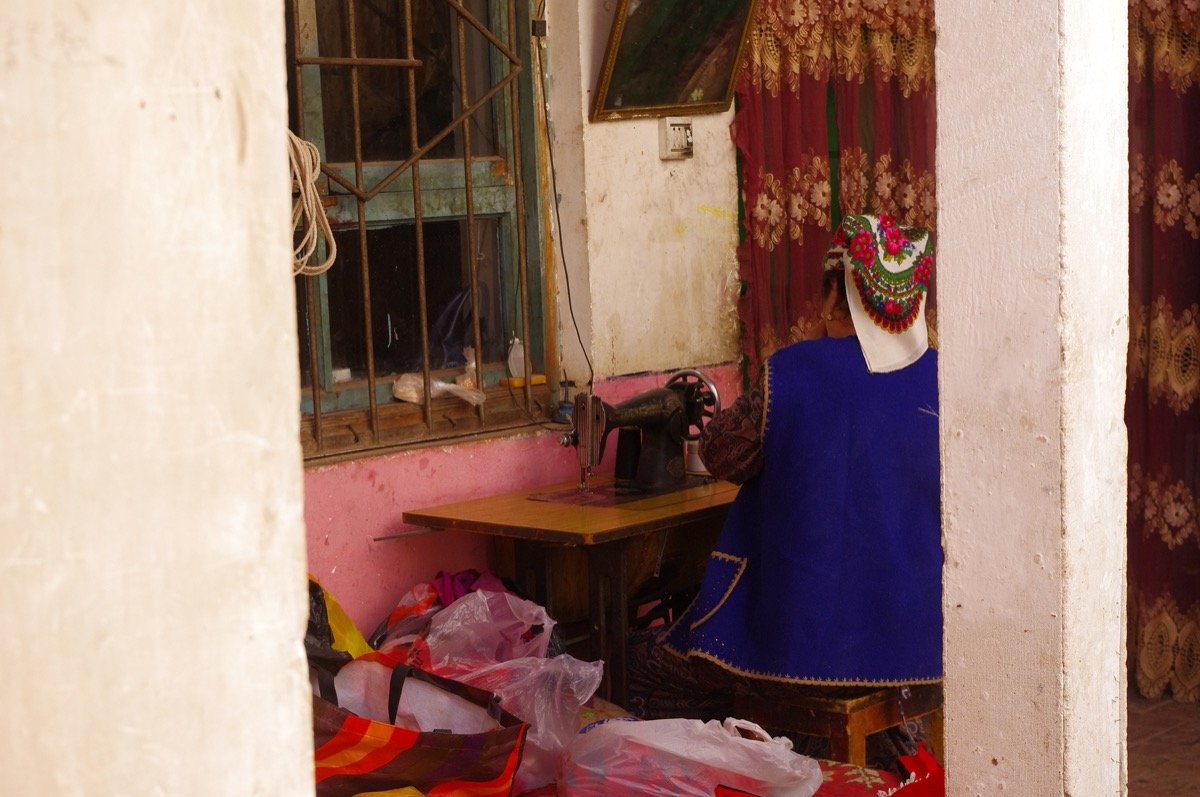
What Is Kazanchi, Exactly?
The name Kazanchi literally means “pot-maker” in Uyghur (from kazan, the traditional cast-iron cooking pot). Centuries ago, this part of Yining was where the city’s coppersmiths and tinsmiths lived and worked. Today, it’s a living neighborhood of roughly 12 square kilometers where more than 80% of residents are Uyghur, and where the architectural layers of the Silk Road are still visible on every street corner.
Unlike a museum district or a commercial pedestrian street, Kazanchi is alive. Children kick footballs between wooden gates painted in lapis blue. Neighbors call out from second-floor balconies. The smell of baking naan drifts from family courtyards. This is why travelers who come here often call it the most authentic urban experience in all of Xinjiang.
The Colors of Kazanchi: Why It’s Called the “Blue Town”
If you’ve seen photos of Kazanchi, you know the dominant color: blue. Not pastel blue, but deep, saturated, door-and-window-frame blue — the blue of Iznik tiles and Central Asian Islamic architecture. The tradition dates back to the 18th and 19th centuries, when Yining (then called Ghulja) was a major hub on the Silk Road’s northern route.
Local families painted their wooden gates and window frames blue to ward off insects (a practical origin) and to express cultural identity (a symbolic one). Over generations, the color palette expanded. Today you’ll find:
- Cobalt blue — the classic Kazanchi gate color
- Sunflower yellow — often used on courtyard walls
- Terracotta red — common on older timber-framed houses
- Emerald green — seen on mosque domes and garden doors
The best way to experience this is simply to walk. There is no “main street” — every lane offers a different composition of colors, vines, and carved wood.
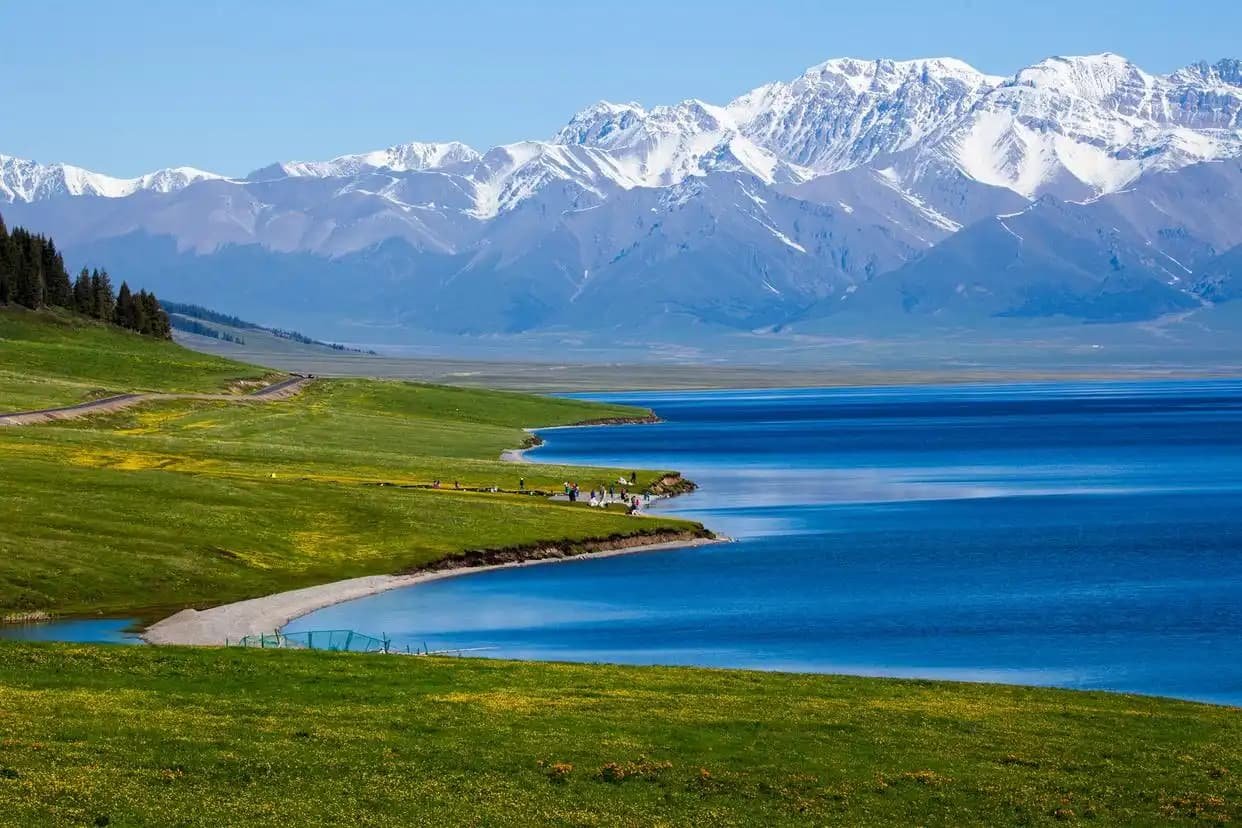 Sayram Lake nearby Ili Valley scenic area Yining Xinjiang travel guide” />
A Living Silk Road Neighborhood
Kazanchi isn’t a reconstruction. The houses here date from the mid-Qing period (18th century) through the Republican era, and many are still inhabited by the same families that built them. The architecture is a remarkable blend:
- Uyghur timber-brick houses with intricate carved wooden columns and grape-vine trellises over the courtyards
- Russian-influenced buildings from the period when Yining was a center of cross-border trade with tsarist Russia and later the Soviet Union
- Hui (Dungan) courtyard houses reflecting the area’s multi-ethnic history
- Qing-dynasty stone foundations still visible in the oldest lanes
The district is crisscrossed by a network of syr (narrow irrigation channels) that bring meltwater from the Tianshan mountains through the neighborhood. You’ll hear the sound of running water everywhere — a rarity in Xinjiang’s otherwise arid towns.
Things to Do in Kazanchi
1. Get Lost on Foot (Seriously)
Kazanchi is a maze by design. The narrow lanes were laid out to confuse invaders during the turbulent centuries of the Silk Road. Today, they simply confuse visitors — in the best possible way. Give yourself at least 2–3 hours to wander without a fixed route. The neighborhood is safe, and residents are accustomed to polite travelers with cameras.
Pro tip: The area around Liuxing Street (六星街) — a planned hexagonal street grid adjacent to the old district — is a good place to start. From there, follow any lane heading south and you’ll quickly find yourself in unplanned, centuries-old Kazanchi.
2. Visit a Working Coppersmith’s Workshop
Remember the name? Kazanchi means “pot-maker,” and a few workshops still practice the craft. Look for the rhythmic clang-clang of hammered copper. Most workshops are happy to show you the process, and some sell hand-beaten bowls and pots that make excellent souvenirs (far more authentic than anything in a tourist shop).
3. Drink Tea in a Family Courtyard
Many Kazanchi families open their courtyards as informal tea houses in the afternoon. Look for a wooden bench outside a gate, or simply ask (a smile and a gesture go a long way). A pot of milk tea with naan and apricot jam is typically 10–20 RMB. This is where you’ll have the most genuine conversations about life in Yining.
4. Explore the Local Mosques
Kazanchi has several neighborhood mosques, including some with distinctive green-tiled domes visible above the rooftops. Non-Muslim visitors are generally not permitted inside during prayer times, but the exteriors — especially the carved wooden minarets — are worth admiring from the lane outside. Dress modestly (cover shoulders and knees) out of respect.
5. Photograph the Blue Gates at Golden Hour
The warm evening light in Yining (which sits at a similar latitude to Budapest) makes the blue paint glow. The best light is from 7:30 PM to 9:00 PM in summer, and 5:00 PM to 6:30 PM in winter. Morning light works well too, especially on east-facing gates.
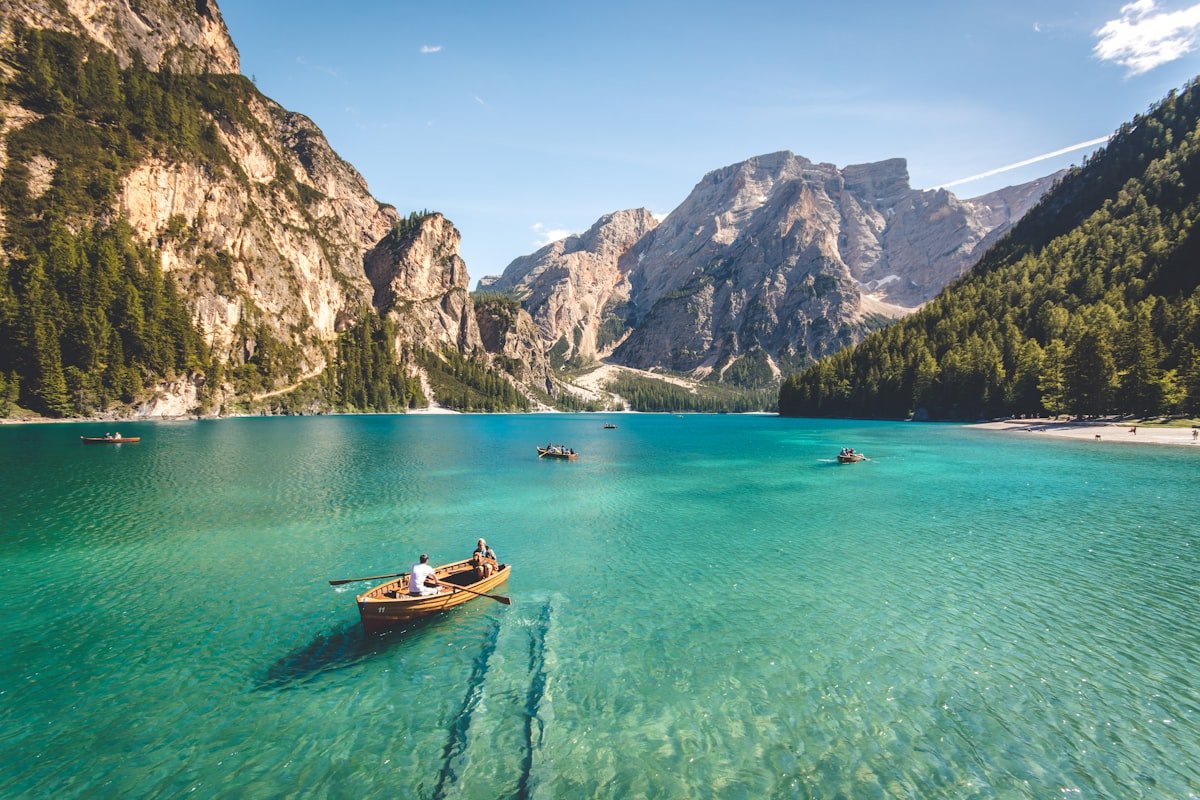 Nalati Grassland near Yining Ili Valley Xinjiang attractions things to do” />
Kazanchi and Nearby: Extending Your Yining Visit
Kazanchi is the cultural heart of Yining, but the Ili Valley has much more to offer within a day trip:
- Sayram Lake (2.5 hours by car) — the “Atlantic’s last tear,” an alpine lake of stunning blue. Read our complete Sayram Lake guide.
- Nalati Grassland (3 hours) — one of Xinjiang’s most famous alpine meadows. See our Nalati guide.
- Guozigou (Guozigou Valley) — the spectacular canyon between Yining and Sayram Lake, with suspension bridges and waterfall views.
- Yining Bazaar — the city’s main market, excellent for spices, dried fruits, and people-watching.
Practical Information for Visitors
Where Is Kazanchi?
Kazanchi is located in the southern part of Yining (Ghulja), the prefectural capital of Ili Kazakh Autonomous Prefecture in northern Xinjiang. The district is bounded roughly by Jiefang South Road to the east and the Ili River to the south.
How to Get to Kazanchi
From Urumqi: Fly to Yining Airport (YIN) — multiple daily flights, 1.5 hours. Alternatively, the overnight sleeper train takes about 10 hours. Our Urumqi transportation guide covers the first leg of this journey.
Within Yining: Take bus No. 1, 101, or any minibus heading south from the city center. Tell the driver “Kazanchi” (喀赞其). A taxi from anywhere in Yining should cost 8–15 RMB.
Best Time to Visit
June to September is ideal. The Ili Valley is at its greenest in June and July, and the famous Huocheng lavender fields bloom in mid-to-late June. September offers golden poplar trees and fewer tourists. Winter (November–March) is very cold but atmospheric, with snow on the blue gates.
Opening Hours and Tickets
Kazanchi is a residential neighborhood, not a gated attraction. There is no entrance fee. You can walk in at any time. Some guided tours operate in the area (typically 50–100 RMB per person), but self-exploration is encouraged and more rewarding.
What to Wear
Dress respectfully — this is a conservatively minded neighborhood. Shoulders and knees should be covered. A light scarf for women is thoughtful but not required. Comfortable walking shoes are essential; the lanes are uneven and some have small irrigation channels along the edges.
Food in and Around Kazanchi
You’re in Yining, which means you’re in one of Xinjiang’s best food cities. Within and around Kazanchi, look for:
- Naan — fresh from the clay oven, still warm. 2–5 RMB each.
- Samsa — baked meat or pumpkin pastries, Uyghur style. 5–8 RMB each.
- Ice cream (marozhka) — Yining has a surprising ice cream culture influenced by its Russian trading history. Look for small shops near Liuxing Street.
- Hand-pulled Laghman noodles — the Yining version is slightly different from the Urumqi version, often with more vegetable toppings. Learn about laghman here.
- Yining sour yogurt (kurut) — tangier than the southern Xinjiang version.
For a full food tour of the city, check our Yining food guide.
Photography Etiquette in Kazanchi
This is the most important section in this guide. Kazanchi is home to thousands of people, not a theme park. Please:
- Ask before photographing people. A smile and a gesture toward your camera is usually enough. If someone says no (or looks uncertain), respect it.
- Don’t enter private courtyards without invitation. Even if a gate is open, it may just mean the family is airing out the space.
- Be mindful of prayer times. Friday midday prayers are particularly important. Keep your voice down near mosques on Fridays.
- Support the neighborhood economically. Buy some naan, some dried fruit, or a small copper souvenir. This keeps the district alive as a living community, not a tourist zoo.
Where to Stay
Yining has a range of accommodation. For the Kazanchi experience, consider:
- Boutique guesthouses — a few family-run guesthouses have opened in and near the district. These let you step out directly into the blue lanes in the morning. Book via Ctrip or booking.com; search for “Kazanchi guesthouse” or “Yining old town stay.”
- City center hotels — Yining has several mid-range business hotels (Home Inn, Vienna Hotel, etc.) within 2 km of Kazanchi. Convenient if you want modern amenities.
For general advice on where to stay across the region, see our Xinjiang accommodation guide.
Kazanchi in Context: Why This Place Matters
It’s easy to treat Kazanchi as a “photo spot.” But it’s more than that. This neighborhood is one of the best-preserved examples of a continuous Silk Road urban community anywhere in Central Asia. The fact that it’s still lived in — that children still grow up playing between 200-year-old gates — makes it irreplaceable.
For solo travelers in Xinjiang, Kazanchi offers something that the region’s epic landscapes sometimes don’t: intimacy. After the vastness of the Taklamakan or the grandeur of Kanas Lake, wandering these lanes — smelling woodsmoke, hearing a distant dutar being tuned, watching an old man pruning his grapevine — is a chance to slow down and actually feel the culture, not just look at it.
Sample Half-Day Itinerary
Here’s how to spend a perfect morning and afternoon in Kazanchi:
9:00 AM — Arrive at Liuxing Street, grab a breakfast of naan and milk tea at a local spot.
9:30 AM — Walk south into the old lanes. Wander without a map for 90 minutes.
11:00 AM — Find a family courtyard tea house. Drink tea, talk if language allows, or just people-watch.
12:30 PM — Walk to the Yining bazaar area for lunch (laghman or Polo pilaf).
2:00 PM — Rest at your hotel during the hottest hours (summer) or continue exploring the southern lanes.
6:00 PM — Return for golden-hour photos of the blue gates.
7:30 PM — Dinner at a Yining restaurant. Try the local ice cream for dessert.
Getting Around Yining and the Ili Valley
Yining makes an excellent base for exploring the Ili Valley. Having your own wheels gives you the most flexibility. Our self-drive guide covers car rental and road-trip planning across Xinjiang, including the Ili loop.
If you don’t drive, local tour groups run day trips from Yining to Sayram Lake, Nalati, and the lavender fields during peak season (June–September). Book through your hotel or via Ctrip.
Final Thoughts
Kazanchi isn’t the most famous attraction in Xinjiang. It’s not even the most famous thing to do in Yining. But it might be the one that stays with you longest.
There’s something about the combination of colors, sounds, and everyday life that gets under your skin. Come for the photos. Stay for the tea. Leave with a sense of what this part of the world felt like when the Silk Road was the internet of its day — a place where cultures mixed, trades were made, and neighborhoods like this one grew organically, one blue gate at a time.
Have you visited Kazanchi or Yining? What was your experience? Let us know — we’re always looking to improve our guides with real traveler insights.
More Xinjiang attraction guides:
Nalati Grassland Guide |
Sayram Lake Guide |
Yining Food Guide |
Huocheng Lavender Fields